
===META_START===
SEO Title: Pineapple Glazed Salmon: Easy 20-Minute Tropical Dinner
Meta Description: This Pineapple Glazed Salmon recipe features a sweet and savory glaze with fresh ginger and garlic. Perfect for a quick, healthy weeknight meal. Get the recipe!
Focus Keyword: Pineapple Glazed Salmon
URL Slug: pineapple-glazed-salmon-recipe
===META_END===
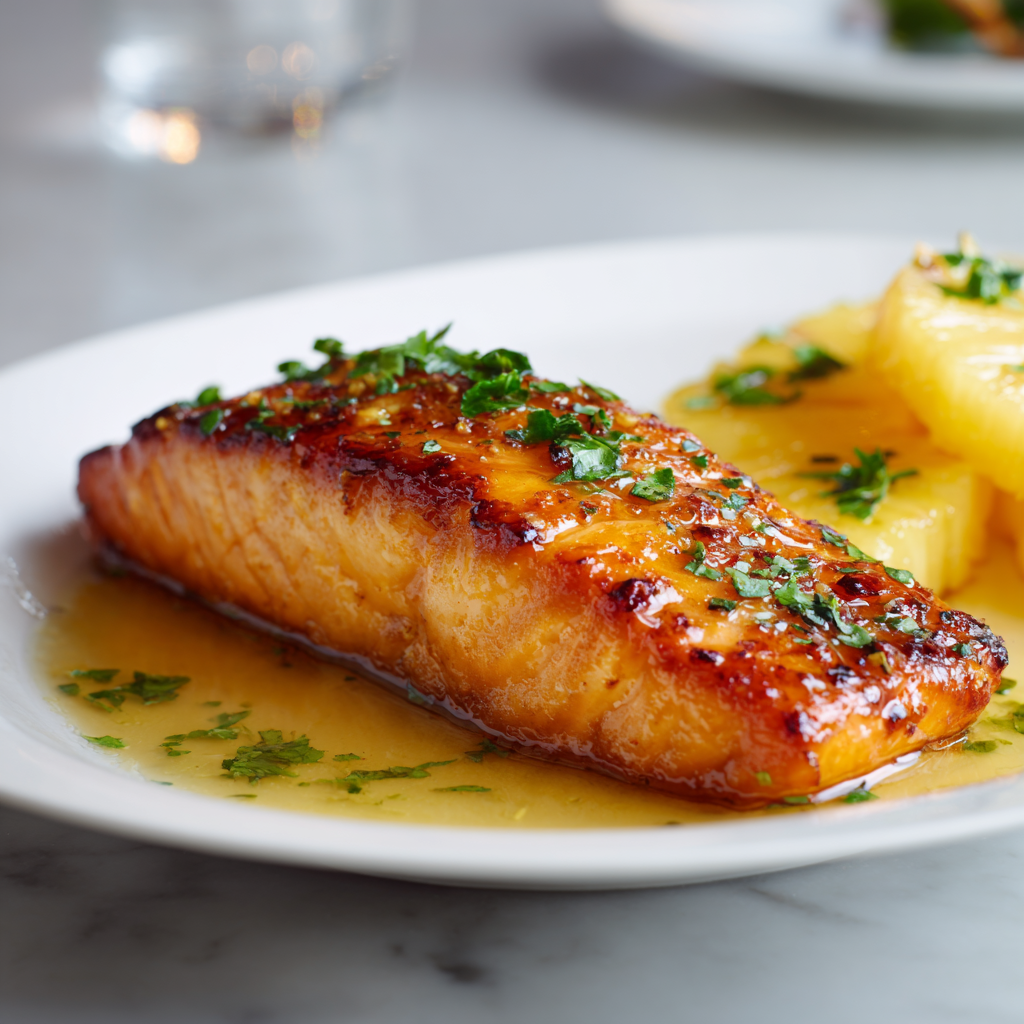
Pineapple Glazed Salmon is a vibrant, nutrient-dense seafood dish featuring tender fillets coated in a caramelized fruit-based reduction. This recipe combines the natural sweetness of crushed pineapple and light brown sugar with the savory depth of soy sauce and fresh ginger. By baking the salmon at a high temperature, we lock in essential omega-3 fatty acids while ensuring a moist, flaky texture that pairs perfectly with the acidity of rice vinegar. You will find that the diced pineapple pieces soften in the oven, creating a built-in salsa that elevates the presentation of any weeknight meal or formal dinner gathering. This preparation method emphasizes lean protein intake without sacrificing the complex flavor profiles typically found in high-end restaurant seafood entrées. The result is a balanced, restaurant-quality meal that takes less than thirty minutes to prepare from start to finish.
Recipe Overview
| Prep Time | Cook Time | Total Time | Servings | Difficulty | Cuisine |
|---|---|---|---|---|---|
| 10 Minutes | 15 Minutes | 25 Minutes | 4 People | Easy | American-Pacific Fusion |
Why This Pineapple Glazed Salmon Recipe Works
I have discovered that the success of this recipe lies in the chemical interaction between the acidity of the pineapple and the protein structure of the salmon fillets. The citric acid found in the fruit acts as a gentle tenderizer, while the sugar components create a beautiful lacquered finish during the roasting process. This balance ensures that the fish remains juicy on the inside while the exterior develops a deep, rich color that is visually appealing and highly flavorful.
Furthermore, because we use high-heat roasting, the kitchen remains free of the heavy smells often associated with stovetop frying. My experience shows that using a single baking dish allows the juices from the pineapple to mingle with the escaping fats from the fish, creating a natural pan sauce that requires no extra thickening agents. This efficiency makes it a go-to choice for busy professionals who refuse to compromise on nutritional quality or gourmet taste during the work week.
Ingredients
| Ingredient | Quantity | Notes and Alternatives |
|---|---|---|
| Salmon Fillets | 4 (6 oz each) | Center-cut preferred; skin-on or skin-off |
| Olive Oil | 1 tablespoon | Extra virgin or avocado oil for high heat |
| Pineapple | 1 cup | Diced fresh or canned (drained thoroughly) |
| Light Brown Sugar | 1/4 cup | Packed; honey or maple syrup as a sub |
| Soy Sauce | 2 tablespoons | Use Tamari for a gluten-free version |
| Rice Vinegar | 1 tablespoon | Provides necessary acidity to cut the sugar |
| Garlic | 1 teaspoon | Freshly minced for the best aroma |
| Fresh Ginger | 1/2 teaspoon | Grated finely; optional but recommended |
| Salt & Pepper | To taste | 1/2 tsp salt, 1/4 tsp black pepper |
Step-by-Step Instructions
Phase 1: Preparation and Sauce Assembly
- Preheat your oven to 400 degrees Fahrenheit (200 degrees Celsius) to ensure a hot cooking environment.
- Grease a large baking dish lightly with oil or non-stick spray to prevent the glaze from sticking.
- Whisk the brown sugar, soy sauce, rice vinegar, minced garlic, and grated ginger in a small bowl until well combined.
Phase 2: Seasoning the Fish
- Pat the salmon fillets thoroughly dry with paper towels to ensure the oil and seasonings adhere properly.
- Rub each fillet evenly with olive oil on all sides to promote even browning.
- Season the fillets generously with salt and black pepper to build the base flavor profile.
- Place the fillets in the prepared dish, keeping the skin-side down if the skin is still attached.
Phase 3: Glazing and Roasting
- Spoon two-thirds of the prepared pineapple mixture over the top of each salmon fillet.
- Scatter the diced pineapple pieces into the open spaces of the baking dish around the fish.
- Bake for 12 to 15 minutes until the fish is opaque and separates easily with a fork.
- Broil for 1 to 2 minutes at the end if you prefer a darker, more caramelized glaze on top.
- Rest the fish for 5 minutes after removing it from the oven to allow juices to redistribute.
Chef Tips for Perfect Results
- Always bring your salmon to room temperature for about 15 minutes before cooking to ensure the center reaches the correct temperature at the same time as the exterior.
- Use an instant-read thermometer to check the internal temperature; 145 degrees Fahrenheit is the FDA standard, but many chefs prefer 130-135 degrees for a more tender texture.
- Drain your canned pineapple aggressively by pressing it into a sieve to prevent excess water from diluting the intensity of your glaze.
- Line your baking dish with parchment paper or aluminum foil for effortless cleanup, as cooked sugar can be difficult to scrub off ceramic or glass.
- Double the glaze recipe if you plan on serving the salmon over a large bed of rice or steamed vegetables.
Common Mistakes to Avoid
Overcooking the salmon is the most frequent error, resulting in a dry, chalky texture and the appearance of white albumin (protein) on the surface. To fix this, start checking the fish at the 10-minute mark and remove it when it still has a slight translucency in the very center. Skipping the drying step with paper towels is another mistake because moisture on the surface of the fish prevents the oil and glaze from sticking. If the fish is wet, the glaze will simply slide off into the bottom of the pan instead of forming a crust. Using cold ginger or garlic from a jar can also result in a muted flavor. For the most punchy, aromatic results, always use fresh aromatics that you grate or mince yourself immediately before whisking the sauce.
Variations and Substitutions
| Ingredient | Substitution | Impact on Flavor |
|---|---|---|
| Light Brown Sugar | Honey | Adds a floral note and a stickier, glossy finish. |
| Rice Vinegar | Lime Juice | Increases the citrus profile and adds a sharp, tropical brightness. |
| Soy Sauce | Tamari | Maintains the savory umami while making the dish 100% gluten-free. |
| Pineapple | Mango | Yields a thicker, creamier sweetness with less acidity. |
Serving Suggestions and Pairings
This Pineapple Glazed Salmon serves as a fantastic centerpiece for a tropical-themed dinner party or a healthy mid-week meal. Serve it over a bed of coconut-infused jasmine rice to soak up the extra glaze and pineapple juices. For a lower-carb option, cauliflower rice seasoned with lime and cilantro provides a fresh contrast to the sweet fish. I highly recommend pairing the dish with charred bok choy or roasted snap peas to add a crunch that offsets the tenderness of the salmon. For a beverage pairing, a chilled sparkling ginger lemonade or a crisp green tea provides a refreshing palate cleanser between bites.
Storage and Reheating
| Method | Duration | Instructions |
|---|---|---|
| Refrigeration | 3 Days | Store in an airtight glass container to maintain moisture. |
| Reheating | 5-8 Minutes | Heat in a 275°F oven covered with foil to prevent drying out. |
Nutritional Information
| Nutrient | Amount per Serving |
|---|---|
| Calories | 420 kcal |
| Protein | 34g |
| Total Fat | 18g |
| Carbohydrates | 28g |
| Sodium | 580mg |
*Approximate values based on standard 6oz fillets.
Conclusion
Achieving a perfect Pineapple Glazed Salmon at home is a simple process that yields impressive, professional results every single time. By following this method of drying the fish, seasoning well, and monitoring the oven time closely, you ensure a meal that is both healthy and incredibly satisfying. The combination of the warm, caramelized fruit and the savory Asian-inspired aromatics creates a profile that appeals to children and adults alike. It is a testament to how few ingredients can transform a basic protein into something spectacular without requiring hours of labor in the kitchen. As you become comfortable with the basic glaze, feel free to experiment with more ginger or perhaps a dash of red pepper flakes for heat. This recipe encourages a healthy lifestyle by making nutritious seafood accessible and delicious for any occasion. Whether you are hosting a summer backyard gathering or simply looking for a way to brighten up a rainy Tuesday, this dish provides the necessary escape. The pan juices alone are worth the effort, offering a concentrated burst of tropical flavor that ties the entire plate together. Enjoy the vibrant colors and the succulent texture of this Pineapple Glazed Salmon.
Frequently Asked Questions
Can I use frozen salmon for this glaze recipe?
Frozen salmon works perfectly well as long as you thaw it completely in the refrigerator before starting the preparation. Ensure you pat the thawed fillets extremely dry with paper towels to prevent excess moisture from ruining the glaze consistency. Thawing fillets in their packaging in a cold water bath is a safe alternative if you are short on time.
How do I know when the glazed salmon is fully cooked?
The salmon is done when the thickest part of the fillet reaches an internal temperature of 145 degrees Fahrenheit and the meat flakes easily. You should notice the color changing from a translucent pink to an opaque coral throughout the entire piece of fish. If the meat resists flaking or looks raw in the center, return it to the oven for two additional minutes.
What can I use instead of light brown sugar?
Honey or real maple syrup serve as excellent natural liquid sweeteners that provide a similar depth of flavor to the glaze. Avoid using granulated white sugar as it lacks the molasses notes that help create the dark, rich color expected in this dish. If you choose honey, you might need to reduce the oven time slightly as honey burns faster than brown sugar.
Can I make the pineapple glaze in advance?
The pineapple glaze can be whisked together up to three days in advance and stored in a sealed jar in the refrigerator. Storing the sauce allows the garlic and ginger flavors to meld and intensify which often results in a better-tasting final product. Simply give the mixture a vigorous shake or whisk before applying it to the salmon fillets.
What sides go best with pineapple-flavored seafood?
Starchy sides like jasmine rice, quinoa, or roasted sweet potatoes provide a neutral base that complements the sweetness of the pineapple. Green vegetables such as asparagus, broccoli, or snap peas add necessary bitterness and crunch to balance the soft texture of the fish. A simple cucumber salad with a light vinegar dressing also works well to cut through the richness of the salmon fats.
Print
Pineapple Glazed Salmon
- Total Time: 30
- Yield: 4 servings
- Diet: Halal
Description
A tropical fusion of sweet pineapple glaze and savory soy sauce meets flaky salmon in this 20-minute healthy dinner. Glisten with caramelized fruit and tangy rice vinegar.
Ingredients
4 (6 oz) salmon fillets
1 cup crushed pineapple, undrained
1/3 cup brown sugar
3 tbsp soy sauce (tamari for gluten-free)
2 tbsp rice vinegar
1 tbsp grated ginger
2 cloves garlic, minced
1 tsp sesame oil (optional)
1/2 tsp salt
1/4 tsp black pepper
Instructions
Preheat oven to 400°F (200°C)
Whisk sugar, soy sauce, vinegar, ginger, garlic, and sesame oil in a bowl
Place salmon in baking dish, season with salt and pepper
Pour glaze over fillets
Bake 15 minutes
Drizzle with additional glaze, return to oven 5 minutes
Broil 2-3 minutes for caramelized finish
Notes
Substitute coconut aminos for alcohol-free soy sauce alternative
Use fresh pineapple for most vibrant flavor
Add green onions or sesame seeds as garnish
Recipe naturally halal and alcohol-free
- Prep Time: 10
- Cook Time: 20
- Category: Healthy Quick Meals | Easy Clean Eating Recipes
- Method: Baking
- Cuisine: American-Pacific Fusion