
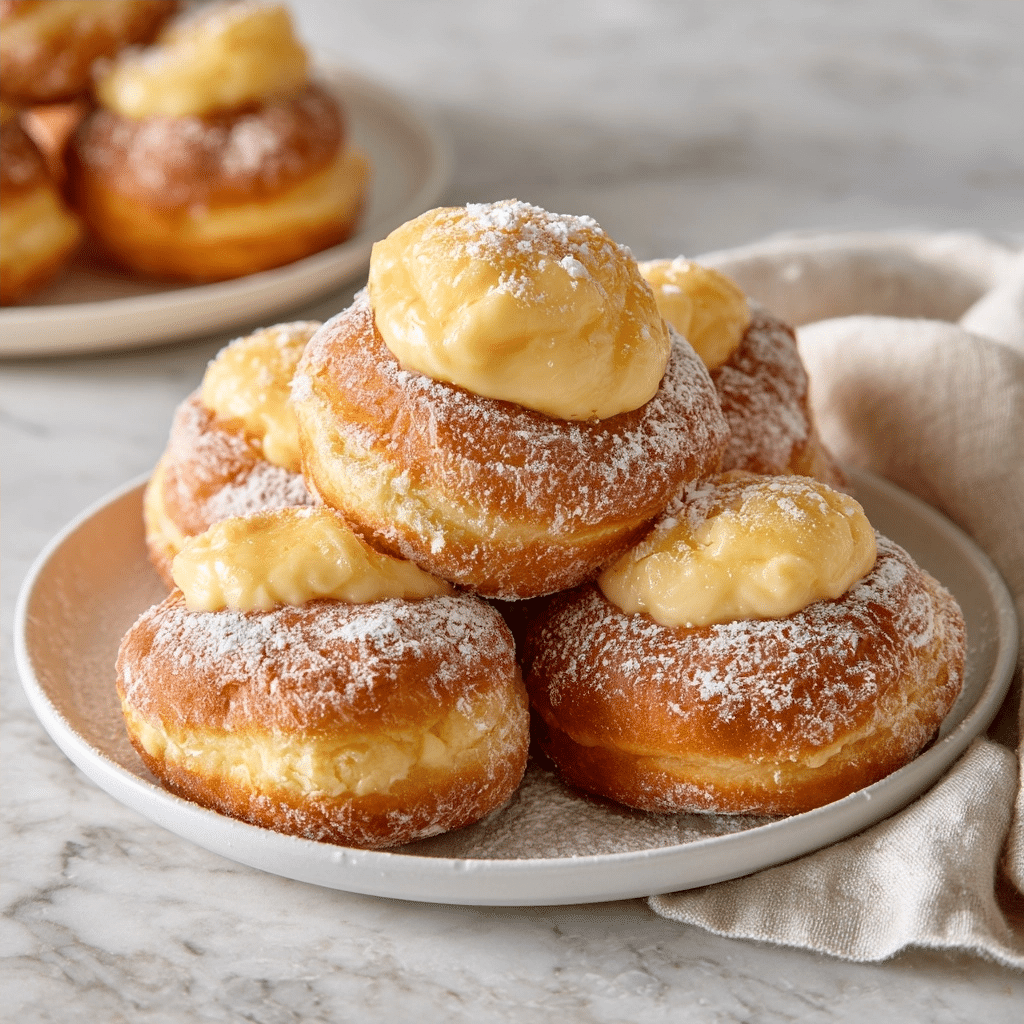
Perfect Bavarian Cream Donuts: A Homemade Bakery Classic
Bavarian cream donuts represent the gold standard of pastry indulgence, featuring a light, airy yeast-risen dough enveloped in granulated sugar and stuffed with a rich, silky vanilla custard. This classic treat provides a comforting balance of textures, combining the slight crispness of a fried exterior with a smooth, velvety center that melts in your mouth. Whether you are hosting a festive brunch or simply seeking a weekend project, these donuts deliver a professional bakery experience directly from your kitchen. Master the art of the perfect proof and golden-brown fry to impress your family and friends with this timeless dessert.
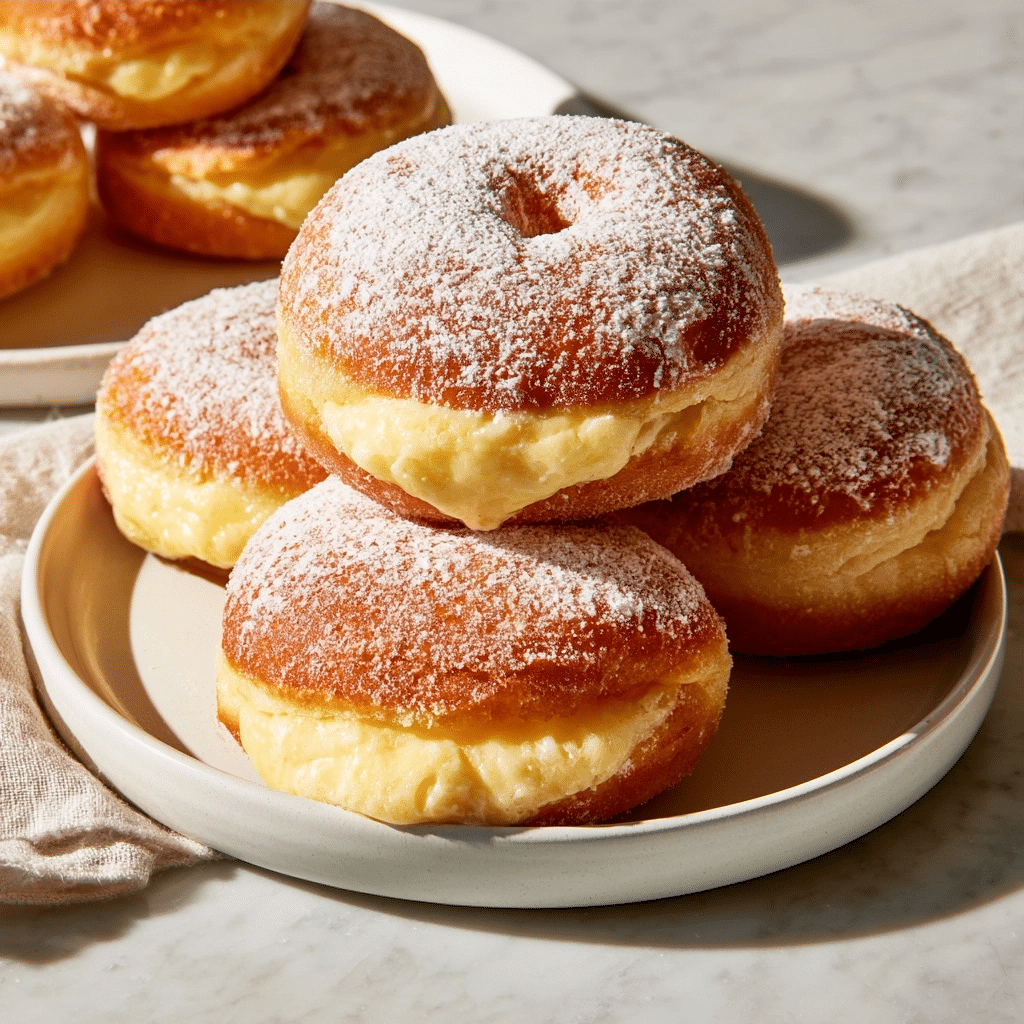
What Is A Bavarian Cream Donut?
A Bavarian cream donut is a yeast-leavened pastry that is deep-fried until golden and filled with a thick, egg-yolk-based custard. Unlike standard jelly-filled donuts, the Bavarian cream filling uses a combination of pastry cream and whipped cream, resulting in a lighter, more luxurious texture that stays stable within the donut. Historically, this dessert draws inspiration from European pastry traditions, where rich custards were paired with fried dough to create indulgent confections. Today, it stands as a staple in bakeries worldwide, known for its distinct contrast between the warm, sugary dough and the cool, creamy interior.
| Prep Time | 45 minutes |
|---|---|
| Cook Time | 30 minutes |
| Total Time | 2 hours (includes rising) |
| Servings | 12-14 donuts |
| Difficulty Level | Intermediate |
| Cuisine | European/American |
| Calories per Serving | 420 kcal |
Why You’ll Love This Recipe
Foolproof Technique: The step-by-step guidance on dough proofing ensures consistent results every time.
Effortless Filling: Mixing pastry cream with whipped cream creates a stable, airy texture that is easy to pipe.
Crowd-Pleasing Flavors: The combination of vanilla-infused custard and warm, sugared dough is universally adored.
Cost-Effective: Homemade donuts require basic pantry staples, making them a budget-friendly way to enjoy high-end pastries.
Versatile Occasions: These donuts are ideal for holiday brunches, potlucks, or an impressive weekend morning surprise.
The primary appeal of this recipe lies in its accessibility for home bakers who want to elevate their baking skills. By focusing on fundamental techniques like creating a controlled proofing environment, you achieve professional-grade results without needing commercial equipment. These donuts are both time-saving for those who plan ahead and perfect for learning the science of yeast doughs.
Why This Recipe Works
My passion for this recipe stems from years of experimentation with fried dough textures. The magic happens through the specific balance of protein in the bread flour and the fat content in the shortening, which keeps the crumb tender even after frying. The use of both an egg and an extra egg yolk provides the richness required to support the structural integrity of the dough while it rises and fries.
The secret to the perfect structure lies in the double-rise method and the gentle handling of the dough. By using a “proofing box” created with steam in your oven, you provide the yeast with the exact humidity it needs to double in volume without drying out. This technique prevents the dough from developing a tough crust before it reaches the hot oil. When the donut hits the 350-degree oil, the rapid expansion of air pockets creates the signature light, airy interior that is essential for a high-quality Bavarian cream donut.
Sensory satisfaction arrives the moment you bite into the finished product. The exterior yields slightly with a satisfying crackle from the sugar coating, followed by the contrast of the cool, silky vanilla pastry cream filling. The flavor profile is perfectly balanced, with the salt in the dough cutting through the sweetness of the custard. This layering of temperature and texture turns a simple donut into an unforgettable culinary experience.
Pro Tips Before You Start
Room Temperature Ingredients: Ensure your eggs are at room temperature to allow for better emulsification into the dough. Precision Temperature: Use an instant-read thermometer for both the milk and the frying oil to avoid killing the yeast or burning the dough. Mise en Place: Measure all ingredients before starting to ensure a seamless flow during the kneading and frying process. Gentle Handling: Always treat the risen dough with care, as deflating it will result in dense, heavy donuts.
Ingredients
Here’s everything you’ll need to make perfect Bavarian Cream Donuts:
| Ingredient | Quantity | Notes/Alternatives |
|---|---|---|
| Whole Milk | 1 cup (240ml) | Must be 105-110F |
| Active Dry Yeast | 3 tablespoons | Do not use rapid-rise |
| Granulated Sugar | 1/2 cup + 1 tbsp | Divide as directed |
| Shortening | 1/4 cup | Butter can be substituted |
| Large Egg | 1 | Room temperature |
| Large Egg Yolk | 1 | Room temperature |
| Vanilla Extract | 1.5 teaspoons | Use pure extract |
| Bread Flour | 3.25 – 3.5 cups | Adjust for humidity |
| Kosher Salt | 2.5 teaspoons | Table salt reduces to 2 tsp |
| Baking Powder | 0.5 teaspoon | Check expiration date |
| Baking Soda | 0.5 teaspoon | Adds leavening boost |
| Canola Oil | 12 cups | Or high-heat peanut oil |
| Heavy Cream | 0.75 cup | Cold for whipping |
| Powdered Sugar | 2 tablespoons | For stabilization |
| Pastry Cream | 1 batch | Make 2 hours ahead |
Step-by-Step Instructions
Phase 1: Dough Preparation
Warm 1 cup whole milk in the microwave until it reaches 105-110F (40-43C) for optimal yeast activity.
Combine the warm milk, 3 tablespoons yeast, and 1 tablespoon sugar in a glass measuring cup to activate.
Whisk 1/2 cup sugar, 1/4 cup shortening, 1 egg, 1 egg yolk, and 1.5 teaspoons vanilla in a large mixer bowl.
Add 3.25 cups bread flour, 2.5 teaspoons salt, 0.5 teaspoon baking powder, and 0.5 teaspoon baking soda to the bowl.
Knead the mixture for 5 full minutes until the dough is stretchy and pulls away from the sides.
Phase 2: Rising and Shaping
Grease a large bowl and place the dough inside, covering it with sprayed plastic wrap.
Create a proofing box by boiling water, placing it on the oven floor, and keeping the oven off.
Proof the dough for 1 hour until doubled in size in the warm, humid environment.
Roll the dough to 0.5-inch thickness and cut into 2.5-inch rounds using a biscuit cutter.
Place each donut on a parchment square and proof for a second time, about 30-45 minutes.
Phase 3: Frying and Filling
Heat 2 inches of oil in a skillet to exactly 350F (175C) using a candy thermometer.
Lower each donut into the oil by holding one side of the parchment paper until it releases.
Fry for 30-60 seconds per side until golden brown, then drain on a wire cooling rack.
Roll the warm donuts in granulated sugar to coat them thoroughly.
Whip the heavy cream with powdered sugar, fold in the chilled pastry cream, and fill each cooled donut.
Chef Tips for Perfect Results
Maintain Oil Temperature: Check the temperature between every batch to ensure it stays near 350F, preventing greasy donuts.
Avoid Twisting: Press your biscuit cutter straight down without twisting to ensure the donuts rise evenly.
Don’t Over-Rise: Monitor the second proofing closely; if they rise too long, they will deflate during frying.
Cool Completely: Never fill a warm donut, or the pastry cream will melt and turn into liquid.
Parchment Method: Always use parchment squares for the second rise to move delicate donuts into the oil without touching them.

Storage and Reheating
| Method | Duration | Instructions |
|---|---|---|
| Refrigerator | 1 day | Store in airtight container; best eaten fresh. |
| Pastry Cream | 3 days | Store in fridge with plastic wrap touching surface. |
| Unfilled Donuts | 2 days | Keep in a paper bag to maintain crust texture. |
Perfect Bavarian Cream Donuts
- Total Time: 120
- Yield: 12-14 donuts
- Diet: Vegetarian
Description
Experience bakery-quality indulgence with these classic Bavarian cream donuts. Featuring a light, fluffy yeast-risen dough fried to a perfect golden crisp and rolled in sweet granulated sugar, each donut is generously filled with a velvety, vanilla-infused custard. The filling combines rich egg-yolk pastry cream with whipped cream for a stable, airy texture that melts in your mouth. Perfect for festive brunches or a decadent weekend treat, this recipe brings European pastry tradition straight to your home kitchen with foolproof techniques.
Ingredients
3 1/2 cups all-purpose flour
1/4 cup granulated sugar
1 packet instant dry yeast
1 tsp salt
1 cup warm whole milk
1/4 cup unsalted butter, softened
2 large eggs
1 tsp vanilla extract
Oil for frying
1/2 cup sugar for coating
1 cup pastry cream
1/2 cup heavy whipping cream
Instructions
Combine flour, sugar, yeast, and salt in a large mixing bowl.
Add warm milk, softened butter, eggs, and vanilla extract; mix until a soft dough forms.
Knead the dough on a floured surface for 8-10 minutes until smooth and elastic.
Place dough in a greased bowl, cover, and let rise in a warm spot for 1 hour or until doubled in size.
Roll dough out to 1/2 inch thickness and cut into 3-inch circles using a donut cutter.
Cover and let the cut donuts rise for an additional 30 minutes.
Heat oil to 350°F and fry donuts for 2-3 minutes per side until golden brown.
Drain on paper towels and toss immediately in granulated sugar while warm.
Fold whipped cream into the pastry cream until smooth and light.
Use a piping bag to inject the cooled donuts with the Bavarian cream mixture.
Notes
Ensure your milk is warm but not hot (between 105°F-115°F) to avoid killing the yeast. Keep the oil temperature consistent with a thermometer for the best texture. Store unfilled donuts at room temperature, but keep filled donuts refrigerated.
- Prep Time: 45
- Cook Time: 30
- Category: Desserts
- Method: Deep Frying
- Cuisine: European