
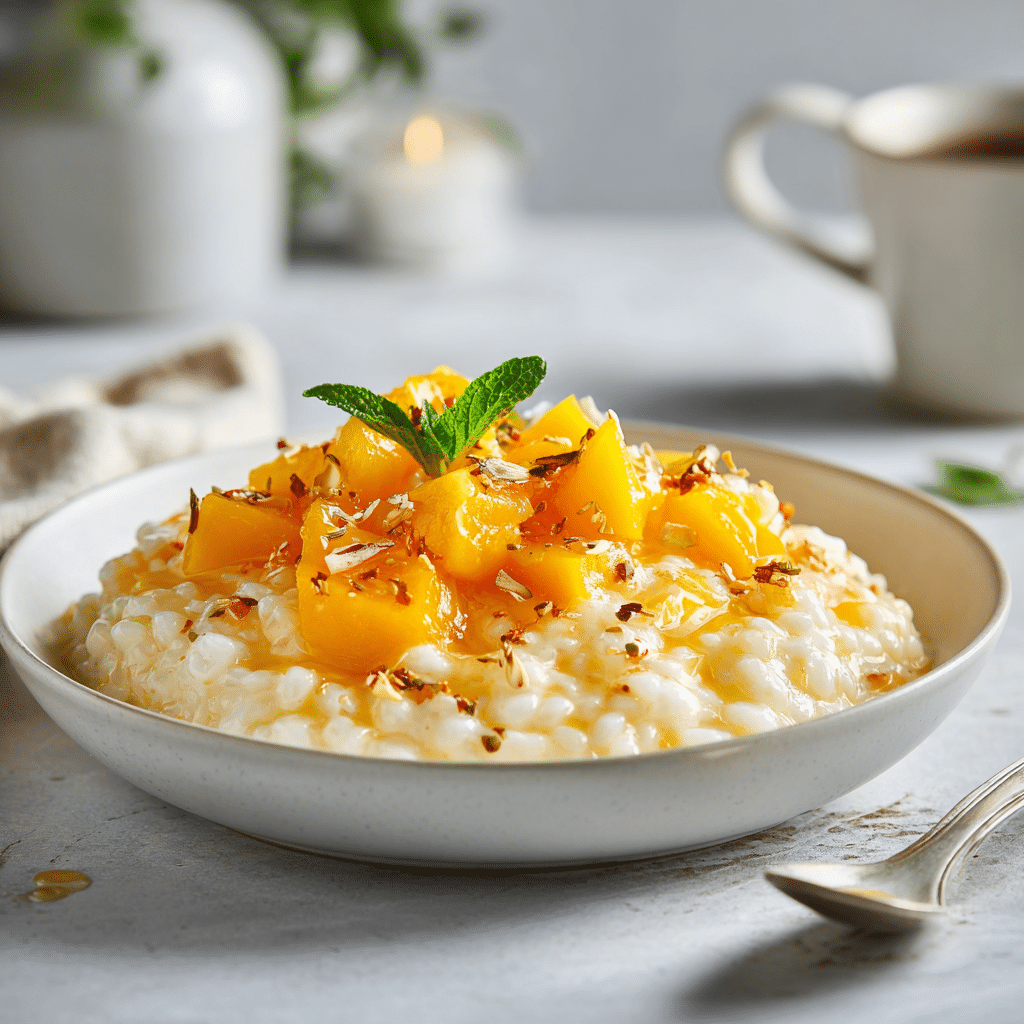
Mango Tapioca Pudding is a refreshing, chilled dessert consisting of translucent tapioca pearls suspended in a creamy base of fresh mango puree and coconut milk. This Mango Tapioca Pudding recipe relies on the natural sweetness of ripe seasonal mangoes balanced by honey to create a luscious texture that is both light and satisfying. By combining the chewy consistency of sago pearls with the silkiness of whole milk and full-fat coconut milk, this dish serves as a staple in Asian-inspired dessert menus. The addition of sliced strawberries provides a tart contrast to the rich tropical flavors of the mango base. You can prepare this versatile dessert in under an hour, making it an ideal choice for summer gatherings or elegant dinner parties.
Recipe Overview
| Prep Time | 15 Minutes |
| Cook Time | 30 Minutes |
| Total Time | 45 Minutes |
| Servings | 6 People |
| Difficulty | Intermediate |
| Cuisine | Asian Fusion |
Why This Recipe Works
I have spent years perfecting the ratio of starch to liquid to ensure that every spoonful of this pudding is balanced. This specific method works because it utilizes a two-step cooking process for the tapioca pearls, ensuring they are cooked through without becoming a gummy mass. The infusion of warm honey into the cooked pearls prevents them from sticking together while simultaneously sweetening them from the inside out.
Using a blender to combine the mango flesh with warm milk creates a professional-grade emulsion that won’t separate in the refrigerator. The warmth of the milk helps the honey dissolve completely and helps the mango fibers break down more efficiently than cold liquids would. This results in a velvety smooth texture that mimics high-end restaurant desserts while remaining accessible for home cooks.
Ingredients
| Ingredient | Quantity | Notes with Alternatives |
|---|---|---|
| Water | 8 cups (1.9L) | Used for boiling pearls; do not reuse for pudding base. |
| Small Tapioca Pearls | 3/4 cup (155g) | Must be small white pearls; do not use large boba pearls. |
| Whole or 2% Milk | 1 cup (235ml) | Oat milk can be used for a dairy-free variation. |
| Full-fat Coconut Milk | 3/4 cup (175ml) | Canned coconut milk is required for the necessary fat content. |
| Honey | 3 1/2 tablespoons | Sub with maple syrup or granulated sugar if preferred. |
| Ripe Mangoes | 3 medium (800g) | Use Philippine or Ataulfo mangoes for the best sweetness. |
| Sliced Strawberries | 1 cup | Provides color and acid; can substitute with pomelo. |
Step-by-Step Instructions
Phase 1: Preparing the Tapioca Pearls
- Boil the water in a large saucepan over high heat before adding any pearls.
- Add the small tapioca pearls to the boiling water and stir immediately to prevent clumping.
- Reduce the heat to medium-high and simmer the pearls for exactly 15 minutes.
- Remove the pot from the heat and cover it with a tight-fitting lid.
- Steam the pearls for 15 minutes until they become fully translucent and clear.
- Drain the cooked pearls through a fine-mesh sieve and rinse thoroughly with cold water.
- Submerge the pearls in a bowl of cold tap water to stop the cooking process.
Phase 2: Creating the Mango Base
- Combine the whole milk and coconut milk in a clean saucepan over medium heat.
- Bring the milk mixture to a boil while watching closely to prevent the liquid from bubbling over.
- Remove from heat immediately and stir in 2 tablespoons of honey until fully dissolved.
- Allow the milk mixture to cool at room temperature for approximately 10 minutes.
- Slice the mangoes to separate the flesh from the central oblong pits.
- Cube two-thirds of the mango flesh for texture and reserve the remaining flesh for the puree.
- Place 1 1/4 cups of mango flesh into a high-speed blender with the warm milk mixture.
- Blend on high until the mixture is perfectly smooth and free of mango fibers.
Phase 3: Final Assembly
- Drain the cooled tapioca pearls from their water bath and place them in a large mixing bowl.
- Drizzle the remaining 1 1/2 tablespoons of honey over the pearls and toss to coat.
- Pour the blended mango puree over the honeyed pearls and stir gently.
- Fold in the reserved mango cubes and sliced strawberries until evenly distributed.
- Cover the bowl and refrigerate the pudding for a minimum of 2 hours before serving.
Chef Tips for Perfect Results
- Always wait for a rolling boil before adding pearls because cold water causes them to dissolve into a starchy paste.
- Choose mangoes that are slightly soft to the touch and smell fragrant at the stem to ensure maximum sweetness.
- Keep the pearls submerged in cold water until the very moment you are ready to assemble the pudding.
- Use a high-speed blender to ensure the mango puree is completely silky without any stringy textures from the fruit.
- Adjust the honey levels after the pudding has chilled because cold temperatures can mute the perception of sweetness.
- Select canned coconut milk rather than the carton version used for beverages to achieve a rich mouthfeel.
Common Mistakes to Avoid
Adding pearls to cold water will cause them to lose their shape and turn into a thick liquid. Always ensure the water is at a full boil before the pearls touch the pot to maintain the integrity of each sphere. This mistake is the most common reason for failed tapioca desserts in home kitchens.
Covering the milk while it boils often leads to a messy stove overflow within seconds. Milk foams rapidly when heated, so you must keep the lid off and stay near the stove to manage the temperature. If the milk starts to rise, lifting the pan off the heat is the fastest way to control it.
Skipping the rinsing step results in a pudding that is too thick and glue-y. Rinsing removes the excess surface starch that leaches out during the boiling process, which keeps the individual pearls distinct. If you omit the rinse, the pudding will set into a solid block rather than a pourable cream.
Using underripe mangoes will result in a sour pudding with a pale color. Ripe mangoes provide the vibrant orange hue and the deep floral taste that defines this dish. If your mangoes are firm, place them in a paper bag for two days before attempting this recipe.
Variations and Substitutions
| Ingredient | Substitution | Impact on Flavor |
|---|---|---|
| Honey | Maple Syrup | Adds a deeper, woody sweetness to the tropical base. |
| Whole Milk | Unsweetened Almond Milk | Results in a thinner consistency and lighter nuttier profile. |
| Strawberries | Diced Kiwi | Provides a sharper tartness and a bright green visual contrast. |
| Mango | Pureed Peaches | Changes the flavor profile entirely to a stone-fruit dessert. |
Serving Suggestions and Pairings
Serve Mango Tapioca Pudding in chilled glass bowls to showcase the vibrant layers of fruit and translucent pearls. This dessert is a traditional favorite for Chinese New Year celebrations or as a cooling palate cleanser after a spicy Thai curry. For an upscale presentation, top each serving with a sprig of fresh mint or a sprinkle of toasted coconut flakes just before serving.
This dish pairs exceptionally well with light snacks like almond cookies or sesame balls. Because the pudding is quite rich, it is best served in smaller portions, roughly 1/2 to 3/4 cup per person. If you are hosting a summer barbecue, serve this pudding alongside fresh fruit skewers to maintain a theme of seasonal freshness.
Storage and Reheating
| Method | Duration | Instructions |
|---|---|---|
| Refrigeration | 3 Days | Store in an airtight container; stir well before serving. |
| Freezing | Not Recommended | Freezing destroys the texture of both mango and tapioca. |
| Reheating | Not Applicable | This dessert must be served cold; do not apply heat. |
Nutritional Information
| Nutrient | Amount per Serving |
|---|---|
| Calories | 245 kcal |
| Total Fat | 9g |
| Saturated Fat | 7g |
| Cholesterol | 5mg |
| Sodium | 25mg |
| Carbohydrates | 42g |
| Fiber | 3g |
| Sugars | 28g |
| Protein | 3g |
Approximate values based on standard ingredients.
Conclusion
Mastering this Mango Tapioca Pudding recipe allows you to bring a refreshing taste of the tropics into your own home. By carefully following the boiling and steaming method for the pearls, you ensure a texture that is light and chewy rather than sticky. The combination of creamy coconut milk and the natural acidity of fresh mangoes creates a profile that appeals to both children and adults. This pudding is an excellent make-ahead option for busy hosts, as the flavors develop and deepen during the required two-hour chilling period. Whether you are using honey, sugar, or maple syrup, the key remains the quality of your fruit selection. As the strawberries add a pop of color and the mango puree provides a silky base, every bite offers a complex range of textures. This dessert represents the best of fruit-forward sweets, focusing on simple ingredients handled with precision. Prepare this for your next gathering to impress guests with a professional-quality treat. The chilled, creamy, and distinctively fruity Mango Tapioca Pudding is sure to become a requested favorite in your dessert rotation.
FAQ
Can I use large boba pearls for this recipe?
You must use small tapioca pearls because large boba pearls have a different starch composition and take much longer to cook. Large pearls will likely stay hard in the center or become too tough when chilled in the mango puree. Small pearls provide the delicate, uniform texture required for this specific pudding style.
How do I know when the tapioca pearls are done?
The pearls are done when they appear completely translucent after the steaming period in the pot. If you see tiny white specks in a few pearls, it is acceptable, as they will continue to soften in the liquid base. If most pearls have large white centers, you must continue the steaming process for an additional five minutes.
Why did my mango pudding turn out too thick?
Your pudding likely became too thick because the tapioca pearls were not rinsed thoroughly or you used too much starch for the amount of liquid. You can easily fix this by stirring in a few tablespoons of extra milk or coconut milk before serving. Always measure your pearls by weight if possible to ensure the most accurate ratio.
Can I make mango tapioca pudding a day in advance?
You can prepare this pudding up to 24 hours in advance for the best texture and flavor profile. Storing it longer than 48 hours may cause the tapioca pearls to absorb too much moisture and lose their chewiness. Always give the mixture a vigorous stir before serving to redistribute any settled fruit or pearls.
What is the best way to slice mangoes for pudding?
The best way to slice mangoes is to cut the two fleshy cheeks away from the central flat pit. Score the flesh in a grid pattern without cutting through the skin, then invert the skin to pop the cubes out. This method provides clean, uniform cubes that look professional and stir easily into the Mango Tapioca Pudding.
Print
Mango Tapioca Pudding Recipe: Creamy Tropical Dessert Guide
- Total Time: 45
- Yield: 6 servings
- Diet: Vegetarian
Description
A chilled Asian-inspired dessert combining chewy tapioca pearls with a silky mango-coconut base. Naturally sweetened with ripe mangoes and honey, this tropical treat balances sweetness and tartness with fresh strawberries for a vibrant finish.
Ingredients
Water
8 cups (1.9L)
Small Tapioca Pearls
3/4 cup (155g)
Whole or 2% Milk
1 cup (235ml)
Full-fat Coconut Milk
3/4 cup (175ml)
Honey
3 1/2 tablespoons
Ripe Mangoes
3 medium (800g)
Sliced Strawberries
1 cup
Instructions
Bring 6 cups of water to a boil in a pot; add tapioca pearls and cook for 15 minutes until translucent. Drain and rinse with cold water.
In a separate pot, combine milk, coconut milk, and honey. Simmer gently for 5 minutes.
Peel mangoes and blend flesh with warm milk mixture until smooth. Strain through a fine mesh sieve.
Combine cooked tapioca pearls with mango-coconut base. Chill for 1 hour.
Top each serving with fresh strawberries before serving chilled.
Notes
Use canned coconut milk for optimal creaminess
Oat milk or almond milk substitute for dairy-free vegan version
Maple syrup may replace honey for alternate sweetness
Strain twice for ultra-smooth texture
Storage: Keep refrigerated for up to 24 hours
- Prep Time: 15
- Cook Time: 30
- Category: Healthy Smoothie Drink Recipes Ideas
- Method: Stovetop Cooking
- Cuisine: Asian Fusion