
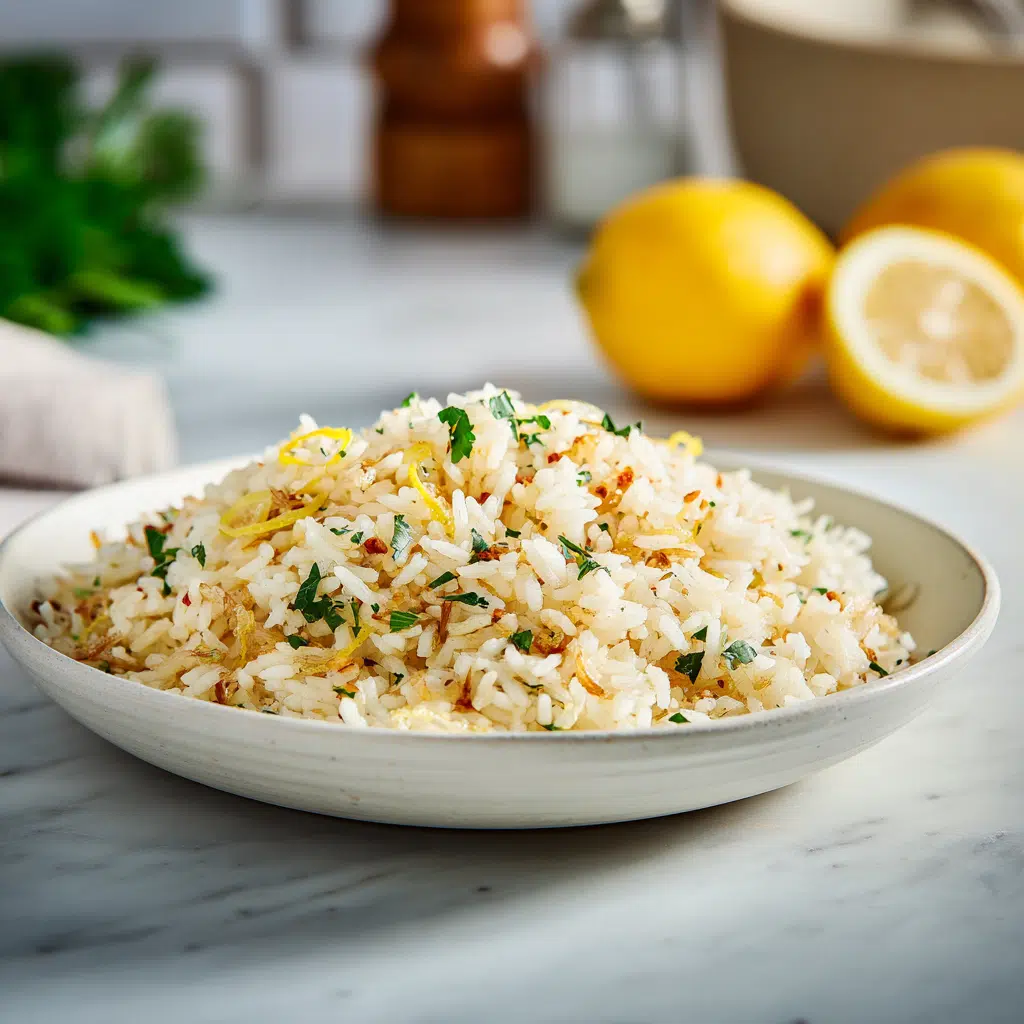
Greek Lemon Rice is a fluffy, citrus-infused Mediterranean side dish that balances the earthy tones of dried oregano with the bright acidity of fresh lemons. This staple dish uses long-grain white rice cooked in savory chicken broth to create a light texture that avoids the starchiness of traditional pilaf. By sautéing aromatics like onion and garlic in olive oil before simmering, you build layers of flavor that permeate every grain. This recipe serves as an essential companion to roasted vegetables, grilled proteins, or classic Greek staples like souvlaki. You will find that the addition of lemon zest provides a concentrated floral aroma that juice alone cannot achieve, making it a favorite for those seeking a vibrant alternative to plain steamed rice.
Greek Lemon Rice Overview
| Prep Time | Cook Time | Total Time | Servings | Difficulty | Cuisine |
|---|---|---|---|---|---|
| 10 Minutes | 20 Minutes | 35 Minutes | 4 Servings | Easy | Greek/Mediterranean |
Why This Recipe Works
I have spent years perfecting side dishes that don’t fade into the background, and this rice recipe consistently steals the show at my dinner table. The primary reason this dish succeeds is the technique of toasting the rice in olive oil and aromatics before adding liquid, which seals the surface of the grains. This process prevents the rice from turning mushy and ensures that each grain remains distinct and fluffy after the steam settles. It offers a sophisticated flavor profile that remains accessible enough for picky eaters while impressing guests with its restaurant-quality aromatic depth.
Another factor that makes this Greek Lemon Rice superior to others is the careful ratio of broth to lemon juice. Many recipes rely too heavily on juice, which can make the rice overly acidic or wet; however, my method uses lemon zest for punch and a measured amount of juice for brightness. The low-sodium broth provides a savory backbone that grounds the citrus, creating a balanced palate. This combination transforms a simple pantry staple into a versatile accompaniment that elevates anything served alongside it, from roasted chicken to grilled halloumi.
Greek Lemon Rice Ingredients
| Ingredient | Quantity | Notes and Alternatives |
|---|---|---|
| Long grain white rice | 1 cup | Basmati or Jasmine work best; avoid short grain. |
| Olive oil | 2 tablespoons | Extra virgin for best flavor. |
| Yellow onion | 1 small | Finely diced; can substitute with shallots. |
| Garlic cloves | 3 cloves | Freshly minced; do not use jarred garlic. |
| Chicken broth | 2 ½ cups | Low-sodium; use vegetable broth for vegan version. |
| Lemon zest | 1 lemon | Zest before juicing for easier handling. |
| Lemon juice | 2–3 tablespoons | Freshly squeezed is mandatory for flavor. |
| Dried oregano | 1 teaspoon | Greek oregano is preferred for authenticity. |
| Salt and pepper | To taste | Adjust based on broth saltiness. |
| Fresh parsley | 2 tablespoons | Optional garnish; finely chopped. |
Step-by-Step Instructions
Creating the perfect Greek Lemon Rice requires focus on heat management and steam retention to achieve the desired fluffy texture.
Phase 1: Sautéing Aromatics
- Heat the olive oil in a medium saucepan over medium heat to ensure a consistent temperature.
- Add the finely diced onion to the pot and sauté for 2 to 3 minutes until translucent.
- Stir in the minced garlic and cook for 30 seconds until the aroma is released.
- Monitor the heat to prevent the garlic from browning and turning bitter.
Phase 2: Toasting and Simmering
- Add the dry rice to the saucepan and stir to coat every grain in oil.
- Toast the rice for 1 minute to develop a subtle nutty undertone.
- Pour in the chicken broth, lemon juice, lemon zest, oregano, salt, and pepper.
- Bring the mixture to a gentle boil, then lower the heat immediately.
- Cover the pot with a tight-fitting lid and simmer for 18 to 20 minutes.
Phase 3: Fluffing and Serving
- Remove the pot from the heat once the liquid is completely absorbed.
- Let the rice sit covered for 5 minutes to finish steaming away from the burner.
- Remove the lid and fluff the grains gently using a fork.
- Taste the rice and adjust the seasoning or lemon juice according to preference.
- Garnish with fresh parsley before transferring to a serving bowl.
Chef Tips for Perfect Results
- Rinse your rice under cold water until the water runs clear to remove excess surface starch that causes clumping.
- Use a heavy-bottomed saucepan to distribute heat evenly and prevent the bottom layer of rice from scorching during the simmer.
- Avoid lifting the lid at all costs during the 18-minute simmer, as the escaping steam will result in undercooked grains.
- Opt for fresh lemons rather than bottled juice, as the zest contains essential oils that provide the primary fragrance.
- If you find the rice is still too firm after 20 minutes, add two tablespoons of water and cover for an extra three minutes.
Common Mistakes to Avoid
Many home cooks struggle with soggy rice, which usually occurs when too much liquid is added or the rice is not toasted first. Toasting the rice creates a physical barrier that prevents excessive water absorption, so skipping this step often leads to a porridge-like consistency. To fix this, always measure your broth precisely and ensure the rice is fully coated in oil during the sauté phase.
Another common error is overcooking the garlic, which introduces a harsh, burnt flavor that ruins the delicate lemon notes. Garlic burns within seconds when heat is too high, so always add it last after the onions have softened and cooled the pan slightly. If you burn the garlic, it is best to start over, as the bitterness cannot be masked by the citrus or salt. Finally, using old dried oregano can result in a dusty taste; ensure your herbs are fresh and aromatic before adding them to the pot.
Variations and Substitutions
| Ingredient | Substitution | Impact on Flavor |
|---|---|---|
| Chicken Broth | Vegetable Broth | Creates a vegan dish with a lighter, earthier taste. |
| Dried Oregano | Fresh Dill | Provides a more anise-like, grassy freshness common in northern Greece. |
| Yellow Onion | Leeks | Adds a subtle sweetness and creamier texture to the base. |
| White Rice | Brown Rice | Significant increase in nuttiness; requires more liquid and longer cook time. |
Serving Suggestions and Pairings
Greek Lemon Rice acts as a vibrant foundation for many Mediterranean meals and is particularly well-suited for family gatherings or Sunday roasts. Serve it alongside Chicken Souvlaki or Grilled Lamb Chops, where the acidity of the rice cuts through the richness of the meat. It also pairs excellently with roasted Mediterranean vegetables like zucchini, bell peppers, and eggplant drizzled with tahini sauce. For a lighter meal, use this rice as a base for a “Greek Bowl” topped with chickpeas, kalamata olives, feta cheese, and cucumber salad. This dish is traditional for Easter celebrations and summer barbecues where outdoor dining calls for refreshing, zesty flavors.
Storage and Reheating
| Method | Duration | Instructions |
|---|---|---|
| Refrigeration | 3–4 Days | Store in an airtight container once completely cooled. |
| Freezing | 2 Months | Freeze in freezer-safe bags; flatten for easy storage. |
| Reheating | 2–3 Minutes | Microwave with a splash of water and cover to restore moisture. |
Nutritional Information
| Nutrient | Amount per Serving |
|---|---|
| Calories | 215 kcal |
| Protein | 4g |
| Fat | 7g |
| Carbohydrates | 34g |
| Fiber | 1g |
| Sugar | 1g |
| Sodium | 320mg |
Approximate values.
Conclusion
Mastering the art of Greek Lemon Rice allows you to bring an authentic taste of the Mediterranean into your kitchen with minimal effort. This dish is more than just a simple side; it is a carefully balanced preparation that showcases how humble ingredients like rice and lemon can be transformed through classic technique. By following the sautéing and toasting steps, you ensure a texture that is light and fluffy, while the aromatics provide a depth of flavor that complements almost any main course. Whether you are prepping a weekday dinner or hosting a festive Greek feast, this recipe provides a reliable and delicious result every time. The combination of savory broth and bright citrus creates a profile that is both comforting and refreshing. I encourage you to experiment with different garnishes like fresh dill or even a sprinkle of feta cheese to make the dish your own. As you fluff the rice and the aroma of lemon and oregano fills your home, you will understand why this recipe remains a favorite among home cooks and professional chefs alike. The simplicity of the process belies the complexity of the taste, proving that quality ingredients handled with care make the best meals. Enjoy the vibrant zest and savory goodness that only a well-made Greek Lemon Rice can provide.
FAQ
Can I substitute brown rice for white rice in this recipe?
You can substitute brown rice for white rice by increasing the liquid and cooking time significantly. Use 3 cups of broth per cup of rice and simmer for approximately 45 to 50 minutes until tender. The final texture will be chewier and nuttier than the original version.
Why is my Greek rice sticky instead of fluffy?
Sticky rice is usually the result of excess surface starch or over-stirring during the simmering process. Ensure you rinse the rice thoroughly before cooking and avoid stirring it once you have covered the pot. The steam must remain undisturbed to keep the grains separate and light.
What should I do if the rice is still hard after the timer goes off?
Hard rice indicates that the liquid evaporated before the grain was fully tender. Add one or two tablespoons of warm broth or water, replace the lid tightly, and cook on low heat for an additional 2 to 4 minutes. Let it rest for another 5 minutes to ensure the new moisture is absorbed evenly.
Can I make Greek Lemon Rice ahead of time?
This dish is an excellent candidate for making ahead because the flavors continue to meld as it sits. Prepare the rice up to two days in advance and store it in the refrigerator in a sealed container. Reheat it with a small amount of liquid to maintain its soft, fluffy texture.
Is fresh lemon juice better than bottled for this dish?
Fresh lemon juice is essential because bottled versions often contain preservatives and lack the bright acidity of the real fruit. Additionally, fresh lemons provide the zest which is responsible for the majority of the citrus aroma in the finished rice. Always use a fresh lemon to ensure the highest quality results.
Print
Greek Lemon Rice Recipe: Easy Mediterranean Side Dish
- Total Time: 35
- Yield: 4 servings
Description
A fluffy, zesty Mediterranean rice dish with the perfect balance of lemon brightness and savory oregano. Toasted in olive oil with onions and garlic, this lemon rice is a vibrant upgrade to plain steamed rice that pairs beautifully with roasted chicken, grilled halloumi, or roasted vegetables.
Ingredients
1 cup long grain white rice (basmati or jasmine recommended)
2 tablespoons olive oil
1 small yellow onion, finely diced
3 garlic cloves, freshly minced
1 teaspoon dried oregano
1/2 teaspoon salt
1.5 cups low-sodium chicken broth
1.5 cups water
1 lemon, zested and juiced
Black pepper, to taste
Instructions
Rinse rice in cold water until water runs clear and drain well
Heat olive oil in a saucepan over medium-high heat
Add onion and sauté until golden, about 5 minutes
Stir in garlic and dried oregano, toasting for 1 minute
Combine rice, salt, chicken broth, water, lemon zest, and pepper in the pan
Bring to a boil, reduce heat to low, cover, and simmer for 20 minutes
Remove from heat, let rest for 5 minutes, then fluff with a fork
Notes
Use freshly squeezed lemon juice for better balance
Add minced dill or parsley for extra freshness
Leftover rice will keep for 3-4 days in the refrigerator
Toasted pine nuts or raisins can be stirred in at the end for texture
- Prep Time: 10
- Cook Time: 20
- Category: Healthy Quick Meals | Easy Clean Eating Recipes
- Method: Stovetop
- Cuisine: Greek