
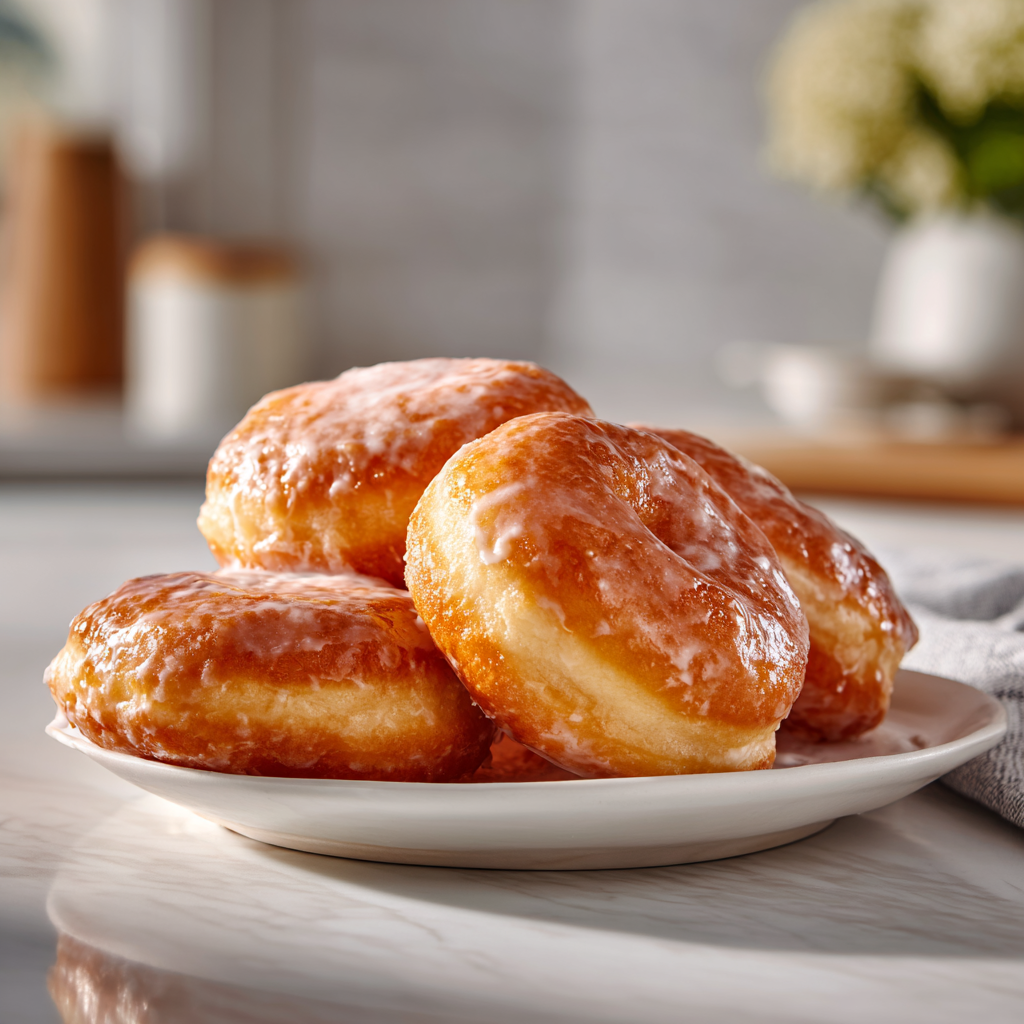
Glazed donuts with milk bread dough utilize the Japanese Tangzhong method to create an exceptionally soft, pillowy texture that stays fresh longer than traditional yeast recipes. This specific technique involves precooking a portion of flour and water into a roux, which allows the dough to hold more moisture without becoming sticky or difficult to handle during the shaping process. By incorporating this starter into a rich brioche-style base, you achieve a donut that is remarkably light, airy, and capable of supporting a thick, crackly vanilla glaze. Home bakers often struggle with dry or dense fried dough, but this milk bread approach guarantees a professional-grade crumb that melts in your mouth with every bite. The combination of high-protein bread flour and the gelatinized starch starter creates a structural integrity that prevents the donuts from collapsing after they emerge from the hot frying oil.
Recipe Overview
| Prep Time | Cook Time | Total Time | Servings | Difficulty | Cuisine |
|---|---|---|---|---|---|
| 2 Hours | 15 Minutes | 2 Hours 15 Minutes | 10-12 Donuts | Intermediate | Fusion / Japanese-American |
Why This Recipe Works
I have spent years perfecting artisanal doughs, and the milk bread method remains the undisputed champion for achieving a cloud-like consistency in fried confections. The Tangzhong starter stabilizes the moisture levels, ensuring that the finished donut possesses a distinct springiness and a moist interior that doesn’t turn stale within hours. Unlike standard recipes that rely solely on yeast for lift, this method builds a superior gluten structure through extended kneading and hydration control.
During my testing, I discovered that the high fat content from the unsalted butter and whole milk creates a luxurious mouthfeel that balances the sweetness of the vanilla glaze perfectly. This recipe allows for a controlled rise, which results in those iconic pale “proof lines” around the center of the donut after frying. You will notice that the dough is much easier to roll and cut than standard sticky doughs, making the process cleaner and more efficient for the home cook.
Ingredients
| Ingredient | Quantity | Notes |
|---|---|---|
| Bread Flour | 3 1/4 cups total | High protein content is essential for structure. |
| Whole Milk | 1/2 cup | Use full-fat milk at room temperature. |
| Instant Yeast | 1 tablespoon | Active dry yeast requires proofing in liquid first. |
| Unsalted Butter | 5 tablespoons | Softened to room temperature for easy mixing. |
| Granulated Sugar | 1/3 cup | Adds subtle sweetness to the dough. |
| Powdered Sugar | 3 1/2 cups | Sifted for the smoothest possible glaze. |
| Neutral Oil | 2-3 quarts | Canola or vegetable oil works best for frying. |
Step-by-Step Instructions
Phase 1: Preparing the Tangzhong Starter
- Whisk the 3/4 cup water and 1/4 cup bread flour in a small saucepan until no lumps remain.
- Cook the mixture over medium heat while stirring constantly with a silicone spatula.
- Remove the pan from the heat once the mixture thickens into a translucent, pudding-like paste.
- Scrape the paste into a small heat-proof bowl and let it cool slightly before adding to the dough.
Phase 2: Mixing and Kneading the Dough
- Combine the bread flour, sugar, yeast, and sea salt in the bowl of a stand mixer.
- Add the room-temperature milk, egg, and the prepared Tangzhong starter to the dry ingredients.
- Knead on low speed for 2 minutes or until a shaggy, cohesive dough begins to form.
- Incorporate the softened butter one tablespoon at a time while the mixer continues to run.
- Increase the mixer speed to medium and knead for 12 minutes until the dough is smooth and passes the windowpane test.
- Shape the dough into a smooth ball and place it in a greased bowl to rest for 45 minutes.
Phase 3: Rolling and Shaping
- Transfer the rested dough onto a lightly floured surface and pat it down gently.
- Roll the dough to an even thickness of 3/4-inch using a heavy rolling pin.
- Cut rounds using a 3-inch donut cutter and place each one on an individual square of parchment paper.
- Re-roll the remaining scraps after letting them rest for 10 minutes to relax the gluten.
- Cover the cut donuts loosely with plastic wrap and proof in a warm spot for 60 minutes.
Phase 4: Frying and Glazing
- Heat 3 inches of neutral oil in a heavy-bottomed pot to exactly 350°F (180°C).
- Lower 2 or 3 donuts into the oil, using the parchment paper squares to prevent finger indentations.
- Fry for approximately 75 seconds per side until the exterior is a deep golden brown.
- Remove the donuts with a slotted spoon and place them on a wire rack set over a tray.
- Whisk the powdered sugar, hot water, vanilla, and salt in a bowl to create a runny glaze.
- Submerge each warm donut into the glaze, coating both sides thoroughly before setting them back on the rack.
Chef Tips for Perfect Results
- Monitor your oil temperature constantly using a digital thermometer to prevent the donuts from becoming greasy or burnt.
- Perform the windowpane test by stretching a small piece of dough; it should be thin enough to see light through without tearing.
- Use room temperature eggs and milk to ensure the yeast remains active and the butter incorporates smoothly.
- Avoid over-flouring your work surface during rolling, as excess flour will burn in the oil and create a bitter taste.
- Sift your powdered sugar before whisking the glaze to eliminate any stubborn lumps that ruin the smooth finish.
Common Mistakes to Avoid
Under-kneading the dough is a frequent error that results in a dense donut because the gluten isn’t strong enough to trap air. You must knead for the full 12 minutes to achieve that signature milk bread elasticity. Over-proofing the dough during the second rise can cause the donuts to collapse when they hit the hot oil. Watch for the dough to double in size, but ensure it still feels slightly resilient to a gentle touch. Frying at too low a temperature will cause the dough to soak up the oil, resulting in a heavy, soggy texture. Always wait for the oil to return to 350°F between batches to maintain consistency. Using cold butter prevents it from emulsifying into the dough, leading to an uneven crumb with large, oily pockets.
Variations and Substitutions
| Ingredient | Substitution | Impact on Flavor |
|---|---|---|
| Vanilla Paste | Maple Extract | Adds a deep, woody sweetness reminiscent of autumn. |
| Whole Milk | Oat Milk (Full Sugar) | Creates a slightly nuttier profile but maintains the creamy texture. |
| Bread Flour | All-Purpose Flour | Produces a softer, less chewy donut that is more fragile. |
| Granulated Sugar | Brown Sugar | Gives the dough a subtle molasses undertone and darker color. |
Serving Suggestions and Pairings
Serve these glazed donuts with milk bread dough fresh and warm for the most impressive texture experience. They pair exceptionally well with a bitter black coffee or a strong Earl Grey tea to balance the sweetness of the vanilla coating. For a brunch spread, serve them alongside fresh seasonal berries and a savory protein dish. These are perfect for morning celebrations, office gatherings, or as a sophisticated weekend dessert for the family. If you are serving a crowd, arrange them on a tiered stand to showcase the glossy finish of the glaze.
Storage and Reheating
| Method | Duration | Instructions |
|---|---|---|
| Room Temperature | 24 Hours | Store in an airtight container at room temperature. |
| Refrigerator | 3 Days | Keep in a sealed container; note that the glaze may weep. |
| Microwave Reheat | 8 Seconds | Heat a single donut on high to restore the pillowy softness. |
Nutritional Information
| Nutrient | Amount per Serving (Approximate values) |
|---|---|
| Calories | 340 kcal |
| Total Fat | 14g |
| Carbohydrates | 48g |
| Protein | 5g |
| Sodium | 180mg |
Conclusion
Mastering the art of glazed donuts with milk bread dough offers a window into the world of professional pastry making right from your own kitchen. By utilizing the Tangzhong method, you have moved beyond the limitations of standard recipes to create something truly exceptional. These donuts stand out because of their intricate balance between a crisp, sugary exterior and a cloud-like, elastic interior that only high-quality yeast dough can provide. Whether you are a seasoned baker or a curious novice, the process of watching a thick flour paste transform into a golden, airy masterpiece is immensely rewarding. The extra time spent on the starter and the extended kneading process pays off the moment you take that first bite and experience the melt-in-your-mouth quality of authentic milk bread. Remember to share these treats quickly, as they are at their absolute peak within hours of leaving the fryer. Use this recipe as a foundation for your own creative explorations, perhaps experimenting with different flavored glazes or infused sugars in the future. The reliability of this dough makes it a staple for any baker looking to impress. Embrace the process, trust the temperature of your oil, and enjoy the unmatched texture of these homemade glazed donuts with milk bread dough.
FAQ
Can I use all-purpose flour for milk bread donuts?
You can use all-purpose flour, but the donuts will be significantly less chewy and may not hold their shape as well. Bread flour provides the necessary protein to create the strong gluten network required for a high rise. If you must switch, reduce the liquid slightly to compensate for the lower absorption rate.
How do I know when the milk bread donuts are fully cooked?
The donuts are done when the exterior reaches a consistent golden brown color and the internal temperature hits 190°F. Frying for exactly 2 to 2.5 minutes total ensures the center is cooked through without burning the outside. If the donuts are brown but doughy inside, your oil temperature is likely too high.
Why did my donut glaze turn out transparent or thin?
A transparent glaze usually occurs because the donuts were too hot or the glaze contained too much water. Wait until the donuts are warm rather than steaming hot before dipping them. You can thicken the mixture by whisking in more sifted powdered sugar one tablespoon at a time.
Can I make milk bread donut dough in advance?
You can certainly make the dough ahead of time by allowing the first rise to happen in the refrigerator overnight. Cold fermentation actually develops more flavor and makes the dough much easier to handle when rolling. Just ensure you let the cut donuts come to room temperature and proof fully before frying.
Should I glaze the donuts while they are hot or cold?
Glaze the donuts while they are still warm to ensure the coating adheres properly and forms a thin, even layer. If the donut is completely cold, the glaze will sit on top and may crack off in large chunks. If the donut is too hot, the glaze will melt into the dough and become invisible.
Print
Glazed Milk Bread Donuts
- Total Time: 135
- Yield: 10-12 donuts
- Diet: Vegetarian
Description
Using the Japanese Tangzhong method, these donuts boast a soft, pillowy texture and a moist brioche-style base. The rich dough supports a thick, crackly vanilla glaze for a melt-in-your-mouth experience. Perfect for home bakers seeking a fusion of Japanese and American techniques.
Ingredients
1/2 cup bread flour (Tangzhong starter)
1/2 cup water (Tangzhong starter)
2 3/4 cups bread flour
1/2 cup whole milk
1 tablespoon instant yeast
5 tablespoons unsalted butter, softened
3/4 cup sugar
2 large eggs
1/2 teaspoon salt
3 cups powdered sugar (glaze)
4 tablespoons unsalted butter, softened (glaze)
1 1/2 teaspoons vanilla extract (glaze)
Instructions
Whisk 1/2 cup bread flour and 1/2 cup water in a saucepan until smooth. Cook over medium heat, stirring constantly, until thickened and opaque (5-7 minutes). Let cool completely
In a stand mixer, combine 2 3/4 cups bread flour, 1/2 cup whole milk, 1/2 cup Tangzhong starter, 1 tablespoon yeast, 5 tablespoons softened butter, 3/4 cup sugar, 2 eggs, and 1/2 tsp salt. Knead on medium speed until smooth and elastic (5-7 minutes)
Place dough in a greased bowl, cover, and let rise in the fridge for 24 hours (refrigerated fermentation)
Turn out dough onto a floured surface, divide into 10-12 balls. Roll each ball into a 12-inch circle, cut out a 3-inch center. Fry in oil at 350°F (180°C) until golden brown (2-3 minutes per side)
Whisk 3 cups powdered sugar, 4 tbsp softened butter, and 1 1/2 tsp vanilla until smooth. Adjust with milk if needed. Drizzle over donuts while warm
Notes
Use room temperature butter and milk for consistent mixing
Shape donuts quickly during the first rise to avoid overproofing
Adjust glaze water to desired consistency: stiffer for a crackly shell
Store in an airtight container for up to 24 hours without losing texture
- Prep Time: 120
- Cook Time: 15
- Category: Easy Cake Recipes for Every Occasion
- Method: Frying
- Cuisine: Fusion / Japanese-American