
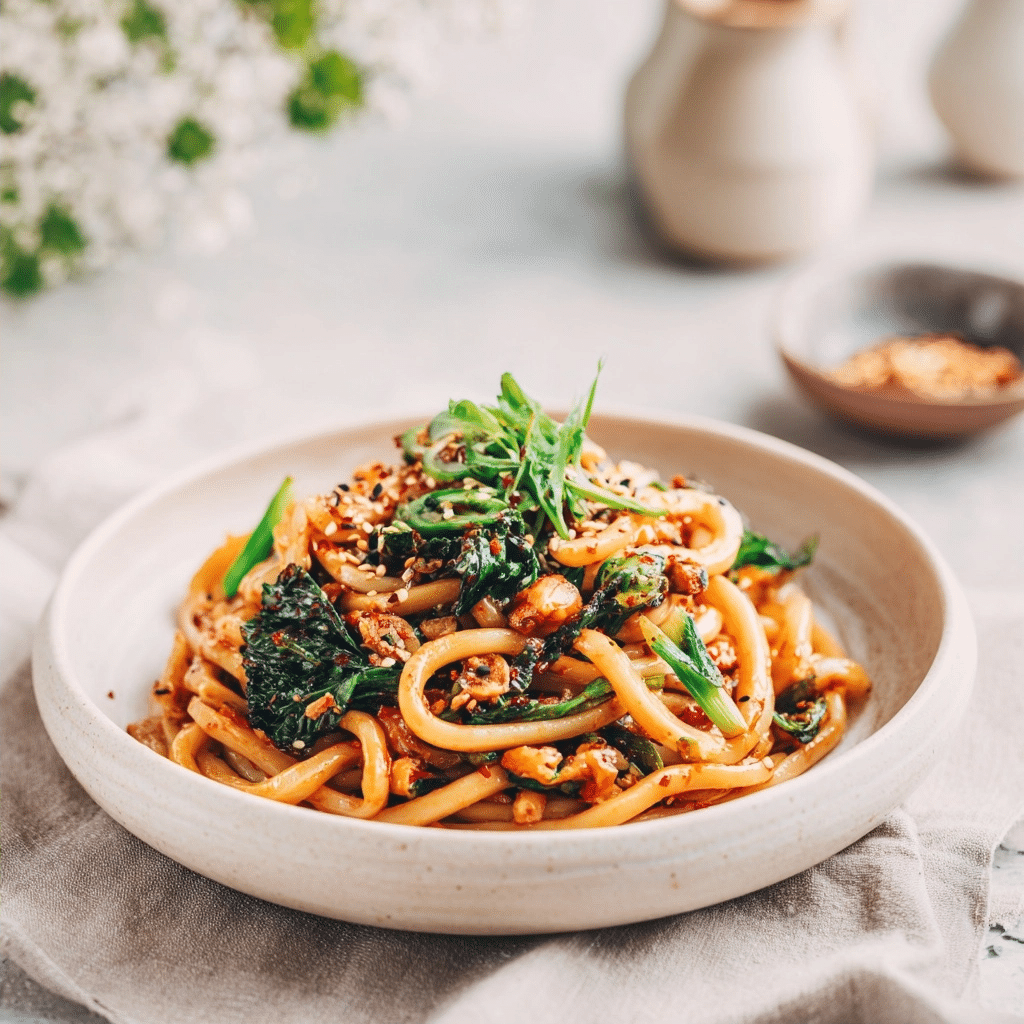
Gochujang Udon Noodles are a masterful fusion dish that combines thick, chewy Japanese wheat noodles with the deep, fermented heat of Korean chili paste. This vibrant meal relies on the unique balance of smoky gochujang, rich heavy cream, and aromatic garlic to create a luxurious sauce that clings perfectly to every strand. By utilizing frozen udon for superior texture, you achieve a restaurant-quality meal that bridges the gap between traditional Asian comfort food and modern creamy pasta techniques. The addition of parmesan cheese provides a salty umami depth that complements the spicy elements while mellowing the heat for a well-rounded profile. This recipe serves as a definitive solution for home cooks seeking a high-impact, flavorful dinner that requires minimal preparation time and basic pantry staples.
| Prep Time | Cook Time | Total Time | Servings | Difficulty | Cuisine |
|---|---|---|---|---|---|
| 5 Minutes | 10 Minutes | 15 Minutes | 2 People | Easy | Korean-Japanese Fusion |
Why This Recipe Works
This dish succeeds because it utilizes the emulsifying power of starchy noodle water and heavy cream to create a velvet-like coating. I have found that the high fat content in the unsalted butter and cream acts as a necessary vehicle for the oil-soluble spice in the gochujang. This specific combination ensures the heat lingers pleasantly on the palate without overwhelming the delicate flavor of the shallots and garlic.
The choice of frozen udon over dried varieties makes a significant difference in the final mouthfeel of the dish. Frozen noodles are flash-frozen at the peak of their freshness, preserving the elastic “mochi-mochi” texture that defines high-quality udon. When these noodles hit the simmering creamy sauce, they absorb just enough liquid to become flavorful while maintaining their structural integrity and satisfying chewiness.
Ingredients
| Ingredient | Quantity | Notes and Alternatives |
|---|---|---|
| Frozen Udon Noodles | 2 Packs | Thaw slightly or cook from frozen; use Sanuki style for best chew. |
| Unsalted Butter | 3 tbsp | Provides a rich base; substitute with olive oil for a lighter version. |
| Garlic | 3 Cloves | Minced finely; avoid jarred garlic for better aromatic quality. |
| Shallots | 2 Medium | Chopped; gives a subtle sweetness compared to regular onions. |
| Gochujang | 1.5 tbsp | Korean red chili paste; adjust for desired spice level. |
| Heavy Cream | 1/2 Cup | Full fat for thickness; coconut milk works for a dairy-free twist. |
| Reserved Noodle Water | 1/2 Cup | Essential for emulsifying the sauce and adding starch. |
| Soy Sauce | 2 tsp | Use low-sodium to control the salt intake effectively. |
| Gochugaru | 1 tsp | Korean chili flakes; adds smokiness and visual red flecks. |
| Green Onion | 1 stalk | Garnish; adds freshness and a sharp bite to the finish. |
| Parmesan Cheese | To taste | Grated; provides a salty, nutty umami component. |
| Egg Yolk | 1 per bowl | Optional; adds extra richness and a silky coating when broken. |
Step-by-Step Instructions
Phase 1: Preparing the Noodles
- Boil a large pot of water and submerge the frozen udon noodles.
- Cook the noodles for approximately 1-2 minutes until they separate easily.
- Reserve 1/2 cup of the starchy noodle water before draining the pot.
- Rinse the noodles under cold running water to stop the cooking process.
Phase 2: Building the Sauce Base
- Melt the unsalted butter in a large skillet over medium heat.
- Sauté the minced garlic and chopped shallots until they turn translucent.
- Incorporate the gochujang paste into the butter mixture, stirring for 30 seconds.
- Aromatics should become fragrant and the oil should turn a bright orange-red.
Phase 3: Emulsifying and Finishing
- Pour the heavy cream and reserved noodle water slowly into the skillet.
- Whisk in the soy sauce and gochugaru flakes to distribute spices evenly.
- Simmer the sauce for 2-3 minutes until it thickens to a coat-the-spoon consistency.
- Toss the cooked udon into the pan and stir until every noodle is coated.
- Plat the noodles and top with parmesan, green onions, and an optional egg yolk.
Chef Tips for Perfect Results
- Use frozen udon instead of shelf-stable packets to ensure the noodles have the correct bouncy texture.
- Fry the gochujang in the butter briefly to awaken the oils and deepen the fermented flavor profile.
- Save more noodle water than required because the udon will continue to absorb liquid once plated.
- Temper the egg yolk by placing it on hot noodles so it creates a sauce rather than staying raw.
- Control the heat by adding the gochugaru gradually, as different brands vary significantly in spice intensity.
Common Mistakes to Avoid
Overcooking the udon noodles leads to a mushy texture because they undergo a second cooking phase in the pan. Boil them just until they separate to ensure they remain firm throughout the saucing process. Neglecting to rinse the noodles in cold water allows excess starch to make the final dish unpleasantly gummy. Forgetting to reserve the noodle water is a critical error since plain water lacks the starch needed to bind cream and oil. Adding the cream to a boiling-hot pan too quickly can cause the dairy to curdle and break the sauce. Keep the heat at a steady medium and stir constantly during the integration of various liquid components.
Variations and Substitutions
| Ingredient | Substitution | Impact on Flavor |
|---|---|---|
| Heavy Cream | Full-fat Coconut Milk | Adds a tropical sweetness and remains dairy-free. |
| Parmesan | Nutritional Yeast | Maintains a cheesy umami flavor for vegan-friendly adaptations. |
| Shallots | Yellow Onion | Produces a stronger, more pungent onion flavor base. |
| Soy Sauce | Tamari | Offers a gluten-free alternative with a slightly richer saltiness. |
Serving Suggestions and Pairings
Serve these noodles as a standalone main course during busy weeknights when you require a hearty, comforting meal. For a complete Korean fusion feast, pair this dish with a side of quick-pickled cucumbers or a simple radish slaw to provide acidity. Small plates of steamed bok choy or roasted broccoli add a nutritional crunch that balances the richness of the cream sauce. If serving for a dinner party, present the noodles in wide, shallow bowls to showcase the vibrant color and garnishes. These noodles also pair exceptionally well with a cold glass of sparkling water infused with lime to cleanse the palate between spicy bites.
Storage and Reheating
| Method | Duration | Instructions |
|---|---|---|
| Refrigeration | 2-3 Days | Store in an airtight glass container to prevent staining from gochujang. |
| Microwave | 1-2 Minutes | Add a splash of water or milk to loosen the sauce before heating. |
| Stovetop | 3-5 Minutes | Heat on low with a tablespoon of water, tossing frequently until warm. |
Nutritional Information
| Nutrient | Amount per Serving |
|---|---|
| Calories | 540 kcal |
| Protein | 12g |
| Total Fat | 28g |
| Carbohydrates | 62g |
| Sodium | 980mg |
Approximate values based on standard ingredient portions.
Concluding this recipe, the Gochujang Udon Noodles stand out as a premier example of how few ingredients can yield massive flavor. The combination of fermented chili heat and dairy creates a profile that is both stimulating and deeply comforting for the soul. By following the meticulous steps of emulsifying the sauce and timing the noodle boil, you ensure a professional result every time you cook. This dish encourages experimentation with toppings and spice levels to suit your personal preferences perfectly. Whether you are a fan of Korean cuisine or simply looking for a new way to enjoy thick Japanese noodles, this recipe delivers consistent satisfaction. The finished plate offers a beautiful visual appeal with its deep orange hue and bright green garnishes, making it a feast for all senses. Embrace the bold, creamy, and spicy characteristics that make these udon noodles a modern classic in fusion home cooking. Your kitchen will be filled with the irresistible aroma of toasted garlic and sweet gochujang as you finalize this savory masterpiece.
Frequently Asked Questions
Can I use dried udon for Gochujang Udon Noodles?
Dried udon noodles work as a substitute, but they lack the signature chewiness found in frozen varieties. You should boil them longer according to the package instructions to ensure they are fully hydrated. The texture will be flatter and less elastic than the traditional frozen Sanuki-style noodles.
How do I make the noodles less spicy?
Reduce the gochujang to one tablespoon and omit the gochugaru flakes entirely to lower the heat level. You can also increase the amount of heavy cream to dilute the concentration of the chili paste. Adding more parmesan cheese will further help to neutralize the spicy capsaicin on your palate.
What should I do if the sauce is too thick?
Add more reserved noodle water one tablespoon at a time until you reach your desired consistency. The starches in the water help the sauce stay smooth rather than becoming thin and watery. Stir constantly while adding the liquid to maintain a unified and creamy emulsion.
Can this udon dish be made ahead of time?
Prepare the sauce in advance, but boil and toss the noodles only when you are ready to serve. Noodle dishes tend to absorb sauce during storage, which can lead to a dry texture upon reheating. If you must make it ahead, store extra sauce on the side for later integration.
Why is my cream sauce curdling?
Curdling usually occurs when the heat is too high or if the cream is added to a very acidic base too quickly. Lower the flame to a simmer before introducing the heavy cream to ensure a smooth transition. Whisking continuously during the pouring process helps to stabilize the proteins in the dairy.
Print
Gochujang Udon Noodles Recipe: Creamy Spicy Korean Pasta
- Total Time: 15
- Yield: 2 People
- Diet: Vegetarian
Description
A vibrant Korean-Japanese fusion dish that blends chewy udon noodles with a rich, creamy, and spicy gochujang-based sauce, offering the perfect balance of heat and umami in every bite.
Ingredients
Frozen Udon Noodles, 2 Packs
Unsalted Butter, 3 tbsp
Garlic, 3 Cloves
Shallots, 2 Medium
Gochujang, 1.5 tbsp
Heavy Cream, 1/2 Cup
Parmesan Cheese, 2 tbsp (optional)
Salt, to taste
Instructions
Bring a large pot of water to a boil and cook frozen udon noodles according to package instructions until al dente. Reserve some starchy pasta water before draining.
In a large pan, melt butter over medium heat. Add minced garlic and chopped shallots, sauté until fragrant and softened.
Stir in the gochujang and cook for 1-2 minutes to blend the flavors.
Pour in the heavy cream and bring to a gentle simmer while stirring to create a smooth, creamy sauce.
Gradually add cooked udon noodles into the sauce, mixing well to coat.
If the sauce is too thick, add a splash of reserved pasta water to reach a desirable consistency.
Optional: Sprinkle parmesan cheese and stir until melted and combined. Season with salt to taste.
Serve immediately, garnished with fresh herbs or sesame seeds if desired.
Notes
Thaw noodles slightly for faster cooking or cook directly from frozen.
Use olive oil in place of butter for a lighter option.
Adjust the amount of gochujang to control spiciness to your taste.
For extra protein, add sautéed tofu or scrambled egg before serving.
- Prep Time: 5
- Cook Time: 10
- Category: Easy Pasta Recipes for Quick Family Dinners
- Method: Simmering
- Cuisine: Korean-Japanese Fusion