
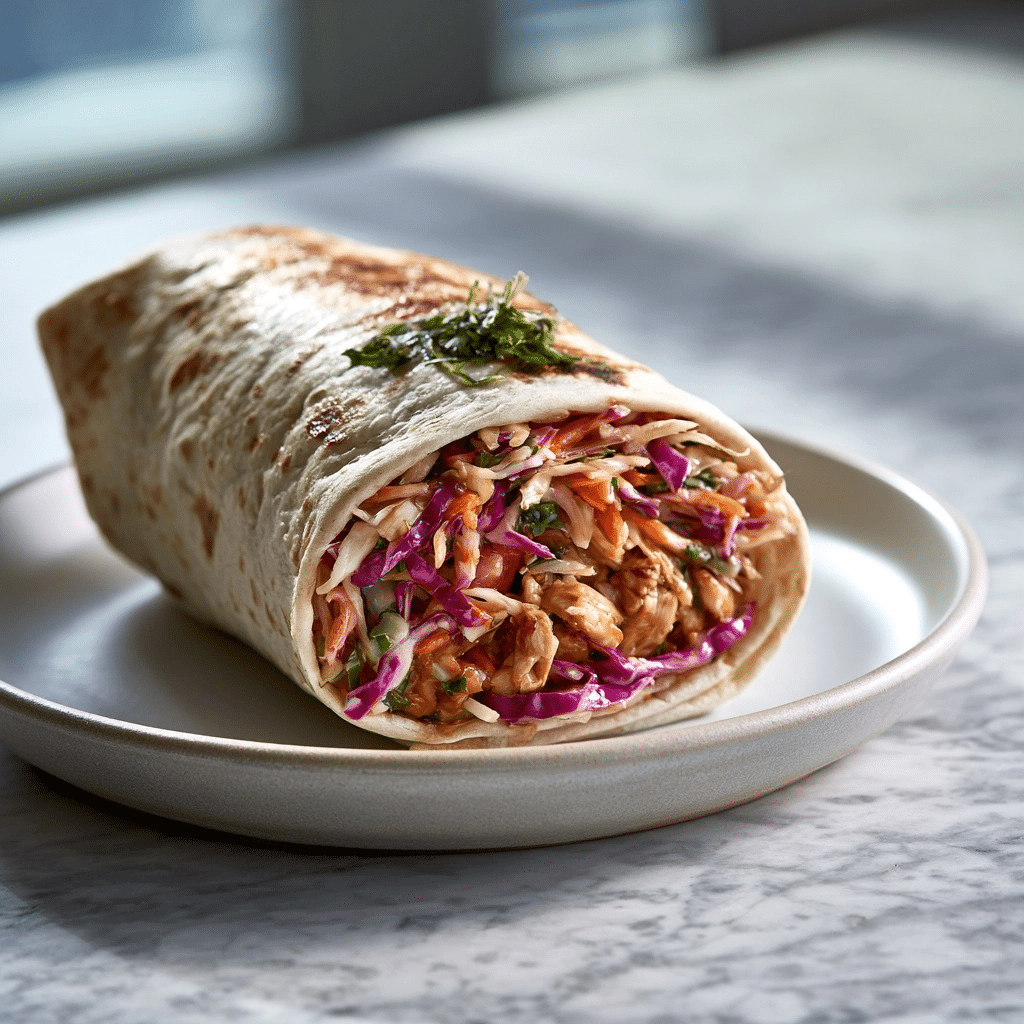
A Thai Chicken Wrap with Crunchy Asian Slaw is a portable, nutrient-dense meal featuring marinated poultry, vibrant vegetables, and a creamy, savory peanut dressing. This Thai Chicken Wrap with Crunchy Asian Slaw combines the warmth of ginger-infused protein with the refreshing snap of chilled cabbage and carrots, making it an ideal choice for busy professionals needing a desk-friendly lunch or families seeking a quick weeknight dinner. Its popularity stems from the harmonious balance of salty, sweet, sour, and spicy notes that define Southeast Asian cuisine, providing a gourmet experience without the need for complex cooking techniques. You will enjoy a high-protein, fiber-rich meal that satisfies cravings for bold flavors while delivering a satisfying crunch in every single bite.
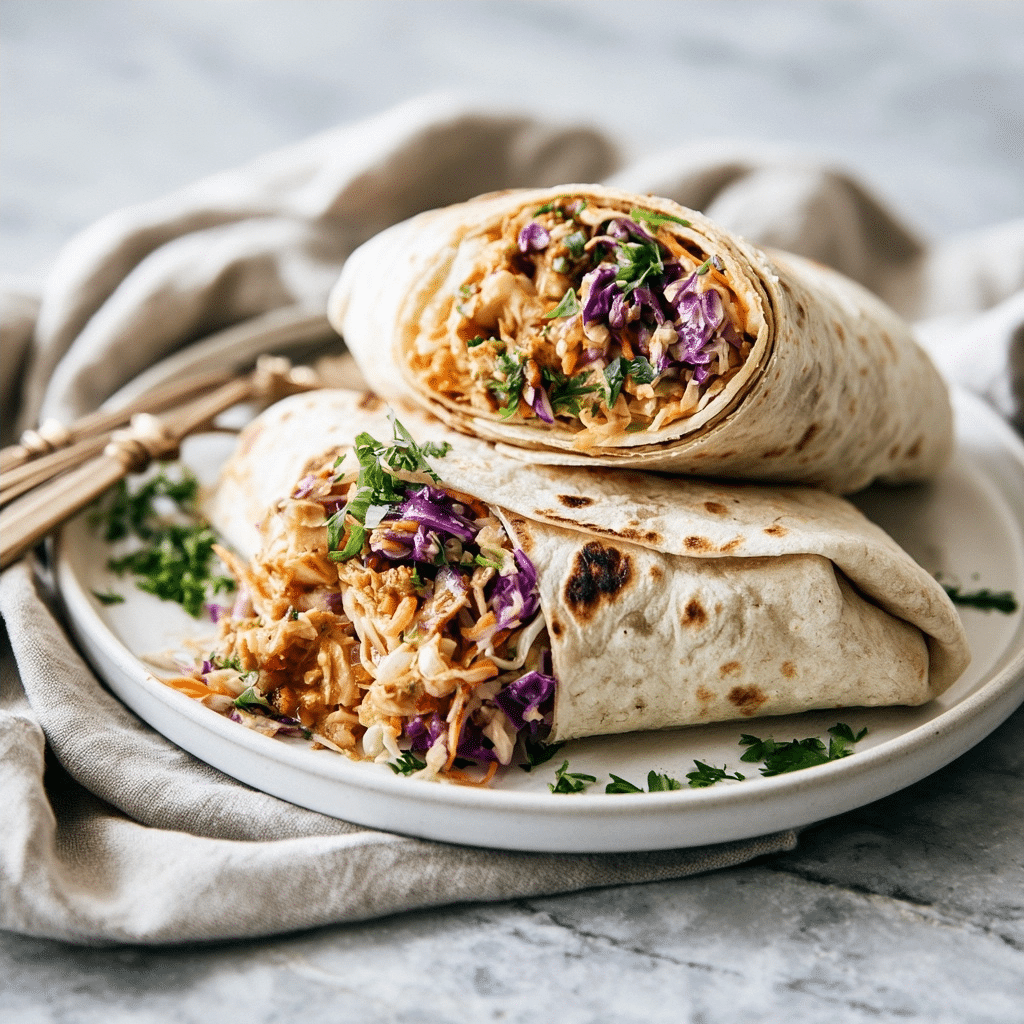
What Is a Thai Chicken Wrap?
A Thai Chicken Wrap is a modern fusion dish that adapts traditional Southeast Asian flavor profiles into a convenient handheld format. It typically consists of a soft flour tortilla or flatbread stuffed with chicken marinated in soy and sesame, paired with a zesty slaw made from shredded cabbage and aromatics. Unlike traditional Thai lettuce wraps (larb), this version uses a sturdier wrap to hold a generous amount of creamy peanut sauce, which acts as the primary flavor bridge. While not a singular historical dish from Thailand, it represents the global ‘fusion’ movement, combining the convenience of Western wraps with the complex seasoning layers of authentic Thai street food.
Recipe Overview
| Prep Time | 20 minutes |
| Cook Time | 15 minutes |
| Total Time | 35 minutes |
| Servings | 4 servings |
| Difficulty Level | Easy |
| Cuisine | Thai-Fusion |
| Calories per Serving | 485 kcal |
Why You’ll Love This Recipe
- Effortless Preparation: This recipe requires minimal kitchen equipment and can be prepared in under 40 minutes.
- Meal-Prep Friendly: The slaw and chicken ingredients maintain their integrity well, making this a foolproof choice for office lunches.
- Texture Contrast: The combination of tender chicken, creamy sauce, and crisp vegetables provides a sophisticated mouthfeel.
- Customizable Heat: You can easily adjust the spice level by increasing or decreasing the chili flakes.
- Nutrient Dense: Packed with lean protein and various colors of slaw, it fulfills daily vegetable requirements effortlessly.
This recipe is a crowd-pleasing solution for those who want a break from boring sandwiches. It is particularly beginner-friendly because it relies on high-impact seasonings like ginger and garlic to do the heavy lifting. Whether you are hosting a casual backyard gathering or prepping for a hectic work week, this wrap provides a time-saving meal that never compromises on flavor or freshness.
Why This Recipe Works
In my decade of developing fusion recipes, I have found that the secret to a great wrap lies in the moisture management of the ingredients. The Thai Chicken Wrap succeeds because it prevents the tortilla from becoming soggy by using a dense, emulsified peanut sauce rather than a watery dressing. The chicken thighs are specifically chosen for their higher fat content compared to breasts, ensuring that the meat remains succulent even after being sliced and chilled for a later meal.
Technically, this recipe works through the science of flavor layering and emulsification. The peanut sauce uses warm water to bind the fats from the peanut butter with the acids from the rice vinegar and lime juice, creating a stable dressing that coats the palate. Meanwhile, the slaw vegetables undergo a slight maceration process when tossed with salt and vinegar, which softens their fibrous structure just enough to be eatable while retaining a distinct ‘snap’.
The sensory payoff is undeniable. You achieve a beautiful caramelization on the chicken skin (Maillard reaction) through the sugar content in the soy-based marinade, which contrasts visually and texturally with the bright purples and greens of the slaw. This careful calibration of temperature, acidity, and fat makes the final wrap feel like a professionally catered meal.
Pro Tips Before You Start
- Mise en Place: Chop all vegetables and whisk your sauces before you turn on the stove to ensure a smooth assembly flow.
- Dry Your Vegetables: Ensure the cabbage is thoroughly dried after washing to prevent the slaw from becoming watery.
- Warm Tortillas: Briefly heat your wraps in a pan to make them more pliable and prevent tearing during the folding process.
- Quality Peanut Butter: Use a creamy, high-quality peanut butter for the smoothest sauce consistency.
Ingredients
Here’s everything you’ll need to make Thai Chicken Wrap with Crunchy Asian Slaw:
| Ingredient | Quantity | Notes/Alternatives |
|---|---|---|
| Chicken Thighs | 1 lb / 450g | Boneless, skinless; can use breast |
| Soy Sauce | 4 tbsp / 60ml | Divided for chicken and sauce |
| Sesame Oil | 2 tbsp / 30ml | Toasted variety for maximum aroma |
| Peanut Butter | 1/3 cup / 85g | Creamy style works best |
| Honey | 1 tbsp / 21g | Sub with agave for vegan options |
| Rice Vinegar | 2 tbsp / 30ml | Unseasoned is preferred |
| Cabbage (Red/Green) | 3 cups / 210g | Pre-shredded mix is a great time-saver |
| Flour Tortillas | 4 pieces | Large 10-inch size for easier rolling |
| Fresh Ginger | 2 tsp / 10g | Grated finely for even distribution |
Best Ingredients for Thai Chicken Wrap
The quality of your aromatics is the most significant factor in this dish. Using fresh ginger and garlic instead of dried powders in the peanut sauce transforms the profile from a generic nut dressing to a bright, restaurant-quality condiment. If possible, source toasted sesame oil; the depth of flavor it provides compared to regular sesame oil is significant and adds a nutty backbone to the chicken marinade that cannot be replicated.
For the wrap itself, look for “burrito-sized” flour tortillas. These have the necessary elasticity to hold the heavy fillings without splitting. If you are budget-conscious, you can buy a whole head of cabbage and shred it yourself rather than buying pre-bagged mixes, which also ensures the vegetable stays crisper for a longer duration.
Step-by-Step Instructions
Phase 1: Marinating and Cooking the Protein
- Whisk together soy sauce, sesame oil, lime juice, garlic powder, ginger, and chili flakes in a medium glass bowl until well combined.
- Add the chicken thighs to the bowl and toss thoroughly to ensure every surface is coated in the marinade.
- Let the chicken marinate for at least 20 minutes at room temperature or up to 4 hours in the refrigerator for deeper flavor penetration.
- Heat a large 12-inch skillet or grill pan over medium-high heat with a teaspoon of neutral oil.
- Sauté the chicken thighs for 5-7 minutes per side until the internal temperature reaches 165°F (74°C) and the exterior is deeply browned.
- Transfer the cooked chicken to a cutting board and allow it to rest for 5 minutes (this keeps the juices inside).
- Slice the chicken into thin strips or bite-sized pieces for easy wrapping.
Phase 2: Preparing the Peanut Sauce and Slaw
- Combine peanut butter, soy sauce, honey, rice vinegar, sesame oil, minced garlic, and ginger in a small bowl.
- Whisk the mixture vigorously until the peanut butter emulsifies with the liquids and becomes smooth.
- Add warm water one tablespoon at a time while whisking until it reaches a pourable, yet thick consistency.
- Toss the shredded cabbages, carrots, bell pepper, scallions, and cilantro in a large mixing bowl.
- Add lime juice, rice vinegar, sugar, and a pinch of salt to the vegetable mixture.
- Mix the slaw thoroughly and let it sit for 10 minutes to allow the acids to soften the cabbage slightly.
Phase 3: Final Assembly
- Warm the tortillas in a dry skillet over medium heat for 15 seconds per side until soft and pliable.
- Spread a generous tablespoon of the peanut sauce onto the center of each tortilla.
- Place a large handful of the Asian slaw over the sauce, followed by a portion of the sliced chicken.
- Drizzle additional peanut sauce over the chicken and garnish with extra cilantro and crushed peanuts.
- Fold the sides of the tortilla inward and roll tightly from the bottom to create a secure wrap.
- Slice diagonally with a sharp serrated knife and serve immediately.
Chef Tips for Perfect Results
- Internal Temp Check: Use an instant-read thermometer to ensure the chicken reaches exactly 165°F (74°C) to avoid drying it out.
- Resting Period: Never skip the 5-minute rest for the chicken; cutting it too soon causes the moisture to leak, resulting in dry meat.
- Sauce Consistency: If your peanut sauce thickens too much in the fridge, whisk in a teaspoon of warm water to loosen it back up.
- Acid Balance: If the slaw tastes too dull, add an extra squeeze of fresh lime juice right before serving to brighten the profile.
- Peanut Toasting: Briefly toast your garnish peanuts in a dry pan for 2 minutes to enhance their crunch and oils.
Common Mistakes to Avoid
- Cold Tortillas: Use of cold wraps results in cracking and tearing. Warm them to ensure the gluten is relaxed and pliable.
- Over-marinating with Acid: Leaving chicken in lime juice for over 12 hours can turn the meat mushy due to protein breakdown. Stick to the 4-hour limit.
- Watery Slaw: Adding salt too early can draw out too much water from the cabbage. Salt the slaw only 10 minutes before serving.
- Too Much Liquid in Sauce: Adding cold water instead of warm water can cause the peanut butter to seize. Always use warm water for a smooth emulsion.
How to Make This Recipe Healthier
To reduce the caloric density of this dish, you can swap the flour tortilla for large collard green leaves or butter lettuce cups. This reduces the carbohydrate count by approximately 30g per serving and increases your intake of vitamins K and A. Additionally, substituting the honey in the peanut sauce with a dash of stevia or monk fruit sweetener will lower the glycemic index without sacrificing the necessary sweetness that balances the soy sauce.
Another impactful swap is using PB2 or powdered peanut butter mixed with water instead of traditional creamy peanut butter. This reduces the fat content by nearly 85% while still providing significant protein and that essential peanut flavor. While the resulting sauce will be less silky, it remains a delicious alternative for those on a strict macro-counting regimen.
Variations and Substitutions
This recipe is highly adaptable to various dietary needs and flavor preferences. If you prefer a vegetarian version, extra-firm tofu or tempeh can be pressed and pan-seared using the same chicken marinade for a delicious plant-based alternative.
| Ingredient | Substitution | Impact on Flavor | Impact on Texture | Coconut Aminos | Slightly sweeter | No change | Almond Butter | More floral/nutty | Grainier texture | Lettuce Cups | Cleaner taste | Much crunchier | Grilled Shrimp | Briny and sweet | Firmer bite |
|---|
Can You Make This Ahead?
Yes, this recipe is excellent for meal prep. You can cook the chicken and prepare the peanut sauce up to 3 days in advance. Store the chicken and sauce in separate airtight containers in the refrigerator. The slaw components (cabbage, carrots, peppers) can be chopped ahead of time, but do not add the dressing (lime juice and vinegar) until the day you plan to eat, as the acid will cause the vegetables to lose their signature crunch over time. Assemble the wraps just before serving for the best experience.
Serving Suggestions and Pairings
Serve these wraps at room temperature or slightly chilled for a refreshing lunch experience. They pair exceptionally well with a side of salt-and-vinegar kale chips or a simple cucumber salad with sesame dressing. For a beverage pairing, a cold glass of sparkling ginger limeade or a jasmine iced tea complements the aromatic ginger and garlic in the chicken wonderfully.
For a more formal presentation at a brunch or party, slice the wraps into smaller 1-inch “sushi-style” rounds and secure them with a toothpick. This transforms the hearty meal into an elegant appetizer that showcases the colorful layers of the Asian slaw and marinated chicken.
Best Occasions to Serve This Recipe
This dish is perfect for summer picnics where you need food that is easy to transport and won’t spoil quickly in the heat. It is also an ideal meal-prep solution for university students or busy parents who need a grab-and-go option during the week. Since it looks vibrant and professional, it works well as a light dinner for casual entertaining when you want to impress guests without spending hours in the kitchen.
Storage and Reheating
Individual components store well, but assembled wraps can become soggy if kept overnight. Store components separately for maximum longevity.
| Method | Duration | Instructions |
|---|---|---|
| Refrigerator | 3-4 Days | Store chicken and sauce in airtight containers. |
| Freezer | 2 Months | Freeze cooked chicken only; slaw and sauce do not freeze well. |
| Reheating | 2 Minutes | Microwave chicken separately or reheat in a skillet before assembly. |
Nutritional Information
Approximate nutritional values per serving:
| Nutrient | Amount per Serving |
| Calories | 485 kcal |
| Protein | 32g |
| Fat | 22g |
| Carbohydrates | 38g |
| Fiber | 5g | Sugar | 9g | Sodium | 890mg |
*Approximate values based on standard ingredients. Actual nutrition varies by brand and substitutions.
Conclusion
The Thai Chicken Wrap with Crunchy Asian Slaw stands as a testament to how simple ingredients can create a restaurant-quality meal at home. Its success lies in the interplay between the warm, savory chicken and the cold, acidic slaw, all unified by a peanut sauce that you will want to use on every salad you make from now on. This recipe proves that healthy eating does not have to be repetitive or bland, offering a complex profile that hits every taste bud.
This wrap delivers a satisfying and consistent result every time, making it a reliable staple in your culinary repertoire. It is a dish that rewards the small effort of fresh preparation with a high-protein payoff that keeps you energized throughout the afternoon. Its versatility allows it to shift from a quick solo lunch to an impressive centerpiece for a casual weekend gathering with friends.
You’ll discover that once you master the balance of this peanut sauce and the texture of the slaw, you will find yourself craving this dish on a weekly basis. Try this recipe this weekend and transform your standard lunch routine into something extraordinary. This delivers the bold, vibrant flavors of Thailand in a convenient, handheld form that fits perfectly into your modern lifestyle.
FAQ
Can I substitute the chicken with another protein?
You can substitute chicken with shrimp, firm tofu, or even thinly sliced lean beef. Shrimp cooks very quickly, so reduce the cooking time to 2-3 minutes per side. For a vegetarian option, press extra-firm tofu well to ensure it absorbs the marinade effectively.
How do I know when the chicken is perfectly cooked?
The chicken is done when it reaches an internal temperature of 165°F (74°C) on an instant-read thermometer. Visually, the juices should run clear and the exterior should have a dark, caramelized glaze. Avoid overcooking, as thighs are forgiving but can eventually become rubbery.
What should I do if my peanut sauce is too thick?
Whisk in warm water one teaspoon at a time until the sauce reaches your desired consistency. The sauce naturally thickens as it cools or sits in the fridge, so a little extra liquid is often necessary before assembly. Ensure the water is warm to help the peanut fats stay integrated.
Can I make the Thai Chicken Wrap the day before?
I recommend preparing the components the day before but waiting until you are ready to eat to assemble the wrap. Storing the assembled wrap in the fridge can lead to a soggy tortilla as the slaw and sauce release moisture. Assemble it in the morning for a lunch later that day for the best texture.