

Creamy Orzo with Roasted Butternut Squash and Spinach is a sophisticated vegetarian main course that combines the velvet texture of slow-cooked pasta with the caramelized sweetness of oven-roasted squash.
This Creamy Orzo utilizes orzo, a tiny rice-shaped pasta, which releases natural starches during the simmering process to create a self-thickening sauce without the need for excessive heavy cream. The inclusion of baby spinach adds a vibrant color and essential nutrients, while the nutty depth of Parmesan cheese provides a savory backbone to the entire meal.
Home cooks appreciate this Creamy Orzo for its versatility, as it functions equally well as a centerpiece for a holiday dinner or a comforting weeknight meal. By roasting the squash separately, you ensure the vegetables maintain their structural integrity and concentrated flavor rather than becoming mushy inside the pasta pot. This creates a delightful contrast between the soft, al dente grains of orzo and the tender chunks of seasonal butternut squash.

Table of Contents
Recipe Overview
| Prep Time | Cook Time | Total Time | Servings | Difficulty | Cuisine |
| 15 Minutes | 35 Minutes | 50 Minutes | 4 Servings | Intermediate | Italian-inspired |
Why This Recipe Works
This Creamy Orzo succeeds because it focuses on the interplay between different cooking techniques to achieve a complex flavor profile from simple ingredients. I have found that roasting the butternut squash at a high temperature is the critical factor that transforms this dish from a standard pasta meal into a gourmet experience.
The natural sugars in the squash caramelize in the oven, providing a smoky sweetness that simply cannot be replicated by boiling or steaming the vegetable. This concentrated flavor balances the richness of the butter and heavy cream, ensuring every bite is dynamic and satisfying rather than one-dimensional.
The technique of toasting the orzo in butter before adding liquid is another reason this specific preparation excels in texture. When you sauté the dry pasta with minced garlic, you create a protective barrier that prevents the orzo from becoming gummy as it absorbs the vegetable broth. This results in an elegant mouthfeel where each grain remains distinct yet bound together by a luxurious, cheese-infused sauce.
My personal experience with this Creamy Orzo has shown that even picky eaters gravitate toward it because the spinach is gently wilted and incorporated so seamlessly that it complements the overall creaminess.
Ingredients
| Ingredient | Quantity | Notes / Alternatives |
|---|---|---|
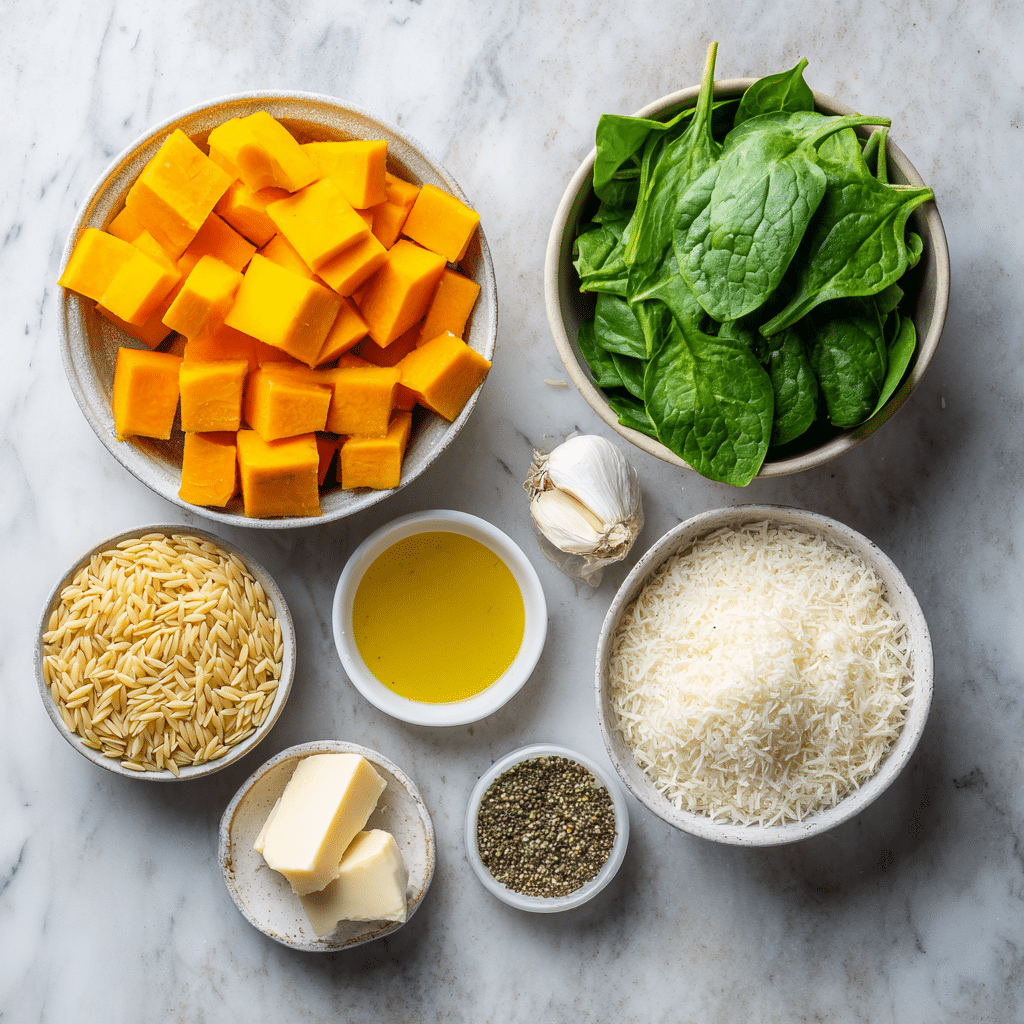
| Butternut squash | 1 small (3 cups diced) | Peel and dice into 1/2-inch cubes; can use pumpkin |
| Olive oil | 2 tbsp | Extra virgin for roasting the squash |
| Salt and pepper | To taste | Use sea salt and freshly cracked black pepper |
| Orzo pasta | 1.5 cups | Dry pasta; look for high-quality durum wheat |
| Vegetable broth | 3 cups | Low sodium preferred to control salt levels |
| Butter | 2 tbsp | Unsalted butter provides a rich, nutty base |
| Garlic | 2 cloves | Minced finely; use fresh for the best aroma |
| Parmesan cheese | 0.5 cup | Freshly grated for better melting and flavor |
| Heavy cream | 0.25 cup | Adds silkiness; substitute with half-and-half if needed |
| Baby spinach | 2 cups | Roughly chopped; stems removed for texture |
| Dried thyme | 0.5 tsp | Optional; provides an earthy, floral note |
| Red pepper flakes | Pinch | Optional; provides a subtle back-end heat |
| Fresh parsley | 2 tbsp | Finely chopped for a bright visual garnish |
Step-by-Step Instructions
Phase 1: Roasting the Butternut Squash
- Preheat your oven to 400°F (200°C) to ensure a hot roasting environment for the vegetables.
- Toss the diced butternut squash with two tablespoons of olive oil, salt, and black pepper in a large mixing bowl.
- Spread the seasoned squash in a single layer on a large rimmed baking sheet without crowding the pieces.
- Roast the squash for 25 to 30 minutes until the edges are golden brown and the centers are tender.
Phase 2: Preparing the Orzo Base
- Melt two tablespoons of butter in a large saucepan or skillet over medium heat until it begins to bubble slightly.
- Add the minced garlic to the melted butter and sauté for exactly one minute until fragrant but not browned.
- Stir in the dry orzo pasta and toast the grains for approximately two minutes while stirring constantly.
- Pour in three cups of vegetable broth and bring the mixture to a steady simmer over medium-high heat.
- Cook the orzo for 10 to 12 minutes, stirring occasionally to prevent the pasta from sticking to the bottom.
Phase 3: Adding Creaminess and Greens
- Stir in the grated Parmesan cheese and heavy cream once the orzo has absorbed most of the liquid.
- Add the chopped baby spinach to the pot and stir gently until the leaves are fully wilted.
- Fold the roasted butternut squash into the creamy pasta mixture using a spatula to avoid breaking the cubes.
- Adjust the seasoning with additional salt, pepper, or herbs before serving the dish warm.
Chef Tips for Perfect Results
- Ensure the butternut squash cubes are cut into uniform 1/2-inch sizes to guarantee they all finish roasting at the same time.
- Aggressively toast the orzo until it turns a light golden color to add a deep, nutty character to the final sauce.
- Stir the orzo frequently during the simmering stage to release its natural starches, which creates a much creamier texture naturally.
- Use room temperature heavy cream and Parmesan cheese to prevent the sauce from breaking or becoming grainy when added to heat.
- Reserve a small amount of extra vegetable broth to loosen the pasta just before serving, as orzo quickly absorbs liquid.
- Always use freshly grated Parmesan from a block because pre-shredded varieties contain anti-caking agents that hinder smooth melting.
Common Mistakes to Avoid
The most common error is overcrowding the baking sheet when roasting the squash, which leads to steaming rather than browning. When pieces are too close, they release moisture that gets trapped, resulting in a soft texture without the flavorful caramelization needed for this Creamy Orzo.
Another frequent mistake is boiling the orzo in too much water and draining it like traditional pasta. This removes the surface starches that are essential for making a creamy sauce, so you must use the exact amount of broth specified.
Adding the spinach too early can cause the greens to overcook and turn a dull, brownish color which ruins the visual appeal. Always wait until the orzo is fully cooked and the heat is reduced before folding in the baby spinach.
Failing to season the squash before roasting is a major oversight that cannot be fully corrected later in the process. The salt needs the heat of the oven to penetrate the vegetable and highlight its inherent sweetness.
Variations and Substitutions
| Ingredient | Substitution | Impact on Flavor |
|---|---|---|
| Butternut Squash | Sweet Potato | Sweeter, softer texture with a more earthy finish |
| Vegetable Broth | Mushroom Broth | Increases the umami profile and creates a darker color |
| Heavy Cream | Coconut Milk | Provides a subtle tropical coconut undertone; keeps it dairy-free if using vegan butter |
| Parmesan Cheese | Pecorino Romano | Results in a saltier, sharper, and more pungent flavor profile |
| Baby Spinach | Lacinato Kale | Offers more bite and a rugged, iron-rich flavor; requires longer wilting time |
Serving Suggestions and Pairings
Creamy Orzo with Roasted Butternut Squash and Spinach serves as a robust meal that pairs excellently with a crisp arugula salad dressed in lemon vinaigrette. The acidity from the lemon cuts through the richness of the cream and cheese, providing a refreshing palate cleanser between bites.
For a more substantial dinner party menu, serve this orzo alongside roasted chicken or a thick piece of crusty sourdough bread rubbed with fresh garlic. This dish is particularly suited for autumn celebrations, harvest festivals, or cozy Sunday dinners when seasonal produce is at its peak. You can also present it in individual ramekins for a more formal dining experience at a winter dinner party.
Storage and Reheating
| Method | Duration | Instructions |
|---|---|---|
| Refrigerator | 3–4 Days | Store in an airtight container once completely cooled to prevent moisture buildup |
| Freezer | Not Recommended | The cream and delicate orzo texture do not survive the freezing and thawing process well |
| Microwave | 2–3 Minutes | Add a splash of broth or water and cover with a damp paper towel before heating |
| Stovetop | 5 Minutes | Heat over low with a tablespoon of milk or broth while stirring gently to restore creaminess |
Nutritional Information
| Nutrient | Amount |
|---|---|
| Calories | 415 kcal |
| Total Fat | 18g |
| Saturated Fat | 9g |
| Cholesterol | 45mg |
| Sodium | 680mg |
| Protein | 12g |
| Carbohydrates | 54g |
| Fiber | 5g |
| Sugar | 4g |
Approximate values.
Conclusion
Creating a batch of Creamy Orzo with Roasted Butternut Squash and Spinach is a rewarding culinary endeavor that brings the best flavors of the season directly to your kitchen table. By following this method of roasting the squash and toasting the pasta, you ensure every element of the dish achieves its maximum potential for taste and texture.
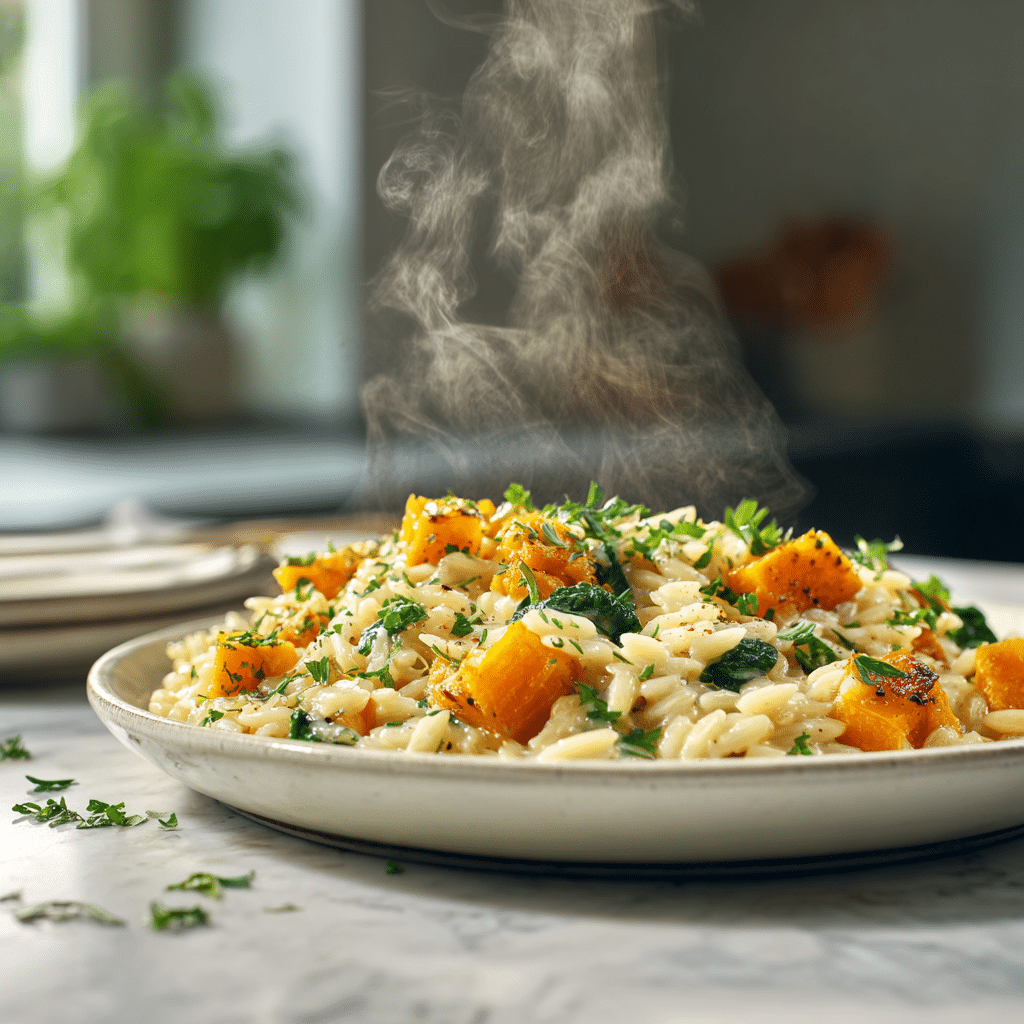
This Creamy Orzo is more than just a simple pasta meal; it is a lesson in how technique can transform modest ingredients like vegetable broth and baby spinach into something truly extraordinary. Whether you are cooking for a family on a Tuesday night or hosting guests for a special occasion, this Creamy Orzo offers a reliable and impressive solution that caters to vegetarians and meat-eaters alike. The golden cubes of squash provide a beautiful visual contrast against the dark green spinach and the ivory silken orzo, making it a feast for the eyes as much as the palate. Remember to adjust your seasonings at the very end, as the saltiness of the Parmesan can vary significantly between brands.
As you serve this meal, you will notice how the earthy thyme and sharp garlic elevate the simple cream sauce into a complex and comforting finish. We encourage you to experiment with various herb garnishes like sage or rosemary to see how they interact with the sweet butternut squash. Ultimately, the success of this Creamy Orzo lies in the balance of creaminess and structure, finishing on a signature flavor that is both deeply savory and delightfully sweet.
Print
Creamy Orzo with Roasted Butternut Squash and Spinach
- Total Time: 45 minutes
- Yield: 4 servings
Description
This creamy orzo with roasted butternut squash and spinach is a cozy, flavorful dish made with tender pasta, caramelized squash, and fresh greens. Perfect for a comforting vegetarian dinner or a healthy side dish.
Ingredients
1 cup orzo pasta
2 cups butternut squash, peeled and cubed
2 tablespoons olive oil
1 teaspoon salt
1/2 teaspoon black pepper
1/2 teaspoon paprika
2 cloves garlic, minced
1 small onion, chopped
3 cups vegetable broth
1/2 cup heavy cream (or coconut milk for dairy-free)
2 cups fresh spinach
1/2 cup grated Parmesan cheese
1/2 teaspoon dried thyme
1/2 teaspoon dried oregano
Instructions
1. Preheat the oven to 400°F (200°C).
2. Toss the butternut squash with 1 tablespoon olive oil, salt, pepper, and paprika. Spread on a baking sheet and roast for 20 to 25 minutes until tender and caramelized.
3. In a large skillet, heat the remaining olive oil over medium heat. Sauté the onion until soft, then add garlic and cook for 1 minute.
4. Add the orzo and stir for 1 to 2 minutes to lightly toast it.
5. Pour in the vegetable broth and bring to a simmer. Cook, stirring occasionally, until the orzo is tender and most of the liquid is absorbed.
6. Stir in the roasted butternut squash, spinach, thyme, and oregano.
7. Add the cream and Parmesan cheese, stirring until the mixture becomes creamy.
8. Adjust seasoning with salt and pepper if needed.
9. Serve warm, garnished with extra Parmesan if desired.
Notes
For a vegan version, use coconut milk and skip the Parmesan or replace with a plant-based alternative.
Do not overcook the orzo to avoid a mushy texture.
You can add mushrooms or chickpeas for extra protein.
Store leftovers in the fridge for up to 3 days and reheat gently with a splash of broth.
- Prep Time: 15 minutes
- Cook Time: 30 minutes
- Category: Main Course
- Cuisine: American
FAQ
Can I use frozen butternut squash for this Creamy Orzo?
Frozen butternut squash is a viable alternative if you are short on time or cannot find fresh produce. You must roast the frozen cubes directly from the freezer at a slightly higher temperature to prevent them from becoming too soft. Expect a slightly less caramelized exterior compared to using fresh, hand-cut squash.
How do I know when the orzo is perfectly cooked?
The orzo is done when it reaches an al dente texture, meaning it is tender but still offers a slight resistance when bitten. You should begin testing the pasta at the 10-minute mark to ensure it does not become overcooked and mushy. The grain will have tripled in size and the surrounding liquid should look like a thick sauce.
What should I do if my orzo sauce is too thick?
Thin the sauce by adding an extra tablespoon of vegetable broth or warm water one at a time until the desired consistency is reached. Pasta continues to absorb liquid as it sits, so you may need to add more liquid right before serving. Constant stirring while adding liquid will help maintain the emulsion of the cream and cheese.
Can this creamy orzo dish be made in advance?
This dish is best served immediately, but the butternut squash can be roasted up to 24 hours in advance. If you must prepare the entire dish ahead of time, undercook the orzo slightly and store the sauce extra loose. Reheat it carefully on the stove with additional liquid to prevent the pasta from drying out.
What proteins are best served with this vegetarian orzo?
Roasted chicken or pan-seared white fish are the best animal-based proteins to pair with this specific recipe. For a vegetarian protein boost, consider adding chickpeas or topping the dish with toasted pine nuts. The creamy profile of the dish allows it to complement a wide range of mild-flavored proteins without overwhelming them.