
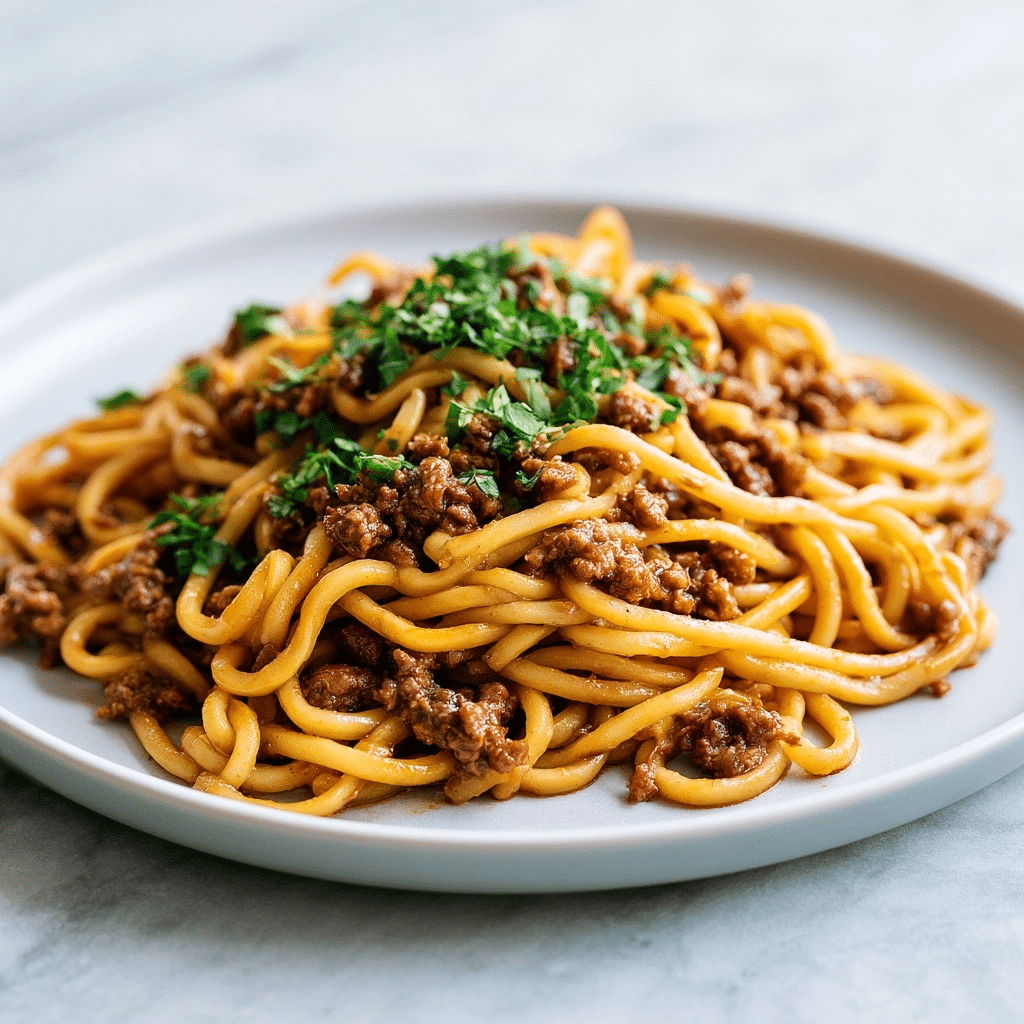
Mongolian Ground Beef Noodles are a savory, fusion-inspired dish featuring tender ground beef simmered in a rich, sweet, and salty garlic-ginger sauce tossed with silky linguine. This specific recipe utilizes lean ground beef and a robust blend of hoisin and soy sauce to deliver a profile that mimics high-end takeout from the comfort of your own kitchen. Designed for busy families and meal prep enthusiasts, this meal transitions from pantry to plate in roughly 30 minutes, offering a reliable solution for hectic weeknights. The aroma of toasted garlic and warm ginger fills the kitchen as the sauce caramelizes against the beef, creating a satisfying texture that clings perfectly to every strand of noodle. This dish transforms standard grocery staples into a gourmet experience that balances deep umami notes with a subtle, refreshing heat.
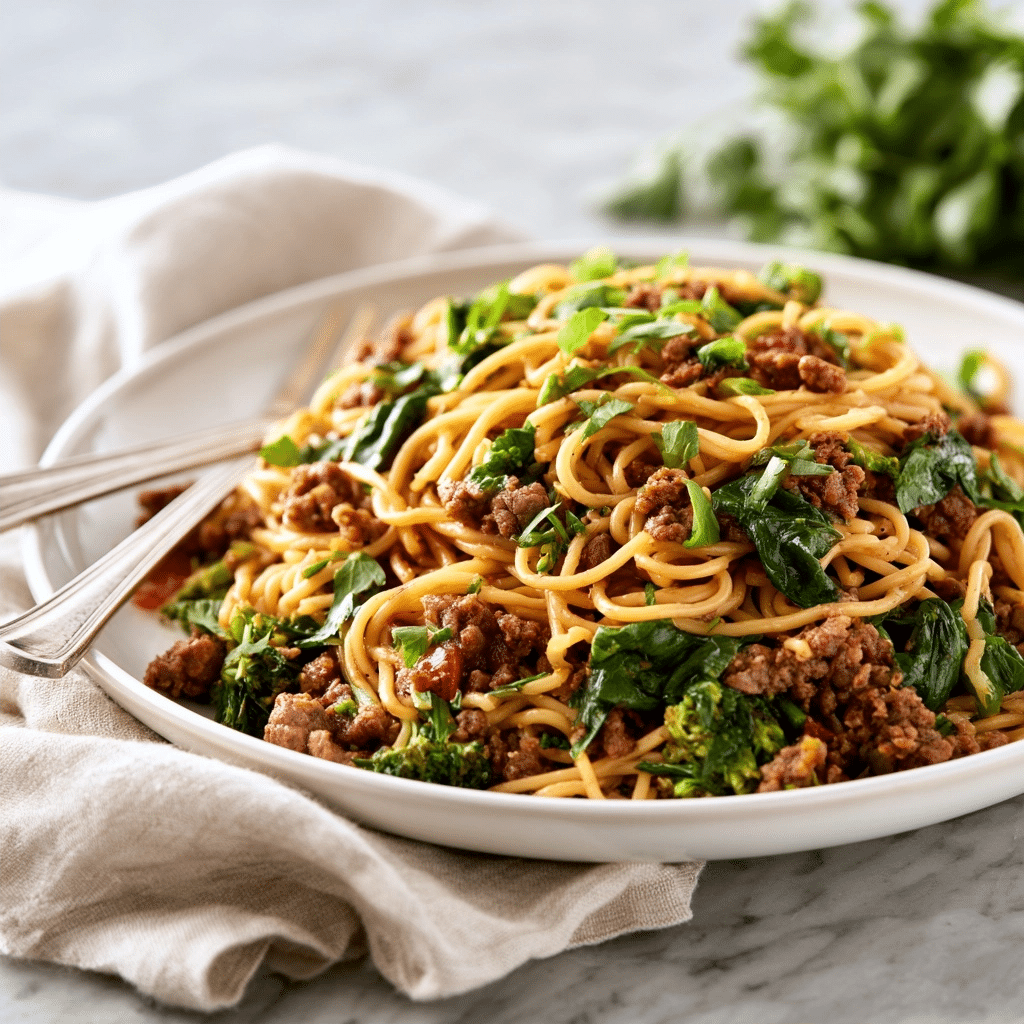
What Is Mongolian Ground Beef Noodles?
Mongolian Ground Beef Noodles is a contemporary adaptation of the classic Mongolian beef profile, reimagined for accessibility and speed using ground meat instead of traditional flank steak. While the name suggests a direct connection to Mongolian cuisine, the flavor profile is actually rooted in Taiwanese-style stir-fries that became popular in American restaurants during the mid-20th century. This dish is defined by its signature dark, glossy glaze made from brown sugar, soy sauce, and ginger. Unlike its steak-based counterpart, the ground beef version provides more surface area for the sauce to penetrate, resulting in a more intense flavor distribution throughout the entire plate of noodles.
| Prep Time | 10 minutes |
| Cook Time | 20 minutes |
| Total Time | 30 minutes |
| Servings | 4 people |
| Difficulty Level | Easy |
| Cuisine | Asian Fusion |
| Calories per Serving | 485 kcal |
Why You’ll Love This Recipe
- Effortless Preparation: Using ground beef eliminates the need for slicing tough cuts of meat against the grain, significantly reducing your active prep time.
- Foolproof Sauce: The ratios of hoisin, soy, and brown sugar create a balanced syrupy consistency that is difficult to ruin, even for beginner cooks.
- Time-Saving Solution: You can prepare the entire sauce and beef base in the time it takes for your pasta water to reach a boil.
- Crowd-Pleasing Flavor: The combination of sweet and savory notes appeals to both children and adults, making it an excellent choice for family gatherings.
- Budget-Friendly: Ground beef and dried linguine are cost-effective pantry staples that deliver a high-protein meal without a premium price tag.
This recipe thrives on its simplicity and speed. You will find that the deep mahogany color of the sauce provides a visually stunning presentation with minimal effort. It is the ultimate one-pan style meal that minimizes cleanup while maximizing the complex savory flavors typically expected from a long-simmering stew or high-heat wok dish.
Why This Recipe Works
Through years of developing quick-service noodle dishes, I have found that the success of Mongolian Ground Beef Noodles lies in the Maillard reaction. By browning the ground beef thoroughly before adding liquids, you create a foundational layer of savory compounds that no sauce can replicate on its own. In my personal experience, allowing the beef to develop a deep brown crust adds a textural contrast against the soft linguine that elevates the entire dining experience from a simple home meal to something truly memorable.
The technique hinges on the controlled emulsification of the sauce. By whisking cornstarch and cold water into a slurry before introducing it to the hot skillet, you ensure a glossy, lump-free glaze. This slurry reacts with the sugar and beef fat under medium-high heat, creating a thick coating that encapsulates the noodles. If you were to add dry cornstarch directly to the pan, it would clump and fail to provide that signature silky mouthfeel. The addition of beef broth ensures the sauce remains fluid enough to coat every strand of linguine without becoming overly sticky or dry.
Finally, the sensory payoff comes from the layering of aromatics. Fresh garlic is sautéed just until fragrant to prevent bitterness, while ground ginger provides a consistent, warm spice throughout the liquid base. When the noodles are tossed into the beef, they undergo a brief second simmer. This allows the pasta to absorb the salt and sugar from the sauce, ensuring the flavor is not just on the surface but integrated into every bite.
Pro Tips Before You Start
- Mise en Place: Measure all liquids and chop your garlic before you turn on the stove, as the sauce thickens very quickly once heat is applied.
- Pasta Water Salt: Season your boiling water heavily with salt; this is your only opportunity to season the interior of the linguine strands.
- Cold Water Slurry: Always use cold water to mix your cornstarch; using warm or hot water will cause it to starch-gel prematurely and create lumps.
- Lean Meat Selection: Opt for a 90/10 or 93/7 beef-to-fat ratio to ensure the sauce doesn’t become greasy.
Ingredients
Here’s everything you’ll need to make these flavorful Mongolian Ground Beef Noodles. The measurements provided ensure a perfectly balanced sauce-to-noodle ratio.
| Ingredient | Quantity | Notes/Alternatives |
|---|---|---|
| Ground Beef | 1 lb (450g) | Lean 90/10 preferred |
| Linguine | 10 oz (285g) | Can use fettuccine or rice noodles |
| Garlic | 5 cloves | Freshly minced for best aroma |
| Brown Sugar | 1/3 cup (65g) | Light or dark both work well |
| Beef Broth | 1/4 cup (60ml) | Low sodium to control saltiness |
| Soy Sauce | 1/3 cup (80ml) | Use Tamari for gluten-free version |
| Hoisin Sauce | 3 tbsp (45ml) | Provides depth and thickness |
| Ground Ginger | 1/2 tsp | Fresh grated ginger (1 tbsp) as alternative |
| Black Pepper | 1/2 tsp | Freshly cracked for more bite |
| Red Pepper Flakes | 1 pinch | Optional for spice |
| Cornstarch | 1 tbsp (8g) | Used for thickening |
| Water | 2 tbsp (30ml) | Must be cold for the slurry |
| Green Onions | 4 stalks | Sliced for garnish |
Best Ingredients for Mongolian Ground Beef Noodles
Quality soy sauce is the backbone of this recipe. I recommend using a naturally brewed soy sauce which offers a complex, fermented character rather than chemically produced alternatives. If you want to elevate the dish, fermented hoisin sauce adds a unique plum-like sweetness and umami that creates a professional-grade finish. The choice of pasta also matters; while we use linguine for its accessibility and surface area, a high-quality bronze-cut pasta will have a rougher texture that grips the Mongolian sauce more effectively than smooth, cheaper varieties.
Step-by-Step Instructions
Phase 1: Preparing the Base
- Cook the pasta in a large pot of boiling salted water according to the package directions, usually taking 9-11 minutes, until just al dente.
- Drain the linguine in a colander and set aside, reserving a small splash of pasta water if you prefer a looser sauce later. (Do not rinse the noodles or the sauce won’t stick.)
- Brown the ground beef in a 12-inch skillet over medium-high heat for 6-8 minutes, breaking it into small crumbles with a wooden spoon until no pink remains.
- Drain the excess fat from the skillet carefully, leaving about a teaspoon in the pan to help sauté the aromatics.
Phase 2: Developing the Flavor
- Add minced garlic to the browned beef and sauté for 60 seconds over medium heat until the aroma is released and the garlic turns light golden.
- Whisk the liquids including soy sauce, beef broth, brown sugar, hoisin sauce, ginger, black pepper, and red pepper flakes directly into the skillet.
- Stir the mixture well to dissolve the brown sugar, ensuring the beef is fully submerged in the simmering liquid.
- Combine the slurry by mixing 1 tablespoon of cornstarch with 2 tablespoons of cold water in a separate small bowl until completely smooth.
- Thicken the sauce by pouring the slurry into the bubbling beef mixture, stirring constantly for 2-3 minutes until the sauce becomes glossy and coats the back of a spoon.
Phase 3: Final Assembly
- Incorporate the noodles by adding the cooked linguine into the skillet with the beef and sauce.
- Toss everything together using tongs, ensuring the sauce is evenly distributed and the noodles are fully coated in the dark glaze.
- Simmer briefly for 2 minutes to allow the noodles to absorb the flavors and reach the target temperature of 165°F (74°C).
- Garnish the dish with freshly sliced green onions to provide a sharp, fresh contrast to the sweet sauce.
- Serve immediately while the sauce is at its peak consistency and the aroma is most potent.
Chef Tips for Perfect Results
- Control the Sweetness: If you prefer a more savory profile, reduce the brown sugar to 1/4 cup and add an extra teaspoon of soy sauce.
- Wok Alternative: If you own a carbon steel wok, use it on high heat to achieve “wok hei” or the breath of the wok, which adds a charred smokiness to the beef.
- Noodle Texture: Always cook your linguine for 1 minute less than the package instructions; the noodles will finish cooking in the sauce and avoid becoming mushy.
- Fresh Ginger Swap: For a more vibrant punch, replace ground ginger with 1 tablespoon of fresh grated ginger root added at the same time as the garlic.
- Resting Time: Let the dish sit for 3 minutes before serving; the starch in the sauce will set further for a better coating.
Common Mistakes to Avoid
Overcrowding the Pan | Results in steamed, gray meat rather than browned beef | Meat releases moisture too quickly and cannot sear | Cook in batches or use a wide 12-inch skillet to ensure proper caramelization.
Burning the Garlic | Results in a bitter, acrid aftertaste | Garlic has a high sugar content and low burn point | Keep the heat at medium and stir constantly, adding liquids immediately after 60 seconds.
Adding Slurry to Cold Liquid | Results in a gritty texture with white clumps | Cornstarch needs heat to gelatinize and thicken properly | Ensure the beef sauce is at a simmer before slowly drizzling in the cornstarch mixture.
Rinsing the Pasta | Results in the sauce sliding off the noodles | Rinsing removes the exterior starch that helps the sauce bind | Drain the pasta and add it directly to the skillet while it is still warm.
How to Make This Recipe Healthier
You can easily adapt this dish to fit various nutritional goals. Substituting the standard ground beef with 95/5 lean beef or ground turkey reduces saturated fat by approximately 40% while maintaining the high protein content. If you are watching sodium intake, prioritize a “Less Sodium” soy sauce and a sodium-free beef broth, which can lower total sodium by 350mg per serving.
White Pasta → Whole Wheat Linguine: Adds a nuttier flavor and increases fiber by 4g per serving, though it creates a slightly denser texture.
Brown Sugar → Honey or Maple Syrup: Provides a more natural sweetness profile, though it increases moisture slightly so you may need 1 extra minute of simmering.
Variations and Substitutions
This recipe is highly adaptable to dietary needs and flavor preferences.
| Ingredient | Substitution | Flavor Impact | Texture Impact |
|---|
Can You Make This Ahead?
Yes, Mongolian Ground Beef Noodles can be prepared up to 4 days in advance. In fact, many find that the flavors deepen significantly after 24 hours in the refrigerator. If making ahead, I recommend slightly undercooking the noodles more than usual to prevent them from becoming too soft during the reheating process. Store the completed dish in an airtight container as soon as it reaches room temperature. When ready to eat, a splash of water or beef broth will help loosen the sauce and restore its original glossy texture.
Serving Suggestions and Pairings
To balance the richness of the Mongolian Ground Beef Noodles, serve with a side of steamed bok choy or a crisp ginger-soy cucumber salad. For a crunchy element, top with toasted sesame seeds or crushed peanuts just before serving. This dish pairs excellently with a crisp white beverage like a non-alcoholic sparkling ginger ale or a chilled jasmine green tea. It is a fantastic option for casual dinner parties where you want to impress guests with bold flavors without spending the entire evening in the kitchen. For a formal presentation, serve in wide shallow bowls and garnish high with vertically sliced green onions.
Best Occasions to Serve This Recipe
This dish is perfect for Tuesday-night dinners when time is tight but you want a comforting meal. It also serves as an excellent meal prep option for Sunday afternoons because the noodles hold up well in lunch containers throughout the week. Because it feels like a treat, it is equally suitable for a budget-friendly date night or for feeding a crowd of teenagers who appreciate large portions and savory flavors. During the colder months, the warmth of the ginger and pepper flakes makes it an exceptionally cozy choice.
Storage and Reheating
Proper storage ensures the noodles maintain their integrity and the beef stays succulent.
| Method | Duration | Instructions |
|---|
Nutritional Information
Approximate nutritional values per serving:
| Nutrient | Amount per Serving |
| Calories | 485 kcal |
| Protein (g) | 28g |
| Fat (g) | 16g |
| Carbohydrates (g) | 58g |
| Fiber (g) | 3g |
| Sugar (g) | 12g |
| Sodium (mg) | 1150mg |
*Approximate values based on standard ingredients. Actual nutrition varies by brand and substitutions.
Conclusion
Mongolian Ground Beef Noodles represent the perfect intersection of convenience and culinary depth. This recipe wins because it utilizes affordable ground beef and transforms it into a restaurant-quality meal using a sophisticated but simple sauce technique. The balance of sweetness from the brown sugar and depth from the hoisin creates a coating that is infinitely more satisfying than any pre-packaged alternative. By mastering the sequence of browning, aromatics, and thickening, you provide a high-value meal that feels like a handcrafted achievement.
The primary benefit of this dish is its sheer speed without the sacrifice of texture or taste. You will find that the methodology—browning the beef to build flavor and using a starch slurry for the sauce—is a skill you can apply to countless other stir-fry recipes in your repertoire. This is a reliable kitchen staple that consistently delivers a family-friendly outcome, ensuring it will become a regular fixture in your meal rotation.
Try this recipe tonight and see how quickly it becomes a household favorite. Save this guide for your next grocery trip and discover how few ingredients are required to build such an impressive result. This transforms your standard weeknight routine into a savory experience that concludes with a clean plate every time. Experience the bold, ginger-infused payoff for yourself.
FAQ
Can I substitute ground beef with ground turkey?
Yes, ground turkey is an excellent leaner alternative for this recipe. You should add one teaspoon of vegetable oil to the pan when browning turkey, as it has a lower fat content and may stick more easily. The flavor will be slightly milder, but the robust Mongolian sauce will still provide a delicious final result.
How do I know when the sauce is thick enough?
The sauce is ready when it reaches a stable, syrupy consistency that coats the back of a spoon. You should be able to run your finger through the sauce on the spoon and leave a clear path. This usually occurs within 2 to 3 minutes of adding the cornstarch slurry and reaching a simmer.
What should I do if my sauce is too salty?
If the dish tastes too salty, add a tablespoon of water or a splash of rice vinegar to balance the sodium. The acidity of the vinegar helps cut through the saltiness of the soy sauce without thinning the consistency too much. You can also increase the amount of noodles to redistribute the sauce across more volume.
Can I make these noodles gluten-free?
You can make this recipe gluten-free by substituting the soy sauce with Tamari or coconut aminos and the linguine with gluten-free pasta or rice noodles. Ensure your hoisin sauce is also certified gluten-free, as some brands use wheat flour as a thickener. The flavor profile will remain very similar to the original version.
How do I reheat the noodles without them drying out?
The best way to reheat these noodles is on the stovetop over medium heat with two tablespoons of beef broth or water. Cover the pan with a lid for the first two minutes to create steam, which helps re-moisturize the pasta. Once the sauce has liquefied again, remove the lid and toss the noodles until they are heated through to 165°F (74°C).
Print
Quick Mongolian Ground Beef Noodles
- Total Time: 30
- Yield: 4 servings
- Diet: Halal
Description
A fusion of sweet and savory flavors, these noodles feature tender ground beef simmered in a garlic-ginger hoisin-soy sauce, tossed with silky linguine. A 30-minute weeknight meal bursting with umami.
Ingredients
1 lb lean ground beef
12 oz linguine
3 cloves garlic, minced
1 tablespoon fresh ginger, grated
2 tablespoons hoisin sauce (vegetarian/halal)
1/4 cup soy sauce (low-sodium if preferred)
2 tablespoons brown sugar
1 teaspoon cornstarch mixed with 2 tablespoons water
2 tablespoons vegetable oil
Salt and pepper to taste
Instructions
Heat oil in a large pan over medium-high heat; cook beef with garlic and ginger until browned.
Add hoisin sauce, soy sauce, and brown sugar. Simmer 5 minutes.
Stir in cornstarch slurry and cook until sauce thickens.
Boil noodles according to package instructions; drain and toss with sauce.
Season with salt and pepper.
Notes
Use halal-certified hoisin and soy sauce
Add frozen peas or broccoli for extra nutrients
Spoon extra sauce from beef mixture onto noodles for heartier coating
- Prep Time: 10
- Cook Time: 20
- Category: Meals
- Method: Stovetop
- Cuisine: Asian Fusion