
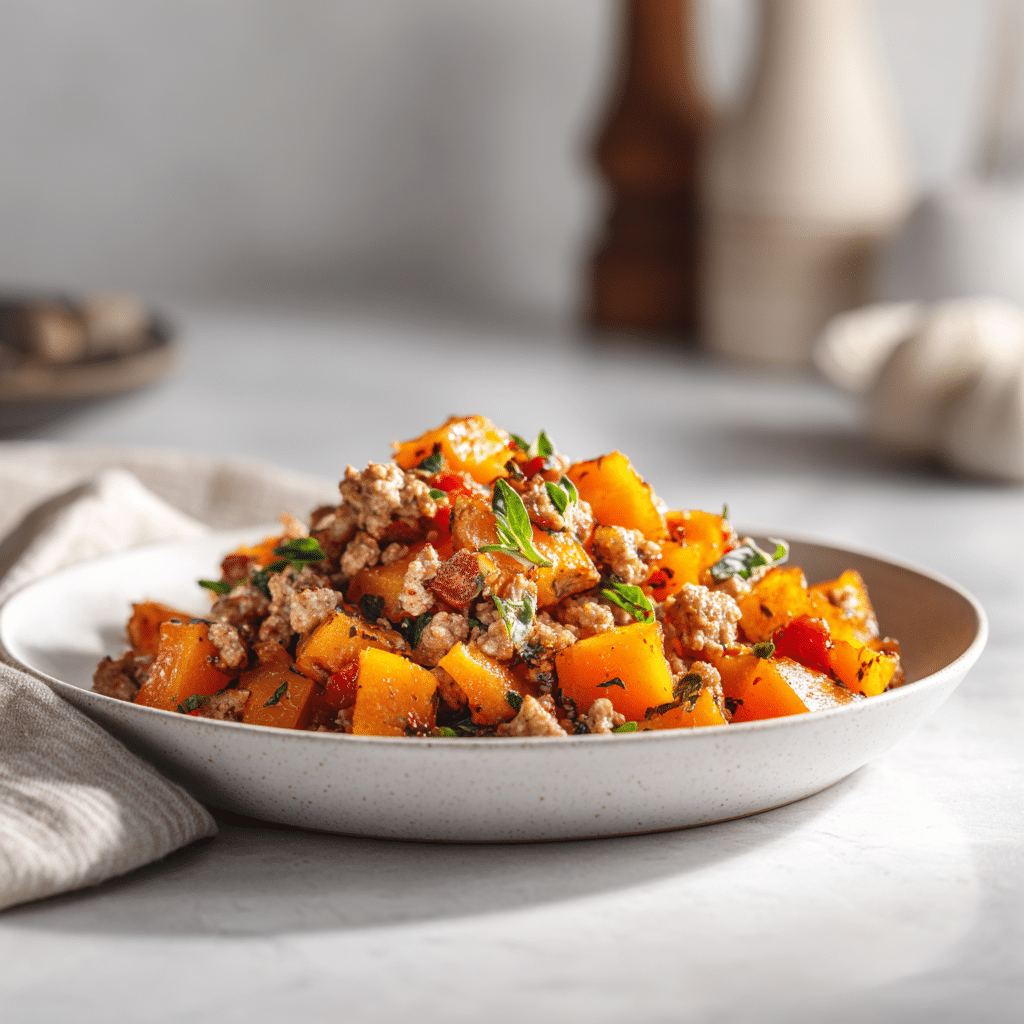
Roasted butternut squash with ground turkey is a nutrient-dense, protein-packed meal that combines caramelized seasonal vegetables with lean poultry and light couscous. This balanced dish provides a sophisticated flavor profile through the use of warm spices like cinnamon and nutmeg paired with the zesty brightness of lemon pepper and fresh citrus.
It delivers a perfect ratio of complex carbohydrates, lean protein, and leafy greens to satisfy nutritional requirements without excessive calories. By roasting the squash at high heat, you achieve a sweet, tender interior and a crisp exterior that complements the savory turkey mixture. This recipe stands as a staple for those seeking a wholesome dinner that does not compromise on texture or aromatic depth.
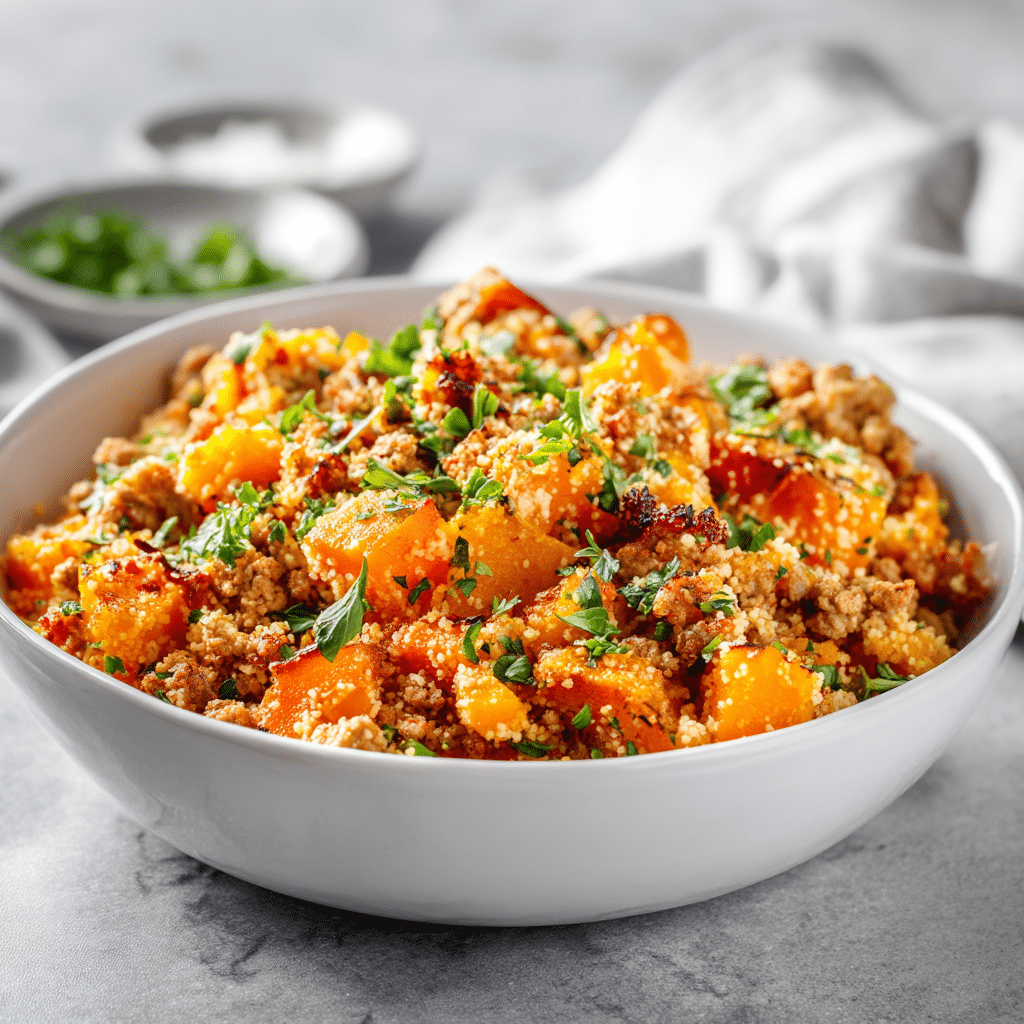
Table of Contents
Recipe Overview
| Attribute | Details |
|---|---|
| Prep Time | 20 Minutes |
| Cook Time | 45 Minutes |
| Total Time | 1 Hour 5 Minutes |
| Servings | 4 Persons |
| Difficulty | Intermediate |
| Cuisine | American Fusion |
Why This Recipe Works
I find that the combination of maple-glazed squash and savory ground turkey creates a multi-dimensional eating experience that satisfies both sweet and salty cravings. The specific roasting technique used here ensures that the squash maintains its structural integrity rather than becoming mushy, providing a satisfying bite alongside the fluffy couscous grains. Using lean turkey prevents the dish from feeling heavy or greasy, allowing the subtle notes of Swiss chard and minced red onion to shine through clearly in every forkful.
The addition of lemon juice at the final stage acts as a flavor catalyst, cutting through the richness of the turkey and the earthiness of the nutmeg. I have discovered that steaming the couscous separately preserves its delicate texture, preventing it from absorbing too much moisture from the vegetable juices and becoming soggy. This meal is exceptionally efficient for busy weeknights because even though it feels gourmet, the active cooking time is focused and manageable for home cooks of any skill level.
Ingredients
| Ingredient | Quantity | Notes and Alternatives |
|---|---|---|
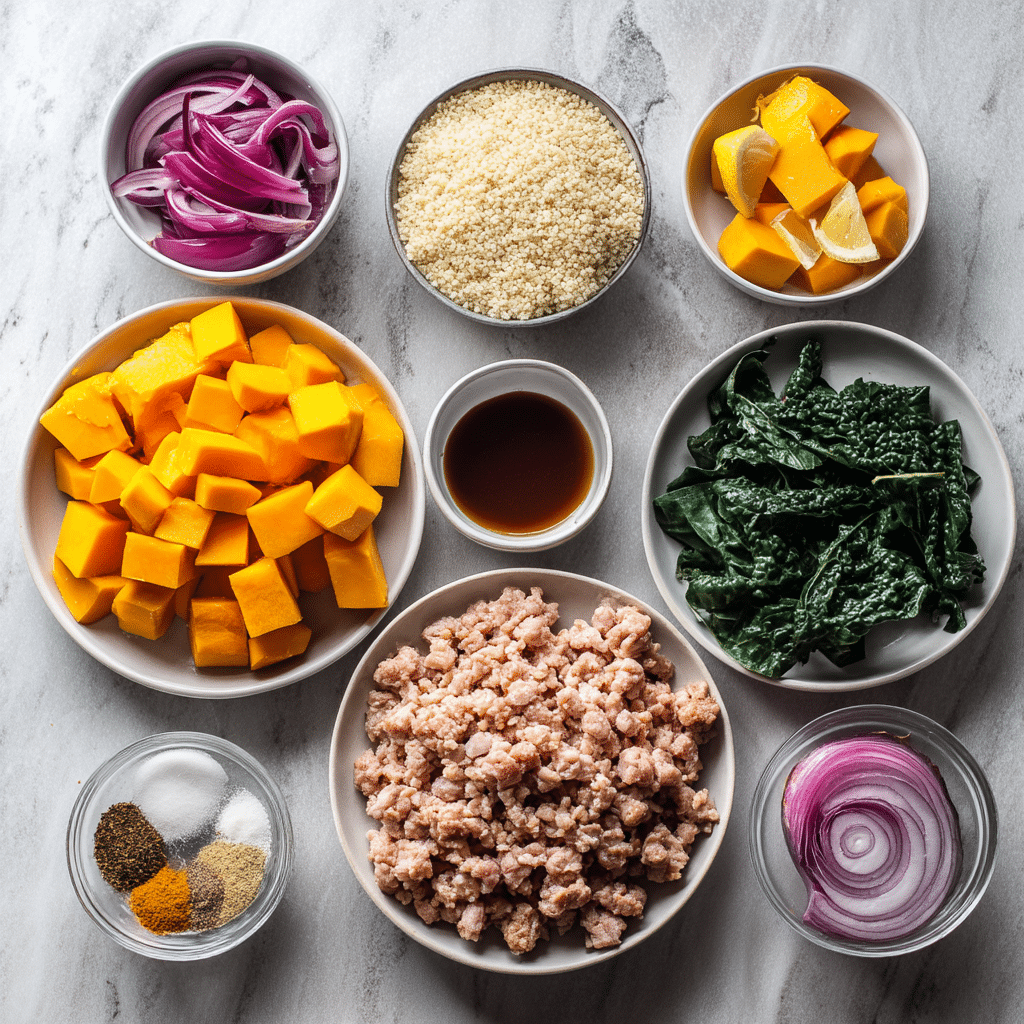
| Butternut Squash | 4 cups | Peeled and diced into 1-inch cubes. Can use sweet potato. |
| Ground Turkey | 1 lb | Use lean ground turkey to minimize grease. |
| Couscous | 1 cup | Dry weight. Quinoa or bulgur are suitable gluten-free swaps. |
| Swiss Chard | 3 cups | Finely chopped including stems. Kale or spinach also work. |
| Red Onion | 1 1/2 cups | Finely minced (1/4-inch pieces). |
| Canola Oil | 3 1/2 tbsp | Divided use for roasting and pan-searing. |
| Maple Syrup | 1/2 tbsp | Grade A for the best caramelization results. |
| Spices | As noted | Cinnamon, nutmeg, salt, black pepper, garlic powder, onion powder, paprika. |
| Lemon | 1 whole | Juiced fresh just before serving the dish. |
Step-by-Step Instructions
Phase 1: Roasting the Butternut Squash
- Preheat your oven to 425°F (220°C) to ensure a hot roasting environment.
- Toss the diced squash in a large bowl with canola oil, nutmeg, cinnamon, maple syrup, salt, and pepper.
- Spread the cubes on a parchment-lined baking sheet so they do not touch.
- Roast for 35 minutes until the centers are fork-tender.
- Broil on high for 3 minutes to achieve a golden, caramelized exterior.
Phase 2: Preparing the Couscous
- Boil one cup of water in a small pot or electric kettle.
- Place dry couscous in a heat-proof bowl and pour the boiling water over it.
- Cover the bowl immediately with a lid or plate to trap the steam.
- Let the grains sit undisturbed for 7 minutes to absorb the liquid.
- Fluff with a fork to separate the grains and keep covered until assembly.
Phase 3: Sautéing the Turkey and Greens
- Heat the remaining oil in a large skillet over medium-high heat until shimmering.
- Sauté the minced red onion for 3 minutes until softened and translucent.
- Add the ground turkey along with lemon pepper, paprika, garlic powder, onion powder, and salt.
- Cook for 3 minutes while breaking the meat into small crumbles with a spatula.
- Incorporate the chopped Swiss chard and cook for 2 more minutes until wilted.
- Remove from heat once the turkey reaches an internal temperature of 165°F.
Phase 4: Final Assembly
- Portion the fluffed couscous into the center of individual serving bowls.
- Spoon the turkey and chard mixture directly over the bed of couscous.
- Arrange the roasted squash cubes around the perimeter or on top.
- Squeeze fresh lemon juice over the entire plate to brighten the flavors.
Chef Tips for Perfect Results
- Maintain consistent 1-inch cube sizes for the squash to ensure every piece cooks at the same rate.
- Avoid overcrowding the baking sheet because trapped steam prevents the squash from developing a crispy roasted skin.
- Use freshly grated nutmeg rather than pre-ground powder to double the aromatic impact of the roasting seasoning.
- Drain any excess moisture from the Swiss chard before adding it to the skillet to prevent the turkey from boiling in its own juices.
- Rest the turkey for two minutes after cooking to allow the juices to redistribute for a moister protein texture.
- Zest the lemon before juicing it and sprinkle the zest over the dish for an extra layer of citrus fragrance.
Common Mistakes to Avoid
Adding the Swiss chard too early is a common error that leads to slimy, overcooked greens. Chard only requires a few minutes of heat to reach the ideal texture, so wait until the turkey is nearly done before stirring it in. If you add it at the start, you lose the vibrant color and the slight crunch of the stems.
Using cold water for the couscous will result in hard, unpalatable grains that never fully hydrate. Always use a 1:1 ratio of boiling water to couscous and ensure the lid is tight during the sitting period. If the steam escapes, the grains remains partially raw, ruining the base of your healthy roasted butternut squash meal.
Skipping the broiling step at the end of the squash roasting process means missing out on the Maillard reaction. This final burst of high heat transforms the natural sugars and maple syrup into a complex, sweet crust. Without it, the squash may taste boiled or bland despite being fully cooked through.
Neglecting to break up the ground turkey into small, uniform crumbles creates large chunks that don’t absorb seasonings evenly. I recommend using a wooden spoon or a meat masher to ensure the turkey bits are fine and well-coated in the paprika and garlic powder. This maximizes the surface area for flavor adherence and ensures a consistent texture.
Variations and Substitutions
| Current Ingredient | Substitution | Impact on Flavor |
|---|---|---|
| Canola Oil | Avocado Oil | Neutral flavor with a higher smoke point for safer roasting. |
| Couscous | Quinoa | Adds a nutty flavor and increases total fiber and protein. |
| Swiss Chard | Baby Spinach | Creates a milder, more delicate texture in the meat mixture. |
| Maple Syrup | Honey | Provides a floral sweetness rather than the earthy note of maple. |
| Ground Turkey | Ground Chicken | Offers a similar lean profile but with a slightly softer texture. |
Serving Suggestions and Pairings
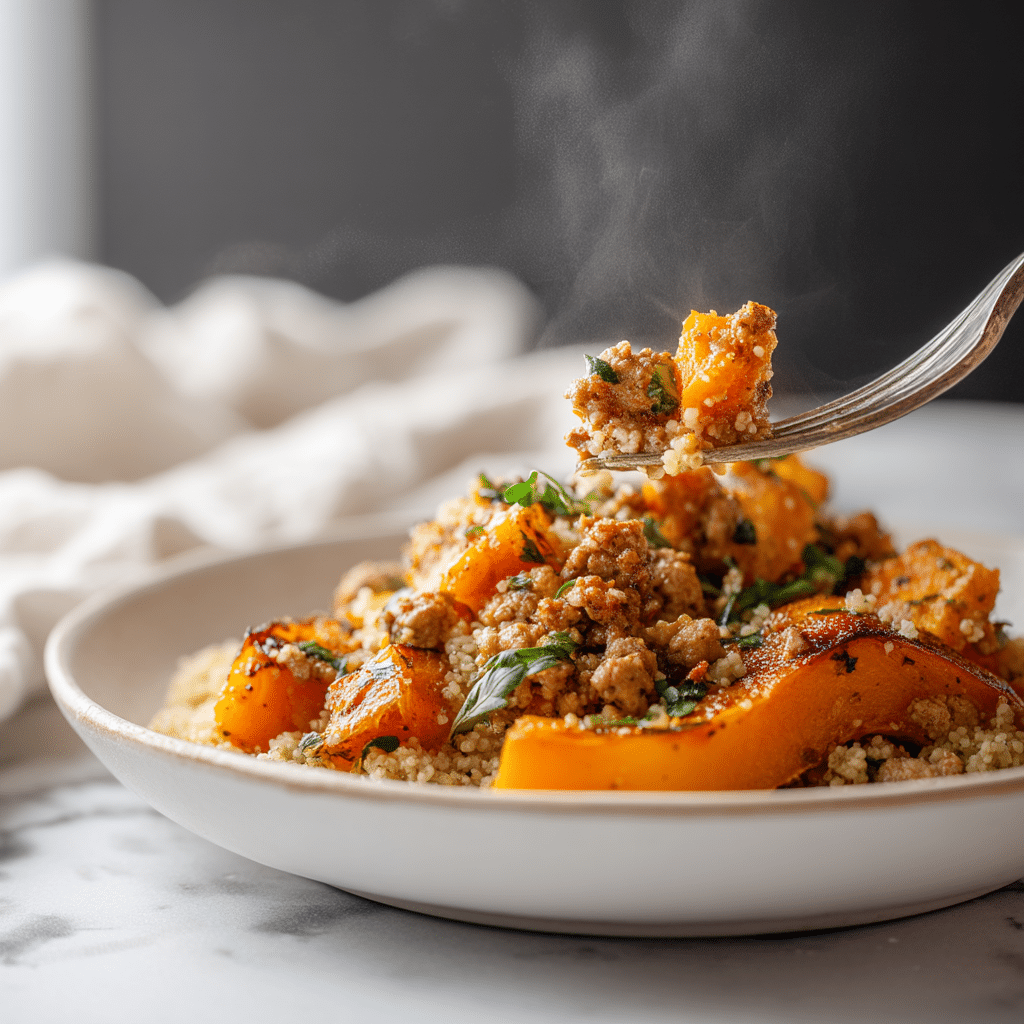
Healthy roasted butternut squash with ground turkey serves as a complete meal for a cozy autumn dinner party or a structured meal prep option. I recommend serving it alongside a crisp green salad tossed in a light balsamic vinaigrette to provide a cold, acidic contrast to the warm, roasted elements. For a more formal occasion, you might pair this Roasted Butternut Squash with a sparkling apple cider or a chilled ginger tea to highlight the cinnamon and nutmeg spices used in the squash preparation.
This recipe is also excellent when served at room temperature for a healthy office lunch. The flavors of the turkey and chard deepen over time, making it a reliable choice for preparation several days in advance. If you are serving this for a family gathering, consider placing each component in separate large serving platters so guests can customize their ratios of grain, protein, and vegetables according to their personal preference.
Storage and Reheating
| Method | Duration | Instructions |
|---|---|---|
| Refrigeration | 3-4 Days | Store in an airtight container once completely cooled. |
| Freezing | 2 Months | |
| Microwave | 2 Minutes | Heat on medium power with a damp paper towel over the bowl. |
| Stovetop | 5 Minutes | Reheat in a skillet over medium heat with a splash of broth. |
Nutritional Information
| Nutrient | Amount per Serving |
|---|---|
| Calories | 420 kcal |
| Protein | 28g |
| Fat | 14g |
| Carbohydrates | 48g |
| Fiber | 7g |
| Sugar | 9g |
| Sodium | 450mg |
Approximate values.
Conclusion
Healthy roasted butternut squash with ground turkey represents the pinnacle of nutritious home cooking that focuses on high-quality ingredients and precise seasoning. This recipe balances the inherent natural sweetness of winter squash with the savory, spiced profile of lean turkey and the refreshing finish of citrus.
By following these specific steps, you create a dish that is as visually appealing as it is nutritionally beneficial. The contrast between the soft couscous and the caramelized edges of the squash provides a satisfying variety of textures in every bite. I encourage you to use the freshest produce available, particularly when selecting the Swiss chard and the butternut squash, to ensure the most vibrant results. This meal proves that healthy eating does not have to be repetitive or flavorless, offering a complex array of aromatics like nutmeg and smoked paprika that elevate the simple ingredients.
Whether you are cooking for a family or preparing meals for the week ahead, this versatile recipe adapts to your needs while providing consistent, delicious results every time. Success with this Roasted Butternut Squash comes down to the heat management during roasting and the careful layering of spices throughout the preparation. Once you master the timing of the broil and the infusion of the turkey seasonings, this will surely become a favorite in your kitchen rotation. Experience the warm, comforting aroma of cinnamon and roasted squash as you bring this wholesome meal to your table tonight.
Print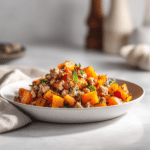
Healthy Roasted Butternut Squash with Ground Turkey
- Total Time: 65
- Yield: 4 servings 1x
- Diet: Halal
Description
A wholesome and balanced meal featuring roasted butternut squash, lean ground turkey, and lemon-spiced couscous. Caramelized vegetables and warm spices like cinnamon and nutmeg are paired with zesty lemon pepper and fresh citrus to create a nutritious and flavorful dinner that is satisfying yet light.
Ingredients
3 cups peeled, diced butternut squash or sweet potato
1 lb lean ground turkey
1 cup dry couscous
1 red onion, minced
1 lemon, juiced
2 garlic cloves, minced
1/2 cup olive oil
1 tsp ground cinnamon
1/2 tsp ground nutmeg
1 tsp lemon pepper seasoning
1 tbsp honey
3 cups finely chopped Swiss chard
Salt to taste
Fresh parsley or cilantro for garnish
Instructions
Preheat oven to 400°F (200°C)
In a bowl, combine the butternut squash with 2 tbsp olive oil, 1/2 tsp of cinnamon, 1/4 tsp of nutmeg, and a pinch of salt. Spread on a parchment-lined baking sheet and roast for 25-30 minutes, until tender and browned
Meanwhile, heat 1 tbsp olive oil in a skillet over medium heat. Cook the garlic and onion for 3-4 minutes until softened
Add ground turkey and cook until fully cooked and crumbly. Stir in the remaining cinnamon, nutmeg, 1/2 tsp lemon pepper, and 1 tbsp honey. Cook for 2-3 minutes, then remove from heat
In a separate pot, prepare couscous according to package instructions with a little water. Fluff with a fork
In a large bowl, mix Swiss chard, cooked turkey mixture, 1 tbsp of the lemon juice, and 1 tsp of the honey
To assemble, serve the roasted squash on a platter, top with the turkey-Swiss chard mixture, and spoon the fluffed couscous alongside
Drizzle with a bit more lemon juice and garnish with fresh parsley or cilantro before serving
Notes
Substitute quinoa or bulgur for a gluten-free alternative to couscous
Butternut squash can be swapped with sweet potato
Adjust the spices to taste, using paprika or cumin for more earthy flavors
Leftovers can be stored in an airtight container in the refrigerator for up to 3 days
- Prep Time: 20
- Cook Time: 45
- Category: Healthy Quick Meals | Easy Clean Eating Recipes
- Method: Roasting and Stovetop
- Cuisine: American Fusion
Nutrition
- Serving Size: 1 serving
- Calories: 420
- Sugar: 8g
- Sodium: 350mg
- Fat: 14g
- Saturated Fat: 2.2g
- Carbohydrates: 38g
- Fiber: 5g
- Protein: 34g
- Cholesterol: 100mg
FAQ
Can I make roasted butternut squash ahead of time for meal prep?
Yes, you can roast the squash up to three days in advance and keep it refrigerated. When you are ready to serve, simply reheat the cubes in an air fryer or oven at 350°F for 5 minutes. This method helps maintain the crispy exterior better than a microwave would.
What should I do if my butternut squash is too hard after roasting?
Return the squash to the oven for an additional 5 to 10 minutes at 425°F if the cubes are still firm. Make sure the dice size was truly 1 inch, as larger pieces require significantly more time to soften. Covering the sheet with foil for the final few minutes can also trap steam to soften resistant centers.
Can I substitute the couscous for a gluten-free grain?
Quinoa or cauliflower rice are excellent gluten-free alternatives to couscous in this recipe. Use the same volume of cooked quinoa to maintain the meal’s structural balance and protein content. If using cauliflower rice, sauté it briefly with the turkey for a lower-carb version.
How do I know when the ground turkey is fully cooked?
Ground turkey is safe to eat when it reaches an internal temperature of 165°F (74°C) as measured by a meat thermometer. Visually, the meat should be opaque and show no signs of pinkness. Cooking it further than this temperature may result in a dry and tough texture.
What is the best way to chop Swiss chard for this recipe?
Roll the leaves tightly like a cigar and slice them into thin ribbons before chopping across the ribbons into fine pieces. Ensure you also finely mince the stems, as they provide a pleasant crunch similar to celery. Adding the stems to the pan one minute before the leaves ensures they soften adequately.