
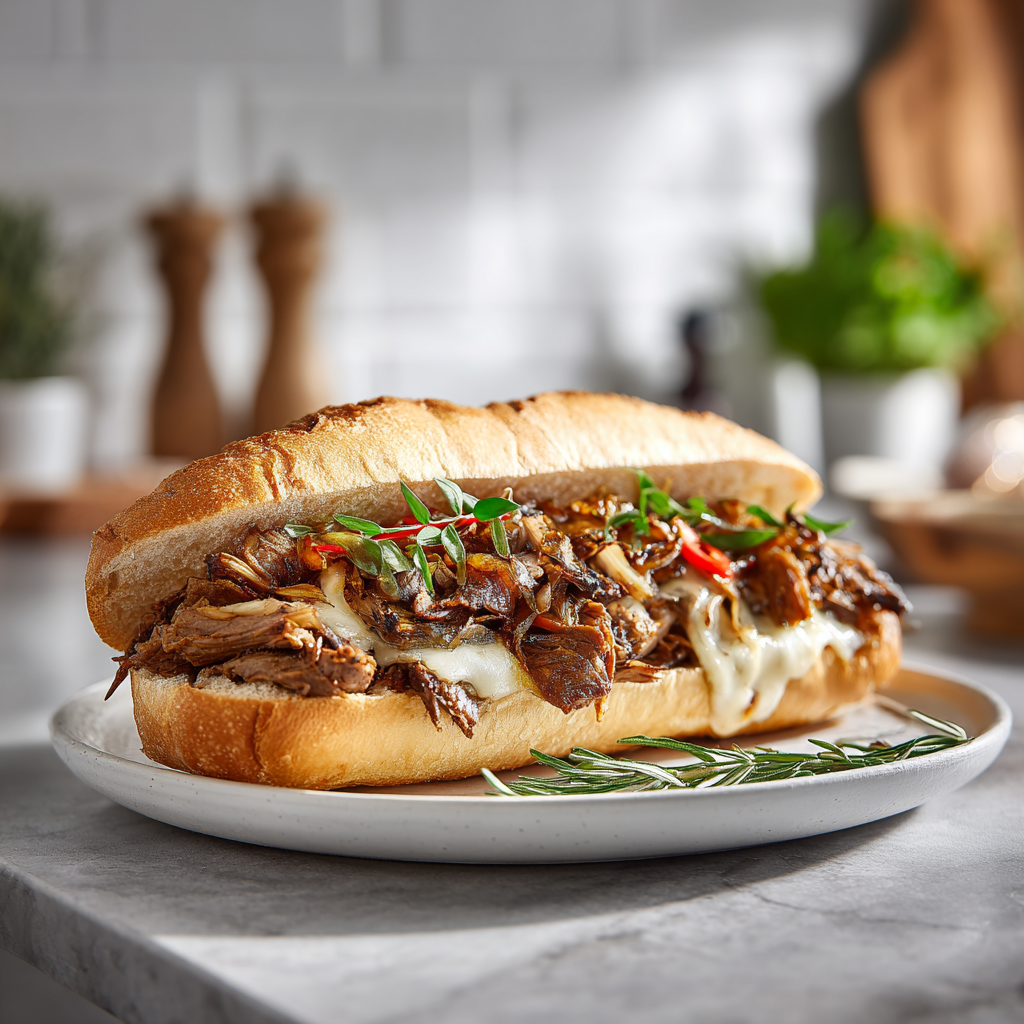
The Philly Cheesesteak is a legendary American sandwich consisting of thinly sliced sautéed ribeye beef and melted cheese served on a long, crusty hoagie roll. This iconic Philadelphia staple relies on high-quality fat-marbled beef and perfectly caramelized onions to deliver its signature savory flavor profile. Achieving the ideal texture requires high-heat searing to brown the protein quickly while maintaining moisture before layering it with sharp provolone cheese. The addition of a garlic-infused mayonnaise and toasted buttered rolls elevates this classic street food into a gourmet home-cooked meal that rivals any authentic corner shop in Pennsylvania. This recipe ensures every bite contains the perfect ratio of tender meat, melted cheese, and crisp bread.
Recipe Overview
| Prep Time | Cook Time | Total Time | Servings | Difficulty | Cuisine |
|---|---|---|---|---|---|
| 20 Minutes | 20 Minutes | 40 Minutes | 4 Servings | Intermediate | American |
Why This Recipe Works
I have spent years perfecting the art of the cheesesteak, and the secret always lies in the temperature control and the quality of the beef cut. Ribeye provides the necessary intramuscular fat that melts during the searing process, creating a natural sauce that coats every strand of meat. By using a cast-iron skillet, we achieve a level of browning that thinner pans simply cannot replicate, ensuring the Maillard reaction is fully realized for maximum depth of flavor.
Combining the richness of salted butter on the rolls with a homemade garlic mayo adds layers of fat and acidity that balance the heavy protein. The technique of toasting the rolls separately prevents the bread from becoming soggy once the juicy beef is added. I find that melting the provolone directly over the meat in the pan, rather than on the bread, allows the cheese to act as a binder that holds the entire filling together during the transfer to the hoagie.
Ingredients
| Ingredient | Quantity | Notes and Alternatives |
|---|---|---|
| Ribeye steak | 2 pounds | Fat trimmed, very thinly sliced; Top sirloin as alternative |
| Kosher salt | 1 ¾ teaspoons | Divided use; adjust to taste |
| Vegetable oil | 1 tablespoon | High smoke point oil is essential |
| Sweet onion | 1 large | Chopped; Yellow onion works for sharper taste |
| Mayonnaise | 4 tablespoons | Full-fat version recommended |
| Garlic clove | 1 clove | Grated or finely minced |
| Salted butter | 4 tablespoons | Softened to room temperature |
| Hoagie rolls | 4 rolls | Split lengthwise; Italian rolls also work |
| Black pepper | ½ teaspoon | Freshly cracked for best aroma |
| Provolone cheese | 8 slices | Sharp or mild; Mozzarella as a mild sub |
Step-by-Step Instructions
Phase 1: Preparation and Searing
- Preheat the oven to 400°F with a rack positioned in the center.
- Season the sliced beef thoroughly with 1½ teaspoons of the kosher salt.
- Heat the vegetable oil in a large cast-iron skillet over high heat until glistening.
- Add the beef in batches to avoid overcrowding and cook undisturbed for 2 minutes to brown.
- Stir the meat and continue cooking for an additional 2 minutes until fully cooked through.
- Transfer the cooked beef to a separate plate using a slotted spoon to retain juices in the pan.
Phase 2: Aromatics and Bread
- Reduce the burner heat to medium and add the chopped onions to the skillet.
- Season the onions with the remaining ¼ teaspoon of salt and cook for 7-8 minutes until softened.
- Combine the mayonnaise and grated garlic in a small mixing bowl while onions caramelize.
- Spread 1 tablespoon of softened butter onto the cut sides of each hoagie roll.
- Arrange the rolls on a sheet pan and bake for 4 minutes until golden and toasted.
- Remove rolls from the oven and apply 1 tablespoon of the garlic mayo to the toasted surfaces.
Phase 3: Assembly
- Return the cooked ribeye to the skillet with the onions and season with black pepper.
- Cook the mixture briefly while stirring to ensure the beef is thoroughly warmed.
- Remove the skillet from the heat source and layer the provolone slices over the beef.
- Divide the cheesy beef mixture evenly between the prepared toasted rolls once the cheese melts.
- Serve the sandwiches immediately while the bread is crisp and the cheese is gooey.
Chef Tips for Perfect Results
- Freeze the ribeye for 30 to 45 minutes before slicing to achieve paper-thin pieces with a sharp knife.
- Use a cast-iron flat top or heavy skillet to maintain consistent high heat during the beef searing phase.
- Avoid moving the meat immediately after it hits the pan to ensure a crusty, caramelized exterior forms.
- Steam the rolls briefly over the meat after assembly if you prefer a softer, traditional street-style texture.
- Grate the garlic into the mayonnaise at least 10 minutes early to allow the flavors to marry fully.
Common Mistakes to Avoid
Overcrowding the skillet is a frequent error that causes the beef to steam in its own juices rather than sear. This results in gray, rubbery meat instead of the browned, flavorful strips required for a high-quality Philly Cheesesteak. Always work in small batches and allow the pan to regain heat between additions.
Using the wrong bread can ruin the structural integrity of the sandwich. Grocery store hot dog buns or soft white bread will disintegrate under the weight of the juicy ribeye and melted cheese. Select a sturdy hoagie roll with a crusty exterior that can withstand the moisture and heat of the filling.
Under-seasoning the onions leads to a flat flavor profile that fails to complement the richness of the beef. Adding salt during the sweating process draws out moisture and encourages even browning and sweetness. Always season each component of the sandwich individually to build a complex, well-rounded taste.
Slicing the meat too thick results in a chewy sandwich that is difficult to bite through. Authenticity in a Philly Cheesesteak comes from the thinness of the beef, which should almost melt in your mouth. If you cannot slice it thinly enough by hand, ask your local butcher to run the ribeye through their commercial slicer.
Variations and Substitutions
| Ingredient | Substitution | Impact on Flavor |
|---|---|---|
| Provolone | Cheese Whiz | Creates a saltier, creamier, and more processed traditional flavor | Flank Steak | Result is much leaner and requires thinner slicing to avoid toughness |
| Sweet Onion | Green Bell Peppers | Adds a bitter, earthy crunch often found in ‘Philly-style’ variations |
| Garlic Mayo | Horseradish Cream | Provides a sharp, spicy kick that cuts through the fatty ribeye |
Serving Suggestions and Pairings
The Philly Cheesesteak is a robust meal that pairs exceptionally well with salty, crispy sides like thick-cut potato wedges or classic French fries. For a lighter accompaniment, a vinegar-based coleslaw provides a necessary acidic crunch that cleanses the palate between bites of heavy beef. This sandwich is a favorite for game day gatherings, casual weekend lunches, or high-energy outdoor events where hearty hand-held food is preferred.
Storage and Reheating
| Method | Duration | Instructions |
|---|---|---|
| Refrigeration | 3 Days | Store meat and onions in an airtight container; store bread separately |
| Stovetop Reheating | 5 Minutes | Heat meat in a skillet with a splash of water or broth to maintain moisture |
| Oven Reheating | 10 Minutes | Wrap assembled sandwich in foil and heat at 350°F until cheese remelts |
Nutritional Information
| Nutrient | Amount per Serving |
|---|---|
| Calories | 840 kcal |
| Protein | 54g |
| Fat | 52g |
| Carbohydrates | 42g |
| Sodium | 1280mg |
Approximate values based on standard ingredient sizes.
Conclusion
Mastering the Philly Cheesesteak involves a commitment to high-quality ingredients and precise cooking techniques that highlight the natural flavors of the beef. By selecting a well-marbled ribeye and taking the time to slice it thinly, you ensure a tender and luxurious texture in every bite. The combination of sweet caramelized onions and sharp melted provolone creates a classic taste that has made this sandwich a worldwide favorite. Using toasted buttered rolls and a hint of garlic mayo provides a modern twist that enhances the overall experience by adding depth and crunch. Whether you are hosting a crowd or simply craving a satisfying solo dinner, this recipe delivers the authentic Philadelphia experience straight to your kitchen. I encourage you to experiment with different cheeses or peppers to find your personal favorite variation of this timeless dish. The key remains the high-heat sear and the quality of the bread, which acts as the perfect vessel for the savory filling. Embrace the process and enjoy the robust, meaty profile of a perfectly constructed cheesesteak. Each bite offers a harmonious blend of melted cheese, savory steak, and sweet onions that defines true American comfort food. Finalize your meal with a cold beverage to balance the heat and richness of the signature Philly flavor.
Frequently Asked Questions
What is the best cut of meat for a Philly Cheesesteak?
Ribeye is the absolute best cut of meat for this sandwich because of its high fat content and tender texture. The marbling ensures the beef remains juicy even when sliced very thinly and cooked at high temperatures. Other lean cuts like sirloin can be used but will generally result in a drier finished product.
Can I make Philly Cheesesteak ahead of time for a party?
You can prepare the beef and onion mixture up to twenty-four hours in advance and store it in the refrigerator. Reheat the filling in a skillet with a small amount of beef broth before adding the cheese and assembling the rolls. Always toast the bread right before serving to prevent it from becoming chewy or stale.
How do I slice the beef thin enough at home?
Place the ribeye in the freezer for forty-five minutes to firm up the muscle fibers before you begin slicing. Use a very sharp chef’s knife or a serrated blade to cut across the grain into translucent strips. This method provides the control needed to mimic the professional texture found in authentic Philadelphia sandwich shops.
Why is my cheesesteak meat tough and chewy?
Tough meat usually occurs because the beef was sliced with the grain rather than against it during the preparation phase. Slicing against the grain breaks up the long muscle fibers, making the meat easier to chew once cooked. Additionally, overcooking the beef until it loses all moisture will also lead to a rubbery and unpleasant consistency.
What can I use instead of provolone cheese?
White American cheese or Cheese Whiz are the most common and acceptable substitutes for provolone in a traditional cheesesteak. American cheese offers a superior meltability that creates a creamy coating, while Cheese Whiz provides the specific tangy flavor profile associated with South Philly. Avoid using hard or aged cheeses that do not melt easily, such as parmesan or aged cheddar.
Print
Philly Cheesesteak Recipe with Ribeye
- Total Time: 40
- Yield: 4 servings 1x
Description
A Philadelphia classic featuring seared ribeye, caramelized onions, and melted provolone on a crusty hoagie roll. Enhanced with homemade garlic mayo and buttered toasted bread for a balanced flavor that rivals corner shops.
Ingredients
2 pounds Ribeye steak, fat trimmed and thinly sliced
1 ¾ teaspoons Kosher salt, divided
1 tablespoon Vegetable oil, high smoke point
1 large Sweet onion, chopped
4 tablespoons Mayonnaise, full-fat
1 clove Garlic, grated or minced
2 cups Provolone cheese, thickly sliced
4 Hoagie rolls, split and cut sides up
1 tablespoon Salted butter
Instructions
Pat ribeye slices dry and season with 1 teaspoon salt.
Heat oil in a cast-iron skillet over high heat until shimmering.
Cook ribeye in batches, searing until browned and crisp (2-3 minutes per side), then set aside to rest.
Reduce heat to medium-low and cook onions in the same skillet with remaining ½ teaspoon salt, stirring occasionally until caramelized and golden (8-10 minutes).
Return seared ribeye to the skillet with onions. Add provolone slices in a single layer, cover, and let melt (2-3 minutes).
Toasted hoagie rolls: Brush cut sides with melted butter, place in a preheated oven (350°F) for 5-7 minutes until golden and crisp.
Toss onions and meat in the pan; transfer to rolls. Top with garlic mayo (mix mayo with finely minced garlic before use) and serve.
Notes
Use a cast-iron skillet for superior browning and heat retention.
Adjust salt to taste, especially if using pre-salted cheese.
Monitor onion cooking to avoid burning; stir frequently.
Assemble sandwiches just before serving to prevent sogginess.
Leftover meat can be stored in an airtight container for 2-3 days.
- Prep Time: 20
- Cook Time: 20
- Category: Easy Chicken Dinner Recipes for Busy Nights
- Method: Sautéing
- Cuisine: American
Nutrition
- Serving Size: 1 sandwich
- Calories: 950
- Sugar: 6g
- Sodium: 500mg
- Fat: 62g
- Saturated Fat: 20g
- Carbohydrates: 60g
- Fiber: 4g
- Protein: 40g
- Cholesterol: 120mg