
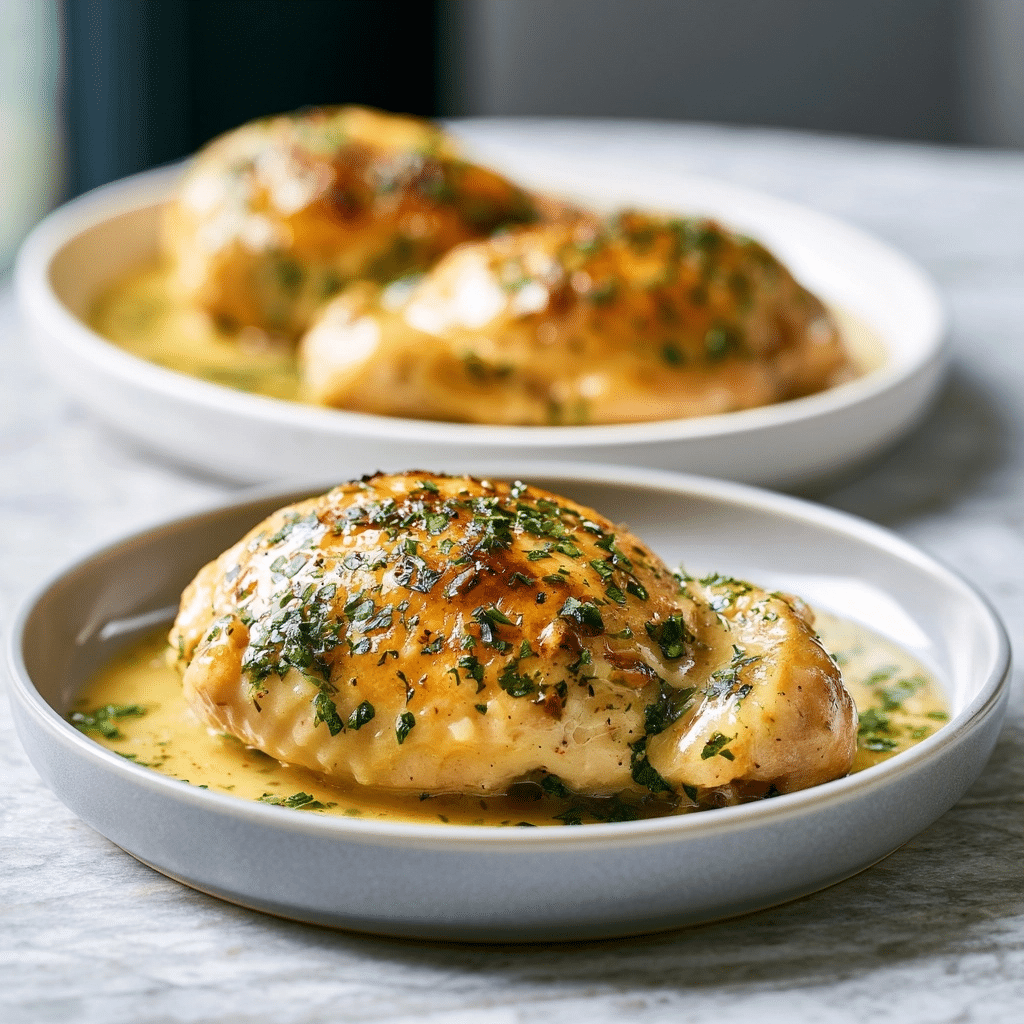
Chicken in white wine sauce is a classic French-inspired dish featuring tender, pan-seared poultry smothered in a luxurious, garlic-forward reduction. This recipe is designed for home cooks who want to achieve sophisticated, restaurant-quality results for weeknight dinners or elegant weekend entertaining. The popularity of this dish stems from its incredible balance of bright acidity, rich creaminess, and deep savory notes. As the chicken sears to a golden crisp, it leaves behind flavorful browned bits that emulsify into a velvety pan sauce. You can expect a succulent meat texture accompanied by an aroma of toasted garlic and fresh herbs. This method delivers a foolproof way to elevate humble chicken breasts into a gourmet masterpiece that feels both comforting and high-end.
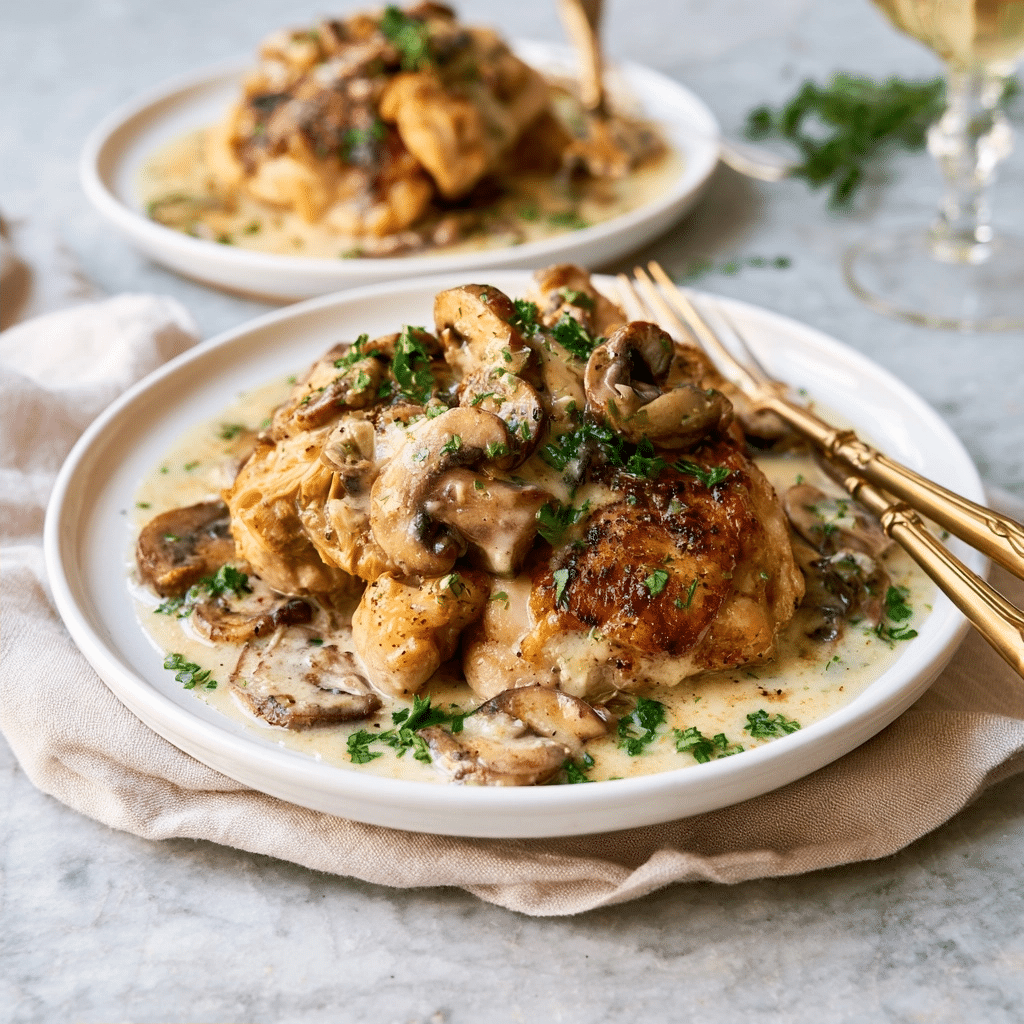
What Is Chicken in White Wine Sauce?
Chicken in white wine sauce is a culinary staple known as a “pan-sauce” dish, where the protein and the sauce are developed in the same vessel to maximize depth. While similar to a Chicken Piccata or a Scaloppine, this version focuses on a heavier reduction of dry white wine balanced with heavy cream and Parmesan cheese. Historically rooted in European bistro cooking, it relies on the technique of deglazing to incorporate the fond—the caramelized proteins stuck to the pan—into a smooth, aromatic liquid base. It is defined by its silken texture and the specific brightness provided by a final splash of citrus.
| Prep Time | 15 minutes |
| Cook Time | 25 minutes |
| Total Time | 40 minutes |
| Servings | 4 |
| Difficulty Level | Intermediate |
| Cuisine | French-American |
| Calories per Serving | 485 kcal |
Why You’ll Love This Recipe
- Effortless Eleganza: Achieve a gourmet aesthetic and flavor profile with minimal equipment and standard pantry staples.
- Foolproof Technique: The pounding and dredging method ensures the chicken stays juicy while developing a crisp exterior.
- Time-Saving One-Pan Cleanup: Both the protein and the sauce are prepared in a single skillet, reducing post-dinner labor.
- Crowd-Pleasing Versatility: The mild yet sophisticated flavor profile appeals to both picky eaters and seasoned foodies.
- Meal Prep Ready: The sauce holds its consistency well, making leftovers just as delicious the following day.
This recipe offers an incredible balance of speed and sophistication. It is the definitive choice for those seeking a reliable main course that fits into a busy schedule without sacrificing culinary standards. By utilizing simple household ingredients in a specific order, you create a complex profile that tastes like it simmered for hours.
Why This Recipe Works
My experience with this dish has shown that the secret lies in the moisture management of the chicken. In earlier versions, I found that thick breasts often dried out before the center reached temperature. By halving and pounding the meat, we ensure even heat distribution and a much faster cooking time, which preserves the delicate proteins. This foundational step is non-negotiable for anyone seeking a melt-in-your-mouth experience.
The technique of dredging the chicken in flour before searing is what makes the sauce truly work. The flour creates a barrier that locks in juices, but more importantly, it leaves behind starch in the pan. When the wine hits the hot surface, it undergoes a process called deglazing, where the starch and browned bits emulsify. This creates a natural thickening agent that gives the sauce its signature body without feeling overly heavy or greasy.
Finally, the sensory payoff comes from the layered seasoning approach. We don’t just salt the meat; we season the flour, the broth, and the final garnish. This building of flavors, combined with the chemical reaction of the lemon juice cutting through the heavy cream, creates a balanced palate. The result is a visual and textural contrast between the golden, crispy chicken skin and the smooth, ivory-colored sauce.
Pro Tips Before You Start
- Mise en Place: Mince your garlic and measure your wine and broth before turning on the stove to prevent burning the butter.
- Dry the Protein: Use paper towels to pat the chicken completely dry before dredging; moisture is the enemy of a golden crust.
- Right Skillet Choice: Use a stainless steel or cast-iron skillet rather than non-stick to ensure plenty of flavorful brown bits form.
- Wine Selection: Use a crisp, dry white wine like Pinot Grigio or Sauvignon Blanc; avoid sweet wines which will ruin the balance.
Ingredients
Here’s everything you’ll need to make Chicken in White Wine Sauce. Quality matters here, especially with the Parmesan and the wine selection.
| Ingredient | Quantity | Notes/Alternatives |
|---|---|---|
| Boneless Chicken Breasts | 2 large (approx. 500g) | Slices into 4 cutlets |
| Italian Seasoning | 2 tsp | Dried blend of herbs |
| All-Purpose Flour | 1/4 cup (32g) | For dredging |
| Olive Oil | 2 tbsp (30ml) | Extra virgin preferred |
| Dry White Wine | 1 cup (240ml) | Pinot Grigio or Chardonnay |
| Unsalted Butter | 3 tbsp (42g) | Divided for sauce |
| Fresh Garlic | 4 cloves | Mined finely |
| Chicken Broth | 1 cup (240ml) | Low sodium recommended |
| Heavy Cream | 1/4 cup (60ml) | Do not substitute with milk |
| Parmesan Cheese | 1/3 cup (35g) | Freshly grated only |
| Lemon Juice | 2 tbsp (30ml) | Freshly squeezed |
| Cornstarch* | 2 tbsp | Optional for thicker sauce |
Best Ingredients for Chicken in White Wine Sauce
The quality of your Parmesan cheese is the single biggest factor in sauce texture. Pre-shredded cheese is coated in potato starch or cellulose to prevent clumping, which will result in a grainy, broken sauce. Always buy a wedge of Parmigiano-Reggiano and grate it yourself for a silky finish. Similarly, the wine you choose should be one you enjoy drinking. Avoid “cooking wines” sold in grocery aisles, as they contain excessive salt and metallic undertones that concentrate during the reduction phase.
Step-by-Step Instructions
Step 1: Prepare and Sear the Chicken
- Slice the chicken breasts in half lengthwise to create thinner, uniform cutlets.
- Place chicken between layers of plastic wrap and pound to a 1/2-inch thickness using a meat mallet.
- Pat the meat completely dry with paper towels to ensure proper flour adhesion.
- Season both sides of the chicken generously with Italian seasoning, salt, and black pepper.
- Dredge each piece in the flour, shaking off any excess until only a light coating remains.
- Heat olive oil in a 12-inch skillet over medium-high heat until the oil shimmers.
- Sear the chicken for 4-5 minutes per side until a deep golden crust develops.
- Remove chicken from the pan and set aside on a plate; do not wipe out the skillet.
Step 2: Deglaze and Build the Sauce
- Turn off the heat and pour in the white wine to avoid flare-ups.
- Turn heat to medium and use a silicone spatula to scrape the bottom of the pan.
- Simmer the wine for 8-10 minutes until the liquid has reduced by exactly half.
- Add the butter and minced garlic to the center of the pan and sauté for 60 seconds.
- Whisk in the chicken broth, Worcestershire sauce, dried parsley, mustard powder, oregano, and basil.
- Bring the liquid to a gentle boil to allow the flavors to meld.
- Stir the cornstarch and cold water in a small bowl if you prefer a very thick consistency.
- Whisk the slurry slowly into the bubbling sauce and continue stirring for 1 minute.
Step 3: Emulsify and Serve
- Reduce the heat to low to prevent the dairy from curdling or breaking.
- Pour in the heavy cream slowly while whisking constantly to create a uniform emulsion.
- Add the freshly grated Parmesan cheese and stir until the cheese is fully melted into the sauce.
- Place the seared chicken back into the skillet, nestling it into the liquid.
- Spoon the sauce over the chicken and simmer partially covered for 5 minutes.
- Remove from heat and stir in the fresh lemon juice to brighten the flavor.
- Garnish with fresh chopped parsley and serve immediately while the sauce is at its creamiest.
Chef Tips for Perfect Results
- Temperature Control: Always use a thermometer to ensure the chicken reaches exactly 165°F (74°C). Overcooking will lead to dry meat regardless of the sauce.
- The Wine Reduction: Do not rush the reduction. Reducing the wine by half concentrates the sugars and removes the harsh alcohol bite.
- Cold Water Slurry: If using cornstarch, always mix it with cold water first. Adding dry starch to a hot liquid creates lumps that are impossible to remove.
- Lemon Timing: Add the lemon juice only at the very end. Cooking lemon juice for too long can result in a bitter aftertaste.
- Resting Period: Let the dish sit for 2 minutes after removing from heat. This allows the sauce to tighten up and coat the back of a spoon perfectly.
Common Mistakes to Avoid
- Using Cold Chicken: [WHAT] Meat cooks unevenly | [WHY] Cold protein shocks the pan and drops the temperature | [FIX] Let chicken sit at room temp for 15 minutes.
- Crowding the Pan: [WHAT] Chicken steams instead of searing | [WHY] Overcrowding traps moisture and prevents browning | [FIX] Sear in batches if your skillet is small.
- Boiling the Cream: [WHAT] Sauce becomes oily or separates | [WHY] High heat breaks the fat emulsion in the dairy | [FIX] Keep heat on low once the cream is added.
- Skipping the Pounding: [WHAT] Dry edges and raw centers | [WHY] Uneven thickness leads to uneven cooking rates | [FIX] Always pound to a uniform 1/2-inch thickness.
How to Make This Recipe Healthier
You can easily modify this dish to fit various nutritional goals without losing the core flavor profile. Swapping the heavy cream (Original) for plain Greek yogurt or evaporated milk (Healthier Swap) reduces the overall fat content by approximately 40%. The result will be slightly tangier and less buttery, but incredibly satisfying. For a lower sodium version, replace the standard chicken broth with a homemade unsalted stock and increase the lemon juice to compensate for the reduced salt. Finally, using a light dusting of almond flour instead of all-purpose flour provides a gluten-free alternative that adds a subtle nuttiness to the crust.
Variations and Substitutions
This recipe acts as a base for many different flavor profiles depending on your pantry availability.
| Ingredient | Substitution | Impact on Flavor | Impact on Texture |
|---|---|---|---|
| White Wine | Chicken Broth + 1 tbsp Vinegar | Less complex, more savory | Identical |
| Heavy Cream | Full-fat Coconut Milk | Mildly tropical note | Very creamy |
| Parmesan | Pecorino Romano | Sharper and saltier | Gritter if not fine |
| Chicken Breast | Boneless Thighs | Richer, more succulent | Slightly more fat |
Can You Make This Ahead?
Yes, you can prepare parts of this dish in advance. You can slice, pound, and season the chicken up to 24 hours before cooking. However, for the best textural experience, I recommend making the sauce fresh. If you must make the entire dish ahead, store it in the refrigerator for up to 2 days. When reheating, add a tablespoon of water or broth to the pan to loosen the sauce, as it will thicken significantly when cold. Reheat gently over low heat to avoid overcooking the chicken.
Serving Suggestions and Pairings
To truly highlight the elegance of the white wine sauce, serve this chicken over a bed of garlic mashed potatoes or buttered egg noodles. These bases are excellent for soaking up the extra reduction. For a lighter pairing, consider roasted asparagus or garlicky green beans. A crisp green salad with a simple vinaigrette provides a nice acidic contrast to the richness of the cream. In terms of beverages, pair this with the same dry white wine used in the cooking, such as a chilled Pinot Grigio or a light Chardonnay.
Best Occasions to Serve This Recipe
This dish is perfect for a romantic date night where you want to impress with professional flavors without spending the whole night in the kitchen. It also shines as a Sunday family dinner because it feels special but remains easy to scale up for larger groups. Because it requires only one skillet, it is an excellent choice for vacation home cooking or small apartment kitchens where space is an issue.
Storage and Reheating
Store any leftovers in an airtight glass container to preserve the freshness of the lemon and cream. Avoid freezing if possible, as the cream-based sauce may separate upon thawing.
| Method | Duration | Instructions |
|---|---|---|
| Refrigerator | 3-4 Days | Keep in airtight container; press plastic wrap to surface. |
| Stovetop | 5-8 Minutes | Heat on low with 1 tbsp broth; stir frequently. |
| Microwave | 2 Minutes | Use medium power; cover with damp paper towel. |
| Freezer | Not Suggested | Dairy-based sauces often separate when frozen. |
Nutritional Information
Approximate nutritional values per serving:
| Nutrient | Amount per Serving |
|---|---|
| Calories | 485 kcal |
| Protein | 38g |
| Fat | 26g |
| Carbohydrates | 12g |
| Fiber | 1g |
| Sugar | 2g |
| Sodium | 640mg |
*Approximate values based on standard ingredients. Actual nutrition varies by brand and substitutions.
Conclusion
This chicken in white wine sauce represents the height of home-cooked sophistication. By mastering the simple techniques of deglazing and emulsification, you transform basic ingredients into a meal that rivals any high-end bistro. The combination of crispy chicken and a velvety, aromatic sauce ensures that every bite is satisfying and full of flavor. It is a testament to how traditional methods can simplify the cooking process while maximizing the final result.
The versatility of this dish makes it a mandatory addition to your culinary repertoire. Whether you are cooking for a special someone or simply elevating a Tuesday night, the result is consistently impressive. It delivers a perfect balance of textures and a flavor depth that few other 30-minute meals can match. You will find that the clean-up is just as pleasant as the cooking itself.
Try this recipe tonight and discover how easy it is to become the chef of your own kitchen. Save this guide for your next dinner party and watch your guests marvel at the restaurant-quality execution. This dish transforms the ordinary into something truly memorable.
Can I use cooking wine from the grocery store?
No, you should avoid using commercial cooking wines because they are heavily salted and contain preservatives. These additives can make your final sauce taste overly metallic or salty after reduction. Always use a drinking-quality dry white wine for the best results.
How do I know when the sauce has reduced enough?
You will know the sauce has reduced by half when it starts to look slightly syrupy and the bubbles become larger and slower. You can also use a spoon to track the liquid level on the side of the pan as it simmers down. A properly reduced sauce provides the foundation for a thick, velvety finish.
What if my sauce breaks and becomes oily?
If your sauce separates, it is likely because the heat was too high after adding the cream. To fix a broken sauce, remove it from the heat immediately and whisk in a teaspoon of cold heavy cream or a splash of water. This helps lower the temperature and re-emulsify the fats.
Is there a non-alcoholic substitute for the wine?
Yes, you can substitute the white wine with an equal amount of high-quality chicken broth mixed with a tablespoon of lemon juice or white wine vinegar. While the flavor profile will be less complex, the acidity from the vinegar will provide the necessary brightness to balance the cream.
Print
Creamy Chicken in White Wine Sauce: Perfect Pan-Seared Results
- Total Time: 40
- Yield: 4 servings 1x
- Diet: Halal, non-alcoholic
Description
A golden pan-seared chicken breast smothered in a rich garlic-herb sauce made with a non-alcoholic substitute, heavy cream, and Parmesan. Serve this elegant, restaurant-style dish with wine-free pairings like roasted vegetables or crusty bread.
Ingredients
4 boneless, skinless chicken breasts
1/2 cup all-purpose flour
1 teaspoon salt
1/2 teaspoon black pepper
4 tablespoons olive oil
1/2 cup leeks (white parts), chopped
4 garlic cloves, minced
1 cup vegetable broth (non-alcoholic substitute for wine)
1 cup heavy cream
1/2 cup grated Parmesan cheese
1 teaspoon fresh thyme leaves
1 teaspoon soy sauce (for umami)
1 tablespoon lemon juice (to mimic wine acidity)
Optional: 1 teaspoon cornstarch (to thicken sauce)
Instructions
Season chicken breasts with salt and pepper, and pound them to about 1/2-inch thickness
In a bowl, mix flour, salt, and pepper. Dredge chicken in the mixture
Heat olive oil in a large skillet over medium heat. Add chicken and cook 4-5 minutes per side until golden. Remove and set aside
In the same skillet, sauté leeks and garlic until softened (2-3 minutes)
Deglaze the pan with vegetable broth. Scrape up browned bits (fond) with a wooden spoon
Add heavy cream, Parmesan cheese, thyme, soy sauce, and lemon juice. Simmer 5 minutes, stirring until thickened
Return chicken to the skillet, submerge in sauce, and cook 2-3 minutes until fully heated
Adjust seasoning and finish with a squeeze of lemon if desired. Serve warm
Notes
For non-alcoholic depth, use lemongrass or white vinegar as alternatives
Substitute chicken breasts with chicken thighs for richer flavor and juiciness
Store leftovers in an airtight container for up to 3 days
For gluten-free, use cornstarch or almond flour for dredging
- Prep Time: 15
- Cook Time: 25
- Category: Meals
- Method: Pan-searing and saucing
- Cuisine: French-American
Nutrition
- Serving Size: 1 chicken breast with sauce
- Calories: 485
- Sugar: 5g
- Sodium: 500mg
- Fat: 34g
- Saturated Fat: 20g
- Carbohydrates: 18g
- Fiber: 1g
- Protein: 40g
- Cholesterol: 180mg