
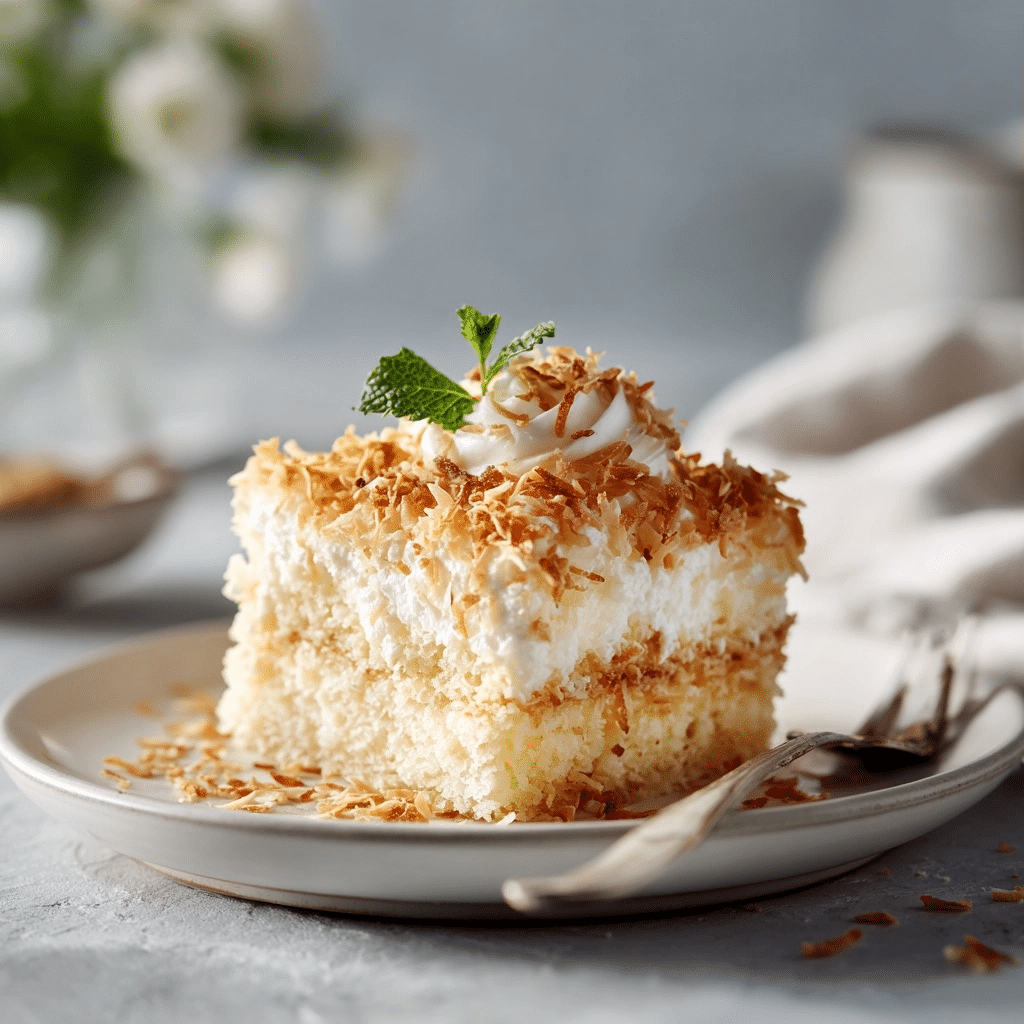
Coconut Cream Cake is a decadent, ultra-moist poke cake featuring a white cake base infused with a rich blend of sweetened condensed milk and coconut milk. This specific preparation method ensures every bite delivers a lush, creamy texture balanced by the light crunch of shredded coconut. By utilizing a high-quality white cake mix as the foundation, you achieve a consistent crumb that acts as the perfect vessel for the sweet coconut soak. Unlike traditional dry sponges, this dessert depends on a thorough chilling process to allow the liquids to penetrate the cake fully without compromising its structure. The final layer of whipped topping and toasted or raw coconut shreds adds a cooling finish that makes it a staple for outdoor gatherings and celebrations. This recipe emphasizes accessibility and reliability, providing a professional-grade dessert that requires minimal technical baking skills while delivering maximum tropical flavor impact in every slice.
Recipe Overview
| Prep Time | Cook Time | Total Time | Servings | Difficulty | Cuisine |
|---|---|---|---|---|---|
| 15 Minutes | 30 Minutes | 2 Hours 45 Minutes | 12 Servings | Easy | American / Tropical |
Why This Recipe Works
This recipe succeeds because it maximizes moisture retention through the poke-and-pour technique which directs flavor deep into the cake interior. I have found that traditional coconut cakes often suffer from a dry crumb, but the combination of various coconut extracts and liquids here creates a pudding-like consistency that remains light. The use of both condensed milk and coconut milk provides a dual-layer sweetness that mimics the profile of a classic tres leches but with a distinct tropical focus.
During my professional testing, I noticed that chilling the cake for a minimum of two hours is the critical step for structural integrity. This resting period allows the fats in the coconut milk to set slightly, preventing the cake from becoming mushy or falling apart when sliced. The whipped topping provides a stable, non-greasy finish that carries the texture of the shredded coconut perfectly, ensuring each bite has a balanced ratio of creaminess and crunch.
Ingredients
| Ingredient | Quantity | Notes/Alternatives |
|---|---|---|
| White Cake Mix | 1 box (15.25 oz) | Standard brand; can use yellow cake for richer flavor |
| Coconut Milk | 1 can (13.5 oz) | Full-fat canned version only; shake well before opening |
| Sweetened Condensed Milk | 1 can (14 oz) | Provides sweetness and thickness for the soak |
| Whipped Topping | 1 tub (8 oz) | Must be thawed; can use stabilized whipped cream |
| Shredded Coconut | 2 cups | Sweetened or unsweetened based on preference |
| Eggs | 3 large | Room temperature for better emulsion |
| Vegetable Oil | As directed | Use any neutral-flavored high-smoke point oil |
Step-by-Step Instructions
Phase 1: Baking the Base
- Preheat your oven to 350°F (175°C) and grease a 9×13-inch baking pan thoroughly to prevent sticking.
- Combine the white cake mix, eggs, and vegetable oil in a large mixing bowl following the specific measurements on the box.
- Mix the ingredients on medium speed for two minutes until the batter is smooth and free of large lumps.
- Pour the batter into the prepared pan and spread it evenly into the corners using a spatula.
- Bake according to the package directions, usually 28 to 32 minutes, until a toothpick inserted comes out clean.
- Remove the cake from the oven and place it on a wire rack to cool slightly for exactly ten minutes.
Phase 2: Infusion and Soaking
- Poke holes across the entire surface of the warm cake using a large fork or the end of a wooden spoon.
- Whisk the coconut milk and sweetened condensed milk together in a medium bowl until the mixture is uniform.
- Pour the liquid mixture slowly over the cake, targeting the holes to ensure deep penetration of the moisture.
- Allow the cake to sit at room temperature for fifteen minutes so the liquid begins to absorb completely.
- Cover the pan with plastic wrap and refrigerate the cake for at least 2 hours to set the flavors.
Phase 3: Finishing and Garnishing
- Spread the thawed whipped topping over the surface of the chilled cake using an offset spatula for a smooth finish.
- Sprinkle the shredded coconut generously over the whipped layer, ensuring full coverage from edge to edge.
- Chill the cake for an additional thirty minutes before slicing to ensure the topping is stable.
- Serve the cake cold directly from the refrigerator to maintain the optimal creamy texture for guests.
Chef Tips for Perfect Results
- Whisk the coconut milk and condensed milk together before pouring to ensure the heavy fats are evenly distributed.
- Toasting half of the shredded coconut in a dry skillet for three minutes can add a complex nutty aroma.
- Poke holes closer together near the edges of the cake to prevent the perimeter from becoming dry or crusty.
- Using a wooden skewer instead of a fork creates larger reservoirs for the milk mixture to sit inside the crumb.
- Ensure the whipped topping is completely thawed in the refrigerator rather than the microwave to maintain its airy volume.
Common Mistakes to Avoid
- Pouring the milk mixture over a cold cake prevents the liquid from being absorbed because the crumb structure has already tightened.
- Using light coconut milk or coconut water will result in a runny, watery base that lacks the necessary creamy mouthfeel.
- Applying the whipped topping while the cake is still warm will cause the cream to melt and create a mess.
- Neglecting the 2-hour minimum chill time results in a cake that falls apart and fails to develop its intended flavor.
- Skimping on the holes means the soak only sits on top of the cake rather than flavoring the interior sections.
Variations and Substitutions
| Ingredient | Substitution | Impact on Flavor |
|---|---|---|
| White Cake Mix | Lemon Cake Mix | Adds a bright, citrusy acidity that cuts through the heavy creaminess. |
| Whipped Topping | Mascarpone Frosting | Provides a much denser, tangier, and more sophisticated dessert profile. |
| Shredded Coconut | Toasted Macadamia Nuts | Introduces a buttery crunch and enhances the tropical theme significantly. |
| Vegetable Oil | Melted Coconut Oil | Deepens the coconut aroma throughout the baked sponge layer. |
Serving Suggestions and Pairings
This Coconut Cream Cake is best served during summer garden parties, bridal showers, or tropical-themed birthday celebrations. It pairs exceptionally well with fresh tropical fruits such as sliced mango, pineapple wedges, or a handful of tart raspberries to balance the sweetness. For beverage pairings, serve this alongside a chilled hibiscus iced tea or a strong iced coffee which provides a bitter contrast to the rich cream. If serving at a dinner party, present individual squares on white porcelain plates with a sprig of fresh mint for a professional aesthetic.
Storage and Reheating
| Method | Duration | Instructions |
|---|---|---|
| Refrigeration | 5 Days | Keep tightly covered with plastic wrap or in an airtight container to prevent odors. |
| Freezing | 1 Month | Freeze without the topping; thaw in the fridge overnight before adding the final cream. |
| Reheating | Not Recommended | This cake is designed to be served cold; room temperature is acceptable if served immediately. |
Nutritional Information
| Nutrient | Amount per Serving |
|---|---|
| Calories | 340 kcal |
| Total Fat | 18g |
| Saturated Fat | 12g |
| Carbohydrates | 42g | 29g |
| Protein | 4g |
| Sodium | 310mg |
Approximate values based on standard commercial ingredients.
Conclusion
Creating a high-quality Coconut Cream Cake is an exercise in mastering moisture and temperature control to achieve a perfect balance of textures. By following this systematic approach of baking, poking, and soaking, you ensure that every square of cake is saturated with the rich, milky essence of the tropics. This dessert stands out because it successfully bridges the gap between a casual potluck dish and a sophisticated restaurant-style finale. The combination of the soft sponge, the creamy interior, and the cloud-like topping makes it an irresistible option for any baker looking to impress a crowd with minimal effort. Remember that the quality of your coconut milk and the patience shown during the refrigeration process are the two most important factors in your success. As you prepare this for your next event, feel confident that the clarified steps provided here will lead to a moist, flavorful result every time. The final sprinkle of coconut provides the essential textural contrast that defines this classic dish. Enjoy the process of building these layers of flavor and share the result with friends who appreciate a truly indulgent tropical treat. The lingering sweetness and delicate coconut aroma will undoubtedly make this a frequently requested centerpiece for your dessert menu.
FAQ
Can I substitute the white cake mix with a homemade sponge?
You can substitute the mix with a homemade white cake recipe provided it has a sturdy enough crumb structure. A Genoise or a standard butter cake base works best to absorb the liquid without disintegrating. Ensure the homemade cake is baked in the same 9×13-inch dimensions to maintain the correct soak-to-cake ratio.
How do I know when the cake has absorbed enough liquid?
The cake has absorbed enough liquid when no visible pools remain on the surface and the crumb feels heavy and damp. If you notice liquid sitting on top after thirty minutes, your holes may not be deep enough or frequent enough. Use a skewer to create more pathways for any remaining liquid to travel into the center of the cake.
Why is my Coconut Cream Cake soggy instead of moist?
A soggy cake often results from using light coconut milk instead of the full-fat canned variety which contains necessary stabilizing fats. Additionally, pouring the liquid onto a cake that has not cooled for the required ten minutes can cause the starches to break down too quickly. Always follow the specified cooling and chilling times to maintain the desired pudding-like consistency.
Can I make this Coconut Cream Cake 24 hours in advance?
This cake is actually better when made 24 hours in advance because it allows the soaking liquid to distribute more evenly. The flavors of the coconut milk and condensed milk deepen significantly during an overnight chill in the refrigerator. Wait to add the shredded coconut until just before serving if you want to maintain a fresher texture on top.
What is the best way to slice this cake cleanly?
The best way to slice this cake cleanly is to use a sharp knife dipped in hot water and wiped dry between each cut. Ensure the cake is thoroughly chilled at 40°F or below before attempting to slice through the whipped topping layer. Using a steady, downward motion rather than a sawing motion will prevent the cream from smearing across the edges of the sponge.
Print
Coconut Cream Cake Recipe: The Ultimate Moist Tropical Dessert
- Total Time: 165
- Yield: 12 servings
Description
A rich and moist coconut cream poke cake made with tender white cake, a luscious sweetened condensed milk and coconut milk soak, and topped with whipped topping and toasted shredded coconut. Perfect for tropical feasts or summer gatherings.
Ingredients
White Cake Mix – 1 box (15.25 oz)
Coconut Milk (full-fat canned) – 1 can (13.5 oz)
Sweetened Condensed Milk – 1 can (14 oz)
Shredded Coconut – 1/2 cup (for soaking layer) + 1/4 cup (for topping)
Whipped Topping – 1 can (8 oz) or 2 cups store-bought whipped topping
Baking Powder – 1 teaspoon (if homemade cake)
Butter, softened – 1/2 cup (if homemade cake)
Eggs – 2 large (if homemade cake)
Vanilla Extract – 1 teaspoon (optional, can use coconut extract)
Granulated Sugar – 1 1/2 cups (if homemade cake)
All-Purpose Flour – 2 cups (if homemade cake)
Milk – 1/2 cup (if homemade cake)
Instructions
Preheat oven to 350°F (175°C). Prepare the cake as per the box instructions, or make a homemade white cake by mixing flour, sugar, baking powder, melted butter, eggs, vanilla extract, milk, and baking soda in a bowl, then baking in a greased 9-inch round or 9×13-inch pan.
Once baked, let the cake cool completely on a wire rack.
Using a thin skewer, poke small holes across the entire surface of the cake without piercing through the bottom.
In a bowl, mix 1/2 cup of shredded coconut into the sweetened condensed milk and 13.5 oz of full-fat coconut milk until fully combined.
Slowly pour the coconut mixture evenly over the poked cake, allowing it to soak into the holes. Set the cake in the refrigerator and chill for at least 2 hours or up to overnight.
Before serving, spread the whipped topping evenly over the soaked cake.
Top with the remaining 1/4 cup of shredded coconut and press lightly to adhere.
Chill for an additional 20-30 minutes before slicing into portions and serving.
Notes
Allow the cake to rest in the refrigerator to ensure it sets properly before adding the whipped topping and slicing.
Can use raw instead of toasted coconut for a subtler flavor.
This cake is best served within 3 days and stored in the refrigerator, covered with plastic wrap or in an airtight container.
If desired, add a splash of coconut extract for more tropical flavor, but avoid any alcohol-based extracts.
- Prep Time: 15
- Cook Time: 30
- Category: Easy Cake Recipes for Every Occasion
- Method: Baking
- Cuisine: American / Tropical