
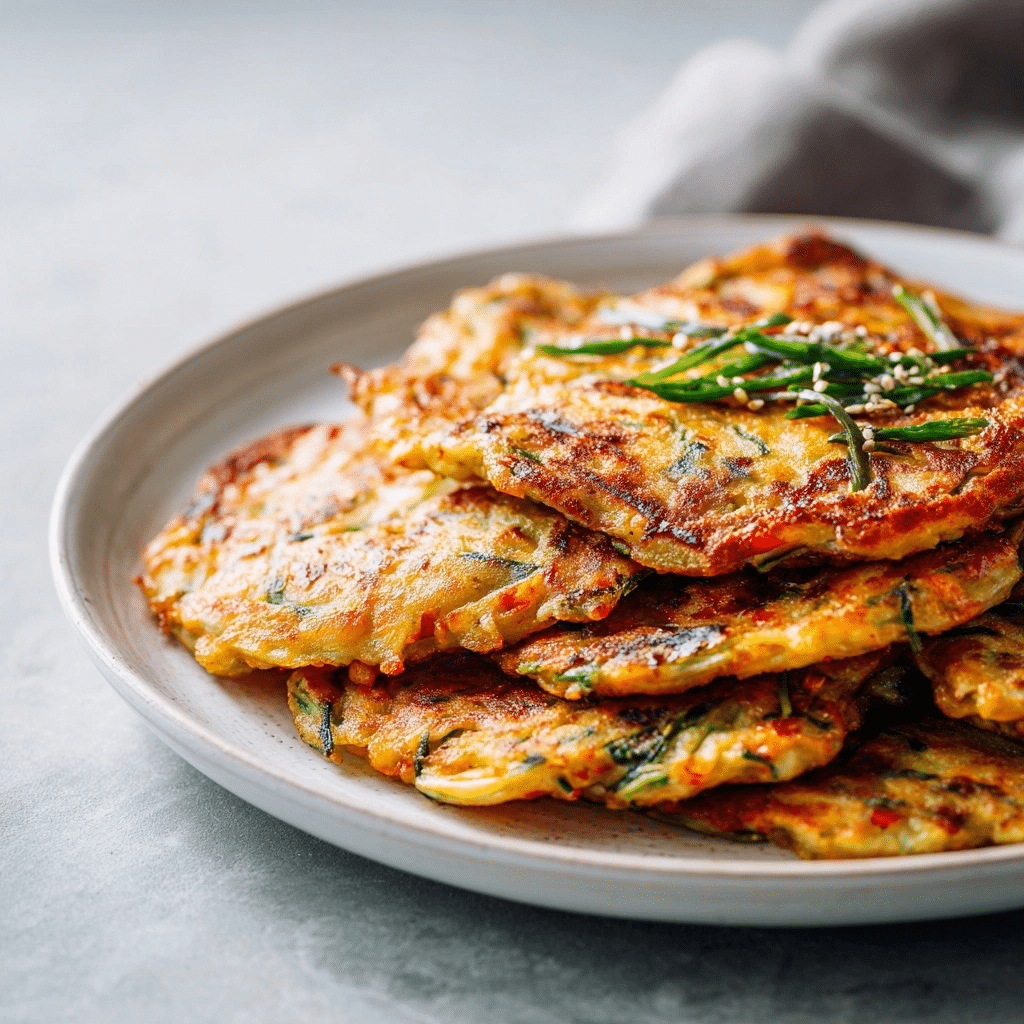
Korean Vegetable Pancakes (Yachaejeon) are savory, crispy disks of batter-bound vegetables that serve as a staple snack, appetizer, or side dish in Korean cuisine. This authentic recipe combines fresh scallions, carrots, peppers, and cabbage into a vibrant pancake that relies on a thin, turmeric-infused flour base to highlight the natural sweetness of the garden-fresh produce. Known for their satisfying crunch and ease of preparation, these pancakes represent the perfect balance of nutrition and flavor. Unlike heavy western pancakes, this dish focuses on a high vegetable-to-batter ratio to ensure every bite remains light and highly textured. By utilizing a specific blend of starch and flour, you create a shatteringly crisp exterior that pairs perfectly with a tangy, umami-rich soy dipping sauce.
Korean Vegetable Pancakes Recipe Overview
| Feature | Details |
|---|---|
| Prep Time | 15 Minutes |
| Cook Time | 15 Minutes |
| Total Time | 30 Minutes |
| Servings | 4 People |
| Difficulty | Easy |
| Cuisine | Korean |
Why This Recipe Works
I have spent years perfecting the art of the savory pancake, and this specific formula succeeds because it prioritizes structural integrity and flavor depth. The addition of turmeric is a professional secret that provides a beautiful golden hue and a subtle earthy warmth that offsets the sweetness of the carrots and red onions. Most home cooks struggle with soggy centers, but my method uses cornstarch to ensure a permanent crispness that lasts even after the pancakes leave the hot oil.
In my experience, the key to a superior Yachaejeon lies in the thinness of the batter coating. By whisking the wet ingredients until perfectly smooth and then folding in a massive volume of julienned vegetables, you ensure the flour acts only as a binding agent. This allows the high heat of the pan to caramelize the vegetable edges while the baking powder creates tiny air pockets for a light finish. I find that using a variety of textures, from the soft green onions to the firm cabbage, creates an engaging mouthfeel that makes this dish addictive.
Ingredients for Success
| Ingredient | Quantity | Notes and Alternatives |
|---|---|---|
| All-purpose flour | 200 g | Base binder; can use rice flour for extra crunch. |
| Cornstarch | 3 tbsp | Essential for achieving a crispy exterior. |
| Water | 250 ml | Use ice-cold water for a crispier result. |
| Turmeric | 1 tsp | Adds color and mild antioxidant benefits. |
| Salt | ½ tsp | Fine sea salt works best for even distribution. |
| Baking powder | ⅓ tsp | Provides a slight lift and airy texture. |
| Green onions | 10 stalks | Cut into short segments; use both white and green parts. |
| Red onion | 1 medium | Sliced thin for sweetness and color. |
| Carrot | 1 large | Julienned into thin matchsticks. |
| Red pepper | 1 large | Cut into thin strips for mild sweetness. |
| Small cabbage | ½ head | Thinly sliced to provide bulk and crunch. |
| Hot pepper | 1 pepper | Finely chopped; adjust quantity for heat preference. |
| Oil for frying | As needed | Use vegetable or grapeseed oil (high smoke point). |
| Soy sauce | 3 tbsp | The base for the dipping sauce. |
| Rice vinegar | 1 tbsp | Provides essential acidity to cut through oil. |
| Sesame oil | 1 tsp | Adds nutty aromatic notes. |
Step-by-Step Instructions
Phase 1: Preparing the Vegetable Base
- Slice the green onions into even, short segments approximately two inches in length.
- Cut the red onion into very thin vertical slices to ensure they cook quickly.
- Julienne the carrot into thin strips to match the diameter of the other vegetables.
- Slice the red pepper into uniform thin strips, removing all seeds and white pith.
- Shred the small cabbage into thin ribbons using a sharp knife or mandoline.
- Chop the hot pepper into fine pieces, ensuring the heat is distributed evenly.
Phase 2: Whisking the Savory Batter
- Combine the flour, cornstarch, turmeric, salt, and baking powder in a large mixing bowl.
- Pour the water into the dry mixture gradually while whisking constantly.
- Process the mixture until the batter is smooth and free of any lumps.
- Fold all the prepared vegetables into the batter using a large spatula.
- Mix thoroughly until every vegetable strip is lightly coated in the golden liquid.
Phase 3: Frying to Golden Perfection
- Add two tablespoons of oil to a large non-stick skillet over medium-high heat.
- Spoon a generous portion of the vegetable batter into the center of the pan.
- Spread the mixture out thin towards the edges to ensure even cooking.
- Fry the pancake until the bottom is a deep golden brown and the edges look dry.
- Flip the pancake carefully using a wide spatula to avoid splashing oil.
- Cook the second side until crispy, then transfer to a wire rack.
Chef Tips for Perfect Results
- Utilize ice-cold water when mixing the batter to prevent gluten development and maximize crispness.
- Press down firmly on the pancake with your spatula while it fries to increase surface contact with the pan.
- Drain the finished pancakes on a wire cooling rack rather than paper towels to prevent steam buildup.
- Maintain a medium-high heat consistently; too low will make the pancakes greasy, while too high will burn the flour.
- Limit the amount of batter used so the vegetables remain the primary star of the dish.
- Apply a thin layer of oil before every new pancake to ensure consistent browning on every batch.
Common Mistakes to Avoid
- Overmixing the batter is a frequent error that leads to a tough, rubbery pancake texture.
- Using room temperature water reduces the temperature shock needed to create a light, crispy crust.
- Crowding the pan with too many pancakes at once lowers the oil temperature and results in sogginess.
- Slicing vegetables too thickly prevents them from wilting and binding correctly within the batter.
- Skipping the cornstarch makes the pancake limp because wheat flour holds moisture longer than starch does.
Variations and Substitutions
| Ingredient | Substitution | Impact on Flavor |
|---|---|---|
| All-purpose flour | Rice Flour (Gluten-Free) | Increases crunch but results in a more brittle texture. |
| Red Onion | Leeks | Provides a milder, sweeter, and more buttery flavor profile. |
| Cabbage | Zucchini | Adds more moisture and a softer texture to the center. |
| Turmeric | Curry Powder | Stronger spice presence with notes of cumin and coriander. |
Serving Suggestions and Pairings
Korean Vegetable Pancakes are best served immediately while the exterior maintains its signature crunch. I recommend serving them as part of a traditional Korean spread alongside Kimchi (fermented cabbage) and Bulgogi (marinated beef). These pancakes are highly popular during rainy days in Korea, often paired with a cold beverage to contrast the hot, oily snack. For a modern twist, you can serve them as a vegetarian main course with a side of steamed brown rice and a fresh cucumber salad known as Oi Muchim. The acidity of the rice vinegar in the dipping sauce is critical for balancing the richness of the fried vegetables.
Storage and Reheating
| Method | Duration | Instructions |
|---|---|---|
| Refrigeration | 3 Days | Store in an airtight container with layers separated by parchment. |
| Freezing | 1 Month | Flash freeze on a tray before bagging to prevent sticking. |
| Toaster Oven | 5 Minutes | Reheat at 375°F until the exterior becomes crisp again. |
| Skillet | 2 Minutes | Heat a dry pan and toast each side until warmed through. |
Nutritional Information
| Nutrient | Amount per Serving |
|---|---|
| Calories | 245 kcal |
| Protein | 6 g |
| Fat | 12 g |
| Carbohydrates | 30 g |
| Fiber | 4 g |
| Sodium | 480 mg |
Approximate values based on recipe proportions and frying oil absorption.
Final Thoughts on Crispy Yachaejeon
Mastering the Korean Vegetable Pancakes (Yachaejeon) is a rewarding journey into the heart of authentic home cooking. By focusing on high-quality fresh produce and a specialized turmeric batter, you can create a restaurant-quality dish in your own kitchen within thirty minutes. This recipe is incredibly versatile, allowing for seasonal adjustments to the vegetable components while maintaining its core appeal. The combination of the crispy edges and the soft, savory interior makes it a favorite for children and adults alike. It is a fantastic way to consume a diverse range of vegetables through a cooking method that highlights their inherent sweetness rather than masking it.
Remember that the secret to the best Korean Vegetable Pancakes (Yachaejeon) is the temperature of your water and the thickness of the pancake. Keep your batter cold and your pan hot for the best results every single time. As you gain confidence, feel free to experiment with dipping sauce ratios or adding extra chili flakes for a bolder kick. Whether you are seeking a quick weeknight dinner or an impressive appetizer for guests, this pancake delivers on every front. I encourage you to share this dish with friends and family to experience the true communal spirit of Korean dining. Enjoy the vibrant colors and the satisfying snap of every bite as you savor the signature flavor of these traditional vegetable pancakes.
Frequently Asked Questions
How can I ensure my Korean Vegetable Pancakes remain crispy after cooking?
Achieving lasting crispness involves using ice-cold water in the batter and adding cornstarch to the flour mix. The cold temperature slows gluten formation which usually makes pancakes chewy, while the starch creates a rigid crust. Placing the finished product on a wire rack prevents moisture from softening the bottom.
What is the best way to tell if the pancake is fully cooked inside?
The pancake is done when the vegetables have softened and the batter has set into a firm, non-liquid state. You will notice the edges turning golden brown and pulling away slightly from the pan surface. If the exterior is brown but the center feels mushy, reduce the heat to medium to finish the cooking process.
Can I prepare the vegetable pancake batter in advance?
Preparing the batter more than an hour ahead is not recommended because the vegetables will release water over time. This excess moisture thins the batter and prevents the pancake from becoming crispy during frying. For the best results, mix the dry ingredients ahead of time but combine them with water and vegetables just before cooking.
Is there a specific oil that works best for frying Yachaejeon?
Vegetable oil, canola oil, or grapeseed oil are the best choices due to their high smoke points and neutral flavors. Avoid using olive oil or butter as they will smoke at the temperatures required to achieve a crisp texture. Ensure the oil is hot enough to shimmer before adding the batter to prevent the pancake from absorbing too much grease.
What should I do if my pancake falls apart when I try to flip it?
Structural failure usually occurs if the pancake is too large or if it has not cooked long enough on the first side. Wait until the edges are completely set and the bottom is dark golden before attempting to flip with a wide spatula. If the problem persists, reduce the size of your pancakes or add a tablespoon more flour to the batter to increase the binding strength.
PrintKorean Vegetable Pancakes (Yachaejeon)
- Total Time: 30
- Yield: 4 portions
- Diet: Vegetarian
Description
Crispy, savory vegetable pancakes made with turmeric-infused batter, fresh scallions, carrots, peppers, and cabbage. A light, textured Korean side dish with a tangy soy dipping sauce.
Ingredients
200 g all-purpose flour
3 tablespoons cornstarch
250 ml ice-cold water
1 teaspoon turmeric
1 teaspoon baking powder
½ teaspoon salt
1 cup finely chopped scallions
1 cup grated carrots
1 cup julienned cabbage
½ cup diced bell peppers
Instructions
Finely chop scallions, grate carrots, julienne cabbage, and dice bell peppers
Mix flour, cornstarch, turmeric, baking powder, and salt in a bowl
Add ice-cold water and whisk into smooth batter
Fold in chopped vegetables gently
Heat oil in a non-stick pan (medium-high heat)
Ladle batter by ¼ cup portions and flatten into patties
Cook 2-3 minutes per side until golden and crisp
Drain on paper towels
Serve warm with tangy soy dipping sauce (½ cup soy sauce + 1 tbsp rice vinegar + 1 tbsp sesame oil)
Notes
Use rice flour instead of all-purpose for extra crunch
Chill batter 15 minutes before cooking for crispier results
Ensure batter remains thin; adjust with more water if needed
Customize vegetables with zucchini or mushrooms
Storage tip: Keep leftovers in airtight container for up to 2 days
- Prep Time: 15
- Cook Time: 15
- Category: Healthy Quick Meals | Easy Clean Eating Recipes
- Method: Frying
- Cuisine: Korean