
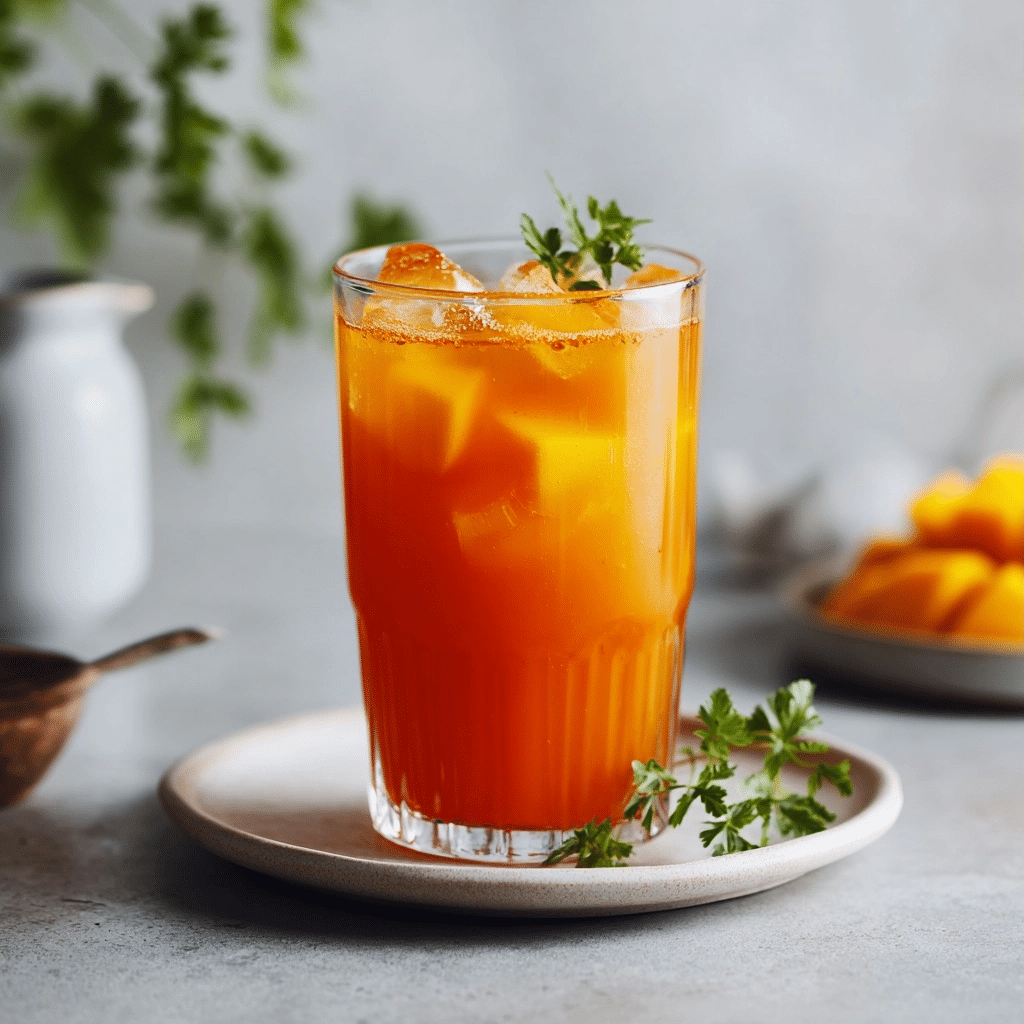
Mango Iced Tea is a refreshing blend of robust black tea and luscious tropical fruit puree sweetened naturally with honey. This chilled beverage provides a superior alternative to store-bought sodas by utilizing real mango chunks rather than artificial syrups or concentrates. The combination of tannins from the tea leaves and the natural sugars of the stone fruit creates a sophisticated profile that appeals to both children and adults. Preparing this drink at home allows for total control over sweetness levels and tea strength while ensuring every sip contains genuine fruit fiber. This recipe serves as a foundational technique for anyone seeking a professional-grade iced tea experience without laboratory-made additives.
| Prep Time | Cook Time | Total Time | Servings | Difficulty | Cuisine |
|---|---|---|---|---|---|
| 5 Minutes | 20 Minutes | 25 Minutes | 4 Servings | Easy | American/Fusion |
Why This Recipe Works
Creating Mango Iced Tea from scratch ensures a vibrant flavor profile that pre-packaged bottled teas simply cannot replicate. I discovered that simmering the mango directly in water creates a concentrated fruit base that integrates seamlessly into the brewed tea. The heat breaks down the cellular structure of the fruit, releasing natural pectins and sugars that provide a velvety mouthfeel and consistent sweetness throughout the pitcher.
The choice of honey as a sweetener acts as a bridge between the earthy notes of the black tea and the floral nature of the mango. I prefer this method over simple syrup because it adds a complexity that complements the tropical notes without overpowering the palate. This recipe balances acidity, sweetness, and astringency, making it a reliable staple for garden parties or quiet afternoons.
Ingredients
| Ingredient | Quantity | Notes and Alternatives |
|---|---|---|
| Black Tea Bags | 2 Bags | Use Assam or Ceylon; replace with 2 tsp loose leaf if preferred. |
| Ripe Mango | 1 Large | Ensure it is soft to the touch; 1.5 cups of frozen mango cubes also work. |
| Water | 4 Cups | Divided into two 2-cup portions for steeping and simmering. |
| Honey | 2 Tablespoons | Adjust to taste; can substitute with agave nectar or maple syrup. |
| Ice | As needed | Use large cubes to prevent rapid dilution of the tea. |
Step-by-Step Instructions
Phase 1: Steep the Tea Base
- Boil two cups of filtered water in a kettle until it reaches approximately 212 degrees Fahrenheit.
- Place the tea bags into a heat-resistant large pitcher or glass carafe carefully.
- Pour the boiled water over the tea bags and allow them to steep for exactly 10 minutes.
- Remove the tea bags without squeezing them to avoid releasing excess bitter tannins into the liquid.
Phase 2: Prepare the Mango Puree
- Dice the fresh mango into small cubes, discarding the skin and the large central pit.
- Heat the remaining two cups of water and the mango pieces in a medium-sized saucepan over medium-high heat.
- Bring the mixture to a rolling boil, then immediately reduce the heat to a low simmer.
- Simmer for 10 minutes, using a potato masher or the back of a large spoon to crush the fruit into a thick pulp.
Phase 3: Combine and Cool
- Strain the hot mango mixture through a fine-mesh sieve directly into the pitcher containing the brewed tea.
- Press firmly on the solids in the sieve to extract every drop of concentrated juice and mango essence.
- Add the honey to the warm liquid and stir vigorously until the sweetener is completely dissolved.
- Cool the tea to room temperature before refrigerating; serve in tall glasses filled with fresh ice and mango slices.
Chef Tips for Perfect Results
- Select Keitt or Kent mangoes for their low fiber content and high sugar levels which result in a smoother tea.
- Cold brew the tea bags in the refrigerator for 12 hours if you prefer a less astringent and much smoother base.
- Flash-chill the tea by placing the pitcher in an ice bath to preserve the bright orange color and fresh aroma.
- Use filtered water to ensure no chlorine or mineral tastes interfere with the delicate fruit and tea balance.
- Temper your glass pitcher with a little warm water before pouring in boiling liquid to prevent thermal shock and cracking.
- Zest a small amount of lime into the honey before stirring it in to add a bright, acidic pop to the finish.
Common Mistakes to Avoid
- Over-steeping the tea bags beyond 10 minutes creates a bitter, dry sensation on the tongue from excessive tannin release.
- Using underripe mangoes results in a tart, starchy flavor and a pale color that lacks the iconic tropical sweetness.
- Adding ice to the tea while it is still boiling hot dilutes the flavor significantly as the ice melts instantly.
- Squeezing the mango pulp too hard through a cheesecloth may introduce fine bitter particulates that cloud the final beverage.
- Neglecting to stir the honey while the tea is still warm prevents the sweetener from integrating properly, leaving it at the bottom.
Variations and Substitutions
| Ingredient | Substitution | Impact on Flavor |
|---|---|---|
| Black Tea | Green Tea | Produces a lighter, more grassy and floral beverage profile. |
| Honey | Stevia | Reduces caloric content significantly while maintaining a sharp sweetness. |
| Mango | Peach | Shifts the flavor toward a stone-fruit profile with higher acidity. |
| Water | Coconut Water | Adds a nutty undertone and increases the electrolyte content of the drink. |
Serving Suggestions and Pairings
Mango Iced Tea is the perfect accompaniment for spicy cuisines such as Thai Green Curry or jerk-seasoned grilled chicken. The sweetness of the mango coat the palate and provides immediate relief from capsicum heat found in spicy peppers. For a social gathering, serve this drink in a large glass dispenser garnished with fresh mint sprigs and floating lime wheels.
This beverage shines during outdoor events such as summer barbecues, graduation parties, or bridal showers where guests require hydration. You can also pair it with light appetizers like shrimp summer rolls or a crisp cucumber salad. The bold tropical notes make it an excellent standalone afternoon treat for those seeking a caffeine boost without the heaviness of coffee.
Storage and Reheating
| Method | Duration | Instructions |
|---|---|---|
| Refrigeration | 3-5 Days | Store in an airtight glass pitcher; stir well before pouring as sediment settles. |
| Freezing | 3 Months | Freeze in silicone ice cube trays to use as flavored ice for future drinks. |
Nutritional Information
| Nutrient | Amount per Serving |
|---|---|
| Calories | 85 kcal |
| Carbohydrates | 22g |
| Sugar | 18g |
| Fiber | 1g |
| Vitamin C | 35% DV |
Approximate values.
Conclusion
Mastering the art of Mango Iced Tea allows you to bring a piece of the tropics into your own kitchen with minimal effort. This recipe highlights the importance of using fresh, whole ingredients to create a beverage that is far superior to any powdered mix. By simmering the fruit and steeping the tea separately, you ensure that both components reach their peak flavor potential before they are combined. The natural sweetness of the honey and the richness of the mango puree create a drink that is refreshing, healthy, and deeply satisfying. This beverage is not just a drink but a celebration of summer flavors that can be enjoyed throughout the year. Whether you are hosting a festive party or looking for a quiet way to cool down, this tea delivers consistent quality and taste. The vibrant orange hue and the aromatic scent of brewed tea make it as beautiful to look at as it is to consume. We encourage you to try this method and experiment with the sweetness levels to find your personal perfect balance. The final result is a clean, crisp, and fruity experience that leaves a lingering signature flavor of sun-ripened mango on the palate.
FAQ
Can I use frozen mango for this iced tea?
You can use frozen mango cubes as a direct substitute for fresh fruit with excellent results. Frozen mango is often harvested at peak ripeness and flash-frozen, which preserves its sweetness and nutritional value perfectly for simmering. Simply add the frozen cubes to the water and proceed with the boiling and mashing steps as directed.
How do I know when the mango puree is done?
The mango puree is ready when the fruit pieces are completely soft and the water has reduced into a thick, colorful syrup. You should be able to mash the cubes with very little resistance from the spoon or masher. This usually takes about 10 minutes of simmering over a medium-low heat setting.
Why is my mango tea cloudy instead of clear?
Cloudiness occurs if you refrigerate the tea while it is still very hot or if you use high-pectin fruit pulp. To fix this, always let the tea cool to room temperature on the counter before placing it in the fridge. If it remains cloudy, it is purely aesthetic and will not negatively impact the delicious tropical flavor.
Can I make mango iced tea a day in advance?
Making this tea 24 hours in advance is actually recommended because it allows the fruit and tea flavors to meld together more thoroughly. Store the finished liquid in a sealed glass container in the refrigerator to keep it fresh and prevent it from absorbing other food odors. Always give the pitcher a good stir before serving to redistribute any settled fruit particles.
What is the best way to serve this at a party?
The most professional way to serve this tea is in chilled glass jars or tall hiball glasses with plenty of extra-large ice cubes. Garnish each individual serving with a long slice of fresh mango and a sprig of fresh mint for a high-end presentation. Providing a small bowl of lime wedges on the side allows guests to customize the acidity of their own drink.
PrintMango Iced Tea: The Ultimate Refreshing Summer Beverage Guide
- Total Time: 25
- Yield: 4 servings
- Diet: Vegetarian
Description
A vibrant fusion of robust black tea and naturally sweet mango puree, sweetened with honey. This homemade iced tea uses real fruit and tea leaves to create a refreshing, zero-alcohol beverage with no artificial additives.
Ingredients
Black Tea Bags
2 Bags (preferably Assam or Ceylon; 2 tsp loose leaf if preferred)
Ripe Mango
1 Large (or 1.5 cups frozen mango cubes)
Water
4 Cups (divided into two 2-cup portions)
Honey
2 Tablespoons (adjust to taste; replace with agave/maple syrup if needed)
Ice
As needed (use large cubes for slow dilution)
Instructions
Boil 2 cups water in a kettle
Steep tea bags in hot water for 5 minutes
Strain tea into a pitcher
Meanwhile, add mango chunks and 2 cups water to a saucepan
Simmer over medium heat for 10 minutes until fragrant
Blend mango mix until smooth using an immersion blender
Chill mango puree in the fridge
Once steamed tea and puree are both cold, combine them
Stir in honey until dissolved
Chill mixture for at least 2 hours
Serve over large ice cubes in 4 glasses
Notes
Use the ripest mango available for maximum flavor
Adjust sweetness by adding 0.5-1 tbsp honey to individual servings
To save time, use frozen mango with 2 minutes extra simmering time
Leftover tea will keep in the fridge for 24 hours
- Prep Time: 5
- Cook Time: 20
- Category: Healthy Smoothie Drink Recipes Ideas
- Method: Cold Brewing
- Cuisine: American/Fusion