
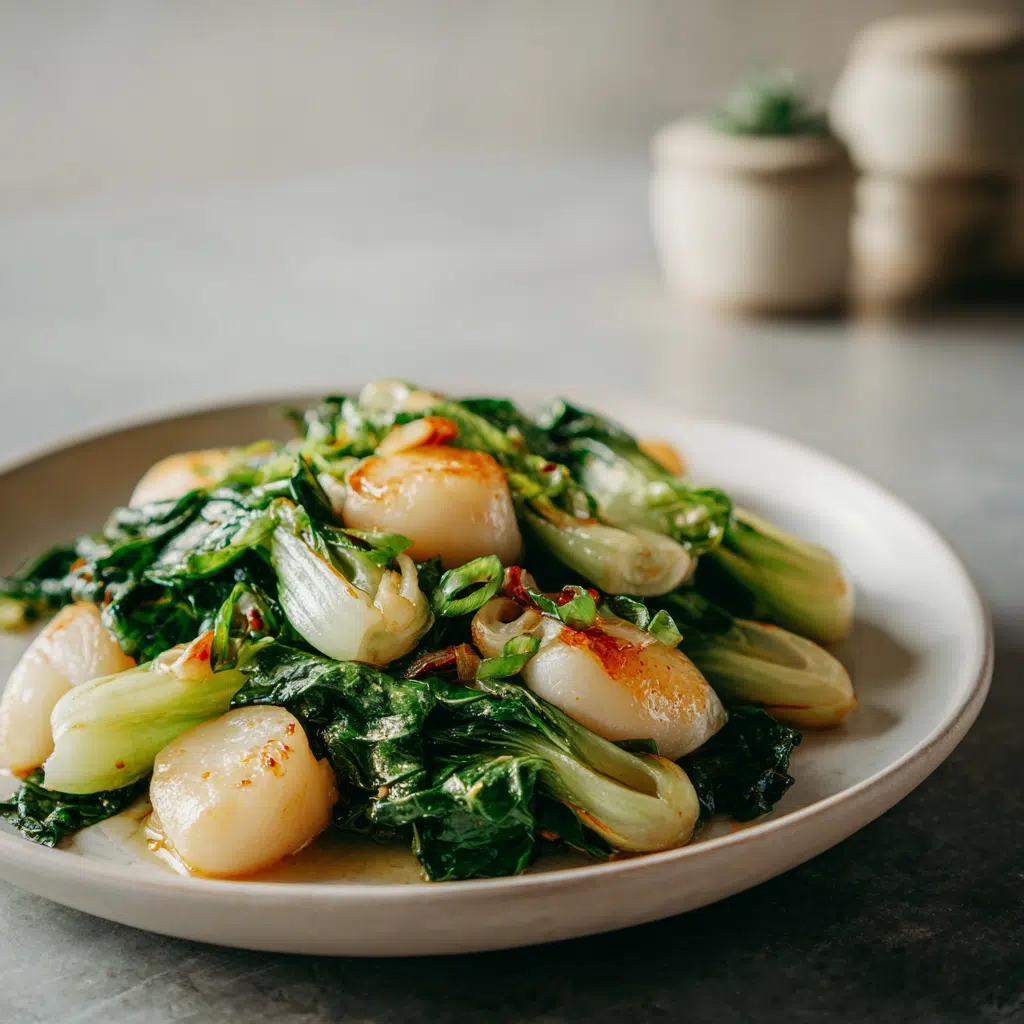
Bok choy with garlic and ginger is a nutrient-dense, savory Asian side dish featuring tenderized baby bok choy halves seared and steamed in a fragrant aromatic base. This culinary preparation emphasizes the natural sweetness of Chinese cabbage while using fresh ginger and pungent garlic to create a bold, savory profile. The high-heat searing technique creates a caramelized surface on the leaves and stems before a quick steam finish ensures the core remains crisp. By combining these essential aromatics with low-sodium soy sauce, you achieve a restaurant-quality vegetable dish that complements various protein sources. This recipe serves as a foundational technique for anyone looking to incorporate more greens into their weekly meal rotation without sacrificing intense, satisfying flavor.
Recipe Overview
| Prep Time | Cook Time | Total Time | Servings | Difficulty | Cuisine |
|---|---|---|---|---|---|
| 5 Minutes | 8 Minutes | 13 Minutes | 2-4 | Easy | Chinese-Inspired |
Why This Recipe Works
I have found that the combination of high-heat searing and low-heat steaming is the most effective way to handle the unique texture of baby bok choy. The thick, crunchy white stalks require more heat and moisture than the delicate green leaves, which can easily overcook and turn mushy. By searing the cut side first, you develop a deep golden color and a nutty flavor that elevates the vegetable from a simple boiled green to a star component of the meal.
The synergy between fresh ginger and garlic creates a classic aromatic base that provides warmth and depth to the light soy sauce glaze. I prefer using fresh aromatics over powders because the oils released during the brief sautéing phase infuse the canola oil, ensuring every leaf is coated in flavor. This method ensures the bok choy remains vibrant and tender-crisp, providing a satisfying textural contrast that works perfectly alongside rice or noodles.
Ingredients
| Ingredient | Quantity | Notes and Alternatives |
|---|---|---|
| Baby Bok Choy | 4 heads | Sliced lengthwise; use larger heads sliced into quarters if needed. |
| Canola Oil | 1 ½ tablespoons | Grapeseed or avocado oil works as a high-heat substitute. |
| Fresh Ginger | 1 teaspoon | Minced finely; use a microplane for better distribution. |
| Garlic | 3 cloves | Minced; adjust based on intensity preference. |
| Low Sodium Soy Sauce | 2 tablespoons | Use Tamari for a gluten-free option. |
| Sesame Oil | 1 teaspoon | Optional for finishing; toasted variety recommended for aroma. |
| Salt and Pepper | To taste | Sub red pepper flakes for a spicy kick. |
Step-by-Step Instructions
Phase 1: Preparing the Aromatics
- Heat the canola oil in a large skillet or wok over medium-high heat until it begins to shimmer.
- Add the minced ginger and garlic to the hot oil immediately.
- Cook for 30 seconds to 1 minute, stirring constantly to prevent burning while releasing the fragrance.
Phase 2: Searing the Vegetables
- Place the baby bok choy halves into the skillet with the cut side facing down.
- Sear the vegetable for 2 minutes without moving them to develop a light brown crust.
- Turn each piece of bok choy over using tongs to expose the rounded side.
Phase 3: Seasoning and Steaming
- Sprinkle the bok choy lightly with salt and black pepper or red pepper flakes.
- Pour the low-sodium soy sauce into the pan, tossing or turning the pieces to ensure an even coat.
- Reduce the heat to medium-low to prevent the sauce from scorching.
- Cover the pan with a tight-fitting lid and steam for 3 to 4 minutes until the stalks reached the desired tenderness.
- Drizzle with optional sesame oil and serve immediately while the greens are hot.
Chef Tips for Perfect Results
- Dry the bok choy thoroughly after washing to prevent the oil from splattering and to ensure a better sear.
- Use a microplane to grate your ginger into a paste for more consistent flavor throughout the sauce.
- Maintain high heat during the initial sear to caramelize the sugars in the cabbage before adding liquid.
- Add a teaspoon of water or vegetable broth if the soy sauce evaporates too quickly during the steaming phase.
- Choose baby bok choy of similar size so that all pieces reach the same level of tenderness simultaneously.
Common Mistakes to Avoid
One primary mistake is overcrowding the pan, which causes the vegetables to steam prematurely rather than sear. When the pan is too full, moisture cannot escape, resulting in gray, limp stalks instead of vibrant, browned ones. Use a wide skillet or cook in batches to ensure every piece has direct contact with the hot surface.
Burning the garlic is another frequent error because minced garlic is incredibly delicate at high temperatures. If the garlic turns dark brown or black, it becomes bitter and ruins the entire flavor profile of the dish. Monitor the aromatics closely and add the bok choy immediately once the garlic becomes fragrant and turns a light golden hue.
Overcooking the greens leads to a mushy texture that lacks the characteristic crunch of well-prepared Chinese vegetables. Start checking for tenderness after three minutes of steaming to ensure the stalks are soft but still hold their shape. Remove the pan from the heat source immediately once the leaves have wilted and the thickest part of the stalk is easily pierced.
Variations and Substitutions
| Ingredient | Substitution | Impact on Flavor |
|---|---|---|
| Canola Oil | Coconut Oil | Adds a subtly sweet, tropical undertone to the dish. |
| Soy Sauce | Liquid Aminos | Provides a similar salty umami profile with less sodium. |
| Red Pepper Flakes | Sriracha | Introduces vinegary heat instead of dry spice. |
| Sesame Oil | Toasted Sesame Seeds | Offers a nutty crunch without the heavy oil finish. |
Serving Suggestions and Pairings
This bok choy with garlic and ginger serves as an exceptional side dish for Seared Salmon or Teriyaki Chicken. Its clean flavor profile cuts through the richness of fatty fish or sweet glazes, providing a refreshing vegetal balance to the meal. For a plant-based dinner, serve this alongside steamed jasmine rice and crispy pan-fried tofu to absorb the remaining ginger-soy sauce.
This dish is also a great addition to a multi-course lunar new year celebration or a simple weeknight stir-fry night. Because it cooks so quickly, it should be the last component prepared before the meal is served to ensure the colors stay bright. Pair it with a hot cup of green tea or oolong tea to complement the earthy notes of the ginger and sesame oil.
Storage and Reheating
| Method | Duration | Instructions |
|---|---|---|
| Refrigeration | 3 Days | Store in an airtight container once cooled to room temperature. |
| Microwave | 1-2 Minutes | Heat on medium power with a damp paper towel over the top. |
| Stovetop | 2-3 Minutes | Reheat in a dry skillet over medium heat until just warmed through. |
Nutritional Information
| Nutrient | Amount per Serving |
|---|---|
| Calories | 85 kcal |
| Protein | 3g |
| Fat | 6g |
| Carbohydrates | 5g |
| Fiber | 2g |
| Sodium | 480mg |
Approximate values only.
Conclusion
Mastering the art of cooking bok choy with garlic and ginger allows you to create a high-quality, flavorful vegetable dish that rivals any traditional restaurant offering. This recipe demonstrates how simple ingredients like fresh aromatics and quality oils can transform humble greens into a savory masterpiece. The combination of textures—from the crispy seared stalks to the tender steamed leaves—provides a sophisticated eating experience that requires very little effort. By focusing on the timing of your stir-fry and the quality of your ginger and garlic, you ensure a nutrient-packed result every time you cook. I encourage you to experiment with various heat levels or additional toppings to make this recipe your own. Whether you serve it as a quick lunch or a dinner side, the versatility of these greens makes them a valuable addition to your culinary repertoire. Enjoy the process of seeing the vibrant green hues brighten in the pan and the fragrance of the toasted aromatics fill your kitchen space. This dish is truly a testament to the power of simple, fresh ingredients handled with care and precision. Finish your plate with a final drizzle of sesame oil for that undeniable signature flavor.
FAQ
Can I substitute baby bok choy with full-grown bok choy?
You can substitute full-grown bok choy by slicing the large white stalks into smaller pieces and roughly chopping the leaves. Large bok choy has a higher water content and tougher stalks, so you may need to increase the steaming time by two minutes to achieve tenderness. Ensure you separate the stalks and leaves during prep, adding the stalks to the pan first to give them a head start.
How do I know when the bok choy is perfectly cooked?
Perfectly cooked bok choy features vibrant green leaves and stalks that are tender enough to be easily pierced by a fork but still offer a slight crunch. If the leaves turn a dark, olive-drab color, the vegetable is overcooked and has lost its nutritional integrity. Always aim for a texture that is known as tender-crisp to maintain the best eating experience.
What should I do if my garlic and ginger start to burn?
Immediately add a small splash of water or the soy sauce to the pan to lower the temperature and stop the browning process. If the aromatics have already turned black or emit a bitter smell, it is best to wipe the pan clean and start over to avoid ruining the flavor of the vegetables. Prevention is key, so keep your heat at a manageable level and stir the aromatics constantly during the first minute.
Can I prepare this dish ahead of time for a dinner party?
This dish is best prepared and served immediately to maintain the texture and bright color of the greens. If you must prepare ahead, wash and cut the bok choy and mince the aromatics several hours in advance so the actual cooking takes only eight minutes. Reheating often results in slightly mushier leaves, so the pre-chopping method is the superior way to save time.
How do I serve bok choy to make it a main meal?
Serve the bok choy over a generous bed of quinoa or forbidden rice and top it with a soft-boiled egg or roasted chickpeas to increase the protein content. Adding a spoonful of chili oil or a sprinkle of toasted peanuts can also add caloric density and complex textures to the dish. This transformation allows the vegetable to move from a simple side to a satisfying, nutritionally complete vegetarian main course.
Print
Bok Choy with Garlic and Ginger
- Total Time: 13
- Yield: 2-4 servings
- Diet: Vegetarian
Description
A savory Chinese-inspired side dish of baby bok choy seared to perfection and infused with aromatic garlic and ginger. This quick, healthy recipe highlights the natural sweetness of bok choy while balancing bold flavors with soy sauce and sesame oil.
Ingredients
Baby Bok Choy – 4 heads
Canola Oil – 1 ½ tablespoons
Fresh Ginger – 1 teaspoon (finely minced)
Garlic – 3 cloves (minced)
Low Sodium Soy Sauce – 2 tablespoons
Sesame Oil – 1 teaspoon (optional, for finishing)
Instructions
1. Wash and halve baby bok choy lengthwise (quarter if large)
2. Heat canola oil in a large skillet over high heat
3. Sear bok choy cut-side down for 2-3 minutes until golden
4. Add minced ginger and garlic; sauté 1 minute until fragrant
5. Pour soy sauce over bok choy and steam uncovered 3-5 minutes
6. Finish with a drizzle of sesame oil before serving if desired
Notes
• For best results use baby bok choy (not large)
• Add 1/4 cup water to skillet during steaming if needed
• Substitute tamari for gluten-free version
• Canola oil can be replaced with avocado/grapeseed oil
- Prep Time: 5
- Cook Time: 8
- Category: Healthy Quick Meals | Easy Clean Eating Recipes
- Method: Stir Fry
- Cuisine: Chinese-Inspired