
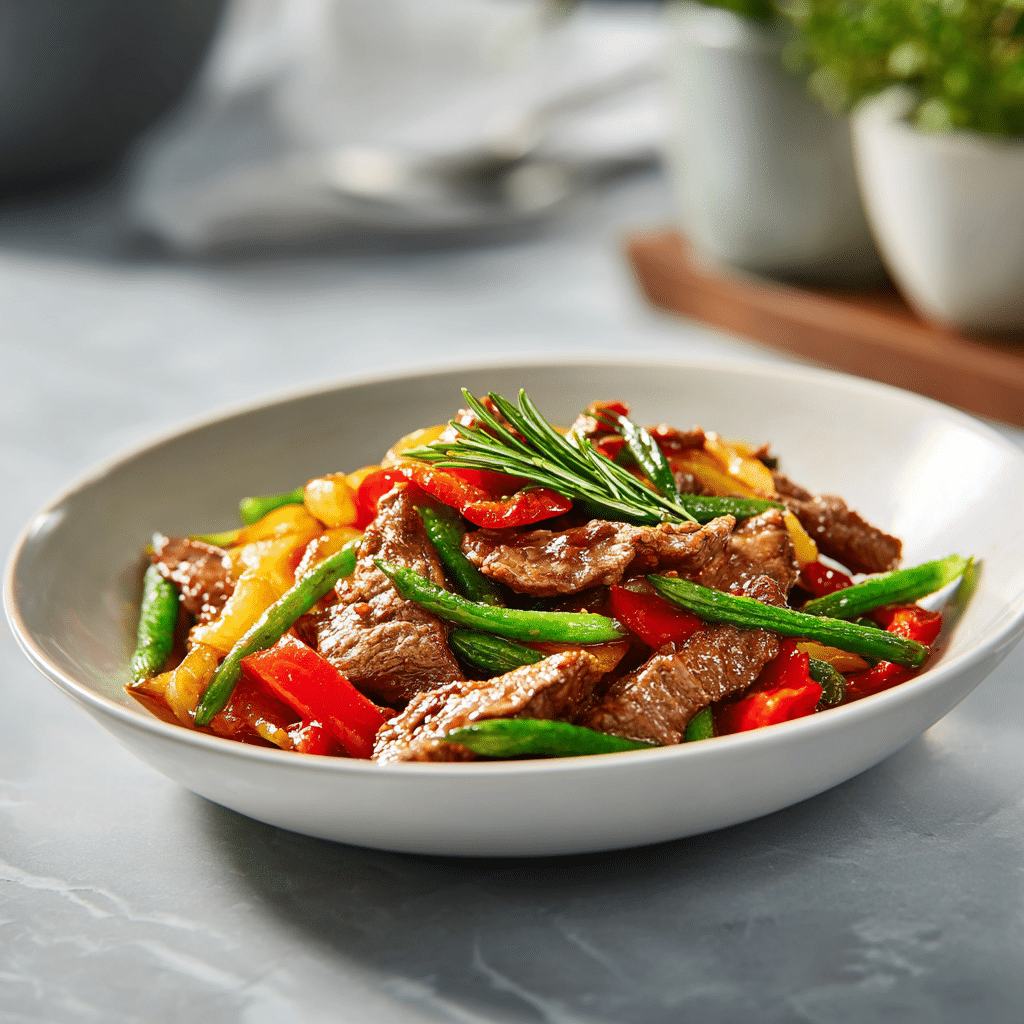
A Beef Stir Fry with Vegetables is a high-protein, nutrient-dense meal consisting of thinly sliced steak and crisp garden produce seared at high heat in a savory glaze. This classic dish relies on the technique of wok-searing to lock in juices while maintaining the integrity of the vegetable textures. By combining umami-rich soy sauce with the sweetness of honey and the aromatic heat of ginger, you create a balanced profile that rivals any professional restaurant offering. Most home cooks favor this preparation because it bridges the gap between gourmet flavor and the efficiency required for busy weeknight schedules. Using lean cuts of beef ensures the meal remains focused on health without sacrificing the deep, caramelized notes that define a traditional stir-fry. Success stems from preparation, as the actual cooking process occurs in less than ten minutes to preserve the vibrant colors and essential vitamins found in the fresh vegetables.
| Prep Time | Cook Time | Total Time | Servings | Difficulty | Cuisine |
|---|---|---|---|---|---|
| 15 Minutes | 10 Minutes | 25 Minutes | 4 Servings | Easy | Asian-Inspired |
Why This Recipe Works
Experience has taught me that the secret to a superior stir-fry lies in the temperature management and the sequence of ingredients. I have found that using a high-heat oil like vegetable oil allows the beef to develop a deep brown crust that creates a complex flavor foundation for the entire pan. The contrast between tender flank steak and the crunch of julienned carrots provides a satisfying mouthfeel that keeps the palate engaged throughout the meal.
My personal technique involves a distinct separation of the protein and the produce during the initial phases. By searing the beef and then removing it, the pan temperature stays high enough to blister the vegetables instead of steaming them in their own moisture. This method ensures that the snap peas retain their bright green color and the bell peppers soften just enough to release their natural sugars while staying firm to the bite.
Ingredients
| Ingredient | Quantity | Notes with Alternatives |
|---|---|---|
| Beef (Flank, Sirloin, or Ribeye) | 1 lb (450g) | Slice against grain; use flank for best texture. |
| Soy Sauce | 2 tablespoons | Low sodium preferred; use Tamari for gluten-free. |
| Hoisin Sauce | 1 tablespoon | Adds thickness; ensure alcohol-free version. |
| Sesame Oil | 1 tablespoon | Toasted variety provides the best aroma. |
| Honey | 1 tablespoon | May substitute with maple syrup or brown sugar. |
| Garlic Cloves | 2 units | Freshly minced for maximum pungency. |
| Fresh Ginger | 1 teaspoon | Grated finely; do not use dried powder. |
| Vegetable Oil | 2 tablespoons | High smoke point oil is essential for searing. |
| Bell Pepper | 1 unit | Thinly sliced; red or yellow for sweetness. |
| Broccoli Florets | 1 cup | Cut into bite-sized pieces for even cooking. |
| Carrot | 1 unit | Julienned into matchsticks for quick softening. |
| Snap Peas | ½ cup | Ends trimmed; adds significant crunch. |
| Green Onions | 2 units | Chopped for fresh garnish. |
| Sesame Seeds | 1 tablespoon | Optional; provides visual finish and nuttiness. |
Step-by-Step Instructions
Phase 1: Preparation and Marinade
- Slice the beef against the grain into thin strips to shorten fibers and ensure maximum tenderness during the rapid cooking process.
- Whisk together the soy sauce, hoisin sauce, sesame oil, honey, minced garlic, and grated ginger in a medium bowl until the mixture is cohesive.
- Marinate the beef in a portion of the sauce for 15 to 30 minutes if time allows to infuse the meat with deep aromatic flavor.
Phase 2: Searing the Protein
- Heat one tablespoon of vegetable oil in a heavy-bottomed wok or large skillet over medium-high heat until the oil begins to shimmer.
- Place the beef in the pan in a single layer, ensuring pieces do not overlap, which prevents the meat from steaming.
- Sear the beef for 2-3 minutes without moving it to allow a crispy, caramelized crust to form on the bottom surface.
- Remove the beef from the pan once it is browned but still slightly pink in the center and set it aside on a clean plate.
Phase 3: Vegetable Sauté
- Add the remaining tablespoon of vegetable oil to the same pan and immediately introduce the carrots, bell peppers, and broccoli florets.
- Stir-fry the vegetables for 3-5 minutes, moving them constantly to distribute the heat while they soften slightly but maintain a crisp core.
- Toss in the snap peas during the final 2 minutes of the vegetable phase because they cook much faster than denser vegetables.
Phase 4: Finishing the Dish
- Return the cooked beef and any accumulated juices back into the skillet with the vegetables.
- Pour the prepared sauce over the entire mixture and stir vigorously to coat every piece of beef and vegetable evenly.
- Simmer the mixture for 1-2 minutes until the sauce thickens and forms a glossy glaze that clings to the ingredients.
- Serve the stir-fry immediately over a bed of steamed rice and garnish with chopped green onions and sesame seeds.
Chef Tips for Perfect Results
- Freeze the beef for 20 minutes before slicing to make it firm enough to cut into paper-thin strips for restaurant-quality results.
- Dry the vegetables thoroughly after washing because excess water will create steam and prevent the produce from getting that charred wok flavor.
- Prep every single ingredient before turning on the heat since the actual cooking happens too quickly to chop while the pan is hot.
- Use a cast-iron skillet if you do not own a wok because the high heat retention mimics the traditional stir-fry environment perfectly.
- Adjust the sweetness or saltiness at the very end by adding a splash of water or an extra teaspoon of honey depending on preference.
Common Mistakes to Avoid
- Overcrowding the pan causes the temperature to drop drastically, resulting in gray, boiled meat instead of seared, browned steak.
- Slicing the beef with the grain makes the meat tough and chewy, so always look for the muscle lines and cut perpendicular to them.
- Adding the garlic and ginger too early in the vegetable phase leads to burning and a bitter aftertaste in the final sauce.
- Cutting vegetable pieces into uneven sizes means some will be mushy while others are raw, so maintain consistent dimensions for all components.
- Skipping the searing phase for the beef prevents the development of the Maillard reaction, which is the primary source of savory flavor.
Variations and Substitutions
| Ingredient | Substitution | Impact on Flavor |
|---|---|---|
| Beef | Firm Tofu | Creates a vegetarian profile with a neutral, sauce-absorbing base. |
| Snap Peas | Green Beans | Provides a more earthy flavor and requires longer cooking time. |
| Honey | Agave Nectar | Offers a cleaner sweetness with a lower glycemic index. |
| Vegetable Oil | Grapeseed Oil | Maintains high heat stability with a more neutral flavor profile. |
| Hoisin Sauce | Oyster Sauce (Halal) | Increases the savory, salty depth while reducing the sweetness. |
Serving Suggestions and Pairings
Standard service for this Beef Stir Fry with Vegetables involves a generous portion over fluffy jasmine rice or brown rice to soak up the sauce. For a low-carb alternative, serve the mixture in large butter lettuce cups or over a bed of cauliflower rice. This dish is ideal for a quick family dinner or a meal-prep lunch because the flavors continue to develop as the sauce sits. Pair this with a side of chilled cucumber salad or steamed edamame for a complete, restaurant-style dining experience at home.
Storage and Reheating
| Method | Duration | Instructions |
|---|---|---|
| Refrigeration | 3-4 Days | Store in an airtight glass container to maintain freshness and prevent odors. |
| Freezing | 2 Months | Cool completely before freezing; vegetables may lose some crispness upon thawing. |
| Reheating | 2-3 Minutes | Heat in a skillet with a splash of water to loosen the glaze and prevent drying. |
Nutritional Information
| Nutrient | Amount per Serving |
|---|---|
| Calories | 340 kcal |
| Protein | 28g |
| Fat | 16g |
| Carbohydrates | 22g |
| Fiber | 4g |
| Sugar | 9g |
| Sodium | 850mg |
Approximate values based on standard ingredient sizes.
Creating a Beef Stir Fry with Vegetables allows you to master the art of high-heat cooking while providing a balanced meal for your family. This recipe provides a template for thousands of variations, yet the core principles of searing and sauce-making remain consistent. By choosing high-quality beef and fresh, colorful vegetables, you ensure that every bite is packed with both nutrition and intense flavor. The combination of ginger, garlic, and hoisin creates a professional-grade glaze that bridges the gap between simple home cooking and gourmet Asian cuisine. As you become more comfortable with the timing, you can experiment with different vegetable combinations or spice levels to suit your specific palate. Remember that the key to success is in the preparation of the ingredients before the first drop of oil hits the pan. Enjoy the process of creating a vibrant, sizzling meal that nourishes the body and satisfies the craving for a savory, umami-rich experience. This beef stir fry represents the pinnacle of efficient cooking without compromising on the depth of flavor that defines great beef dishes.
FAQ
Can I make beef stir fry with vegetables gluten free?
Yes, you can easily adapt this dish by substituting the soy sauce with tamari and ensuring your hoisin sauce is certified gluten-free. Most other ingredients like beef and fresh vegetables are naturally free of gluten, making this a safe base for dietary restrictions. Always check the labels on processed sauces to confirm there are no hidden wheat thickeners.
How do I make stir fry beef more tender?
Tenderness is achieved by slicing the beef against the grain and using a process called velvetting if you have extra time. Slicing against the grain breaks up the tough muscle fibers, while a short marinade in the sauce helps break down proteins. Using a high-quality cut like flank steak or ribeye also significantly improves the final texture.
What is the best way to prevent soggy vegetables?
Preventing soggy vegetables requires using very high heat and avoiding overcrowding the cooking surface. You must cook the vegetables in small batches if your pan is not large enough to keep every piece in contact with the hot surface. Do not add water to the pan during the sauté phase, as this will steam the produce instead of searing it.
Can I prepare the beef stir fry ahead of time?
You can prepare this meal ahead of time by chopping all the vegetables and slicing the meat up to 24 hours in advance. Store the prepped components in separate containers in the refrigerator until you are ready to cook. This makes the final assembly take less than ten minutes, which is perfect for meal planning or busy evenings.
What should I do if my stir fry sauce is too thin?
If the sauce does not thicken sufficiently after a minute of simmering, you should mix a teaspoon of cornstarch with a teaspoon of cold water and stir it in. This slurry will activate with the heat and create a thick, glossy coating on the beef and vegetables instantly. Ensure the pan is at a simmer for the starch to reach its full thickening potential.
Print
Beef Stir Fry with Vegetables: Fast and Healthy Recipe
- Total Time: 25
- Yield: 4 servings
- Diet: Non-Vegetarian
Description
This high-protein Beef Stir Fry with Vegetables is a nutrient-dense, quick, and flavorful dish made with lean steak and crisp garden produce in a savory glaze of soy sauce, honey, and ginger. Perfect for busy weeknights and packed with Asian-inspired flavor.
Ingredients
Beef (Flank, Sirloin, or Ribeye) – 1 lb (450g)
Soy Sauce – 2 tablespoons
Hoisin Sauce – 1 tablespoon
Sesame Oil – 1 tablespoon
Honey – 1 tablespoon
Garlic Cloves – 2 units
Fresh Ginger – 1 teaspoon
Carrots – 2 medium, julienned
Snap Peas – 1 cup
Bell Peppers – 2 medium, sliced
Vegetable Oil – 2 tablespoons
Salt and Pepper
Instructions
Slice the beef thinly against the grain into 1-inch strips and season with salt and pepper.
In a small bowl, mix soy sauce, hoisin sauce, sesame oil, honey, minced garlic, and grated ginger.
Heat a wok or skillet over high heat and add 1 tablespoon of vegetable oil.
Sear the beef for 2-3 minutes until browned and nearly cooked through. Transfer to a plate.
Add the remaining vegetable oil to the pan and stir-fry the carrots for 1 minute, then add snap peas and bell peppers. Cook for 2-3 minutes until crisp-tender.
Return the beef to the pan and pour in the sauce. Stir-fry for 2 minutes until everything is well-coated and the beef is fully cooked.
Remove from heat and serve immediately.
Notes
Slice the beef against the grain for a tender bite.
Use low-sodium soy sauce to reduce salt content.
Ensure the hoisin sauce is alcohol-free if needed.
For a gluten-free version, use Tamari instead of soy sauce.
Store leftovers in an airtight container in the refrigerator for up to 2 days.
- Prep Time: 15
- Cook Time: 10
- Category: Healthy Quick Meals | Easy Clean Eating Recipes
- Method: Stir Fry
- Cuisine: Asian-Inspired